Tag Archives: biodiversity

A Power [Plant] Party

A couple of weekends ago my friend hosted a power point party. In case you’ve not heard of this, this is where everyone puts together a power point on any topic they wish to discuss and presents it at the party. It sounds like work, and it sort of is, but it is also a lot of fun. I won’t detail all of the power points that were presented that day, but there was everything from how beavers are little ecosystem engineers, saving wetlands and forests to musing over what makes something a door or a window to using one’s own acid-fueled dreams to demonstrate the energy and water cost of AI by depicting said dreams as simple AI comics. That last one was both a comedy of comical comics as well as a sad realization to what we are doing to the environment for a few lolz.

Mine was less fun(ny), but I did make it interactive. I brought with me a sampling of all the edible weeds and native plants I found in my backyard on a charcuterie board, with some cheeses and an olive oil dressing to show people all of the free food to which they have access. Here are the slides from my presentation!

This one is documented throughout several pieces of literature, everything from older botany and medicinal texts to works of fiction. It is also documented in a lot of druid and Celtic healing documents and stories. For the peer reviewed article cited in the slide, click here.

This was an audience favorite…for flavor. Those who recognized the weed from their yard were less than pleased with the seed dispersal abilities of this little fire cracker.

This one tasted like green peas to me, which freaked me out and I instantly went into panic mode that I had poisoned myself. For that I learned a valuable lesson. Even if you think you researched a plant to its fullest, you should also research their ecological doppelgängers. I did, and although it has at least two, the blossoms of the poisonous varietals are red and purple and look wildly different. So, *whew*! Crisis of unintentional poisoning, averted!

I’m sure at this point everyone knows they can consume dandelion, but a few fun bits of info I learned: the roots are also edible and can be eaten like a turnip, the roots can act as a diuretic, and there are a handful of states (New Mexico being one of them) where it is illegal to grow dandelions. My guess is they are not native to the region and dandelions have a way of making everywhere their home.

This was another favorite of the day. An incredibly important plant species to our forests in the Eastern U.S., it is also a somewhat forgotten gem. Used by the Cherokee, Chippewa, and other native people in the region for ceremonial and medicinal purposes, it is also a great alternative to store-bought cloves (harvesting the berries after they have turned red) and black pepper (harvesting the berries while they are still green). The leaves really do have a lemony flavor and the woody part is filled with a spicy scent. *Correction on the slide, it isn’t just the bark, but rather the entire twig. The branch and leaves make something similar to masala chai.

These plants were not edible plants (or, they might be, but I didn’t look into that particular trait), but I thought were incredibly beneficial yard and garden plants to keep and not kill. They serve as environmental indicators to detect high levels of nitrogen, phosphorous, and heavy metals – in case you need your soil to contain less or more of these elements. They can also extract these molecules from the soil, oftentimes leaving the soil healthier and more balanced.

My main point with this is that we should stop spraying yards with herbicides just to grow resource intensive grass when we have so many native plants that serve as food for the soil and wildlife, and make amazing environmental cleaners. Plus, most are flowering and that’s a triple bonus for the native pollinators! There are many reasons we don’t harvest these plants as food and sell them in the grocery stores. Sometimes it is just difficult to harvest (i.e. dandelion roots are small and irregularly shaped and hard to clean and peel), don’t ship well (delicate leaves on the bittercress and chickweed), but also more insidious reasons have all but ended the cultivation of native plants. White colonial settlers have historically forbidden the cultivation of foods used by indigenous people in order to end their way of life – a form of cultural genocide. I don’t know if that is the case for spicebush, but it certainly is possible.

Then, with that, I ended my slide show with this ridiculous compilation video of footage from my bird feeder that my sis-in-law got me.

Enjoy!

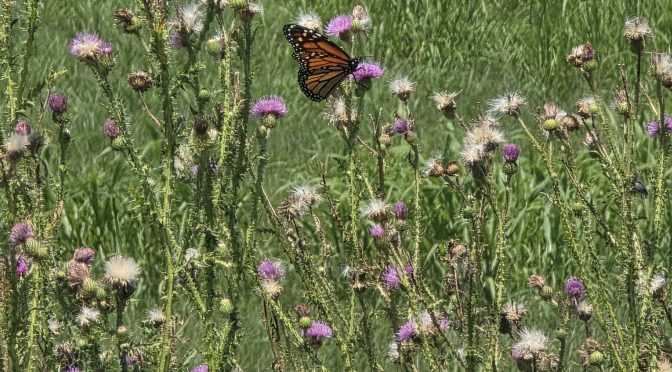
Two Pollinators

Last week, the world around me began to bloom. Mother nature pulled out her paint pallet and began to dab the Eastern U.S. in a thousand different colors we haven’t seen in months.

We aren’t the only ones who are waking up to see the new world. With every bud and blossom that emerges, so does another critter. To drink and feast on the sugars and chomp on the detritus in a dizzy display.

Continue reading Two Pollinators

Transitive Healing in Nature

I’m not sure how to change, but winter is always tough for me, partly because I refuse to go outside unless I have to. The walls and windows are a comfortable barrier between me and the outdoors, keeping me warm and snuggly inside. Unfortunately, warm and snuggly does not necessarily equate a complete, harmonious state of mental wellbeing.

Continue reading Transitive Healing in Nature

New Year, New Earth

This was the name of the summit I attended last week, hosted by Ecoversity. The focus: permaculture. It was three full days of information, so I won’t go into detail on what all was covered, but I was surprised to learn how adamant each of the speakers were about WHAT permaculture means.

Continue reading New Year, New Earth

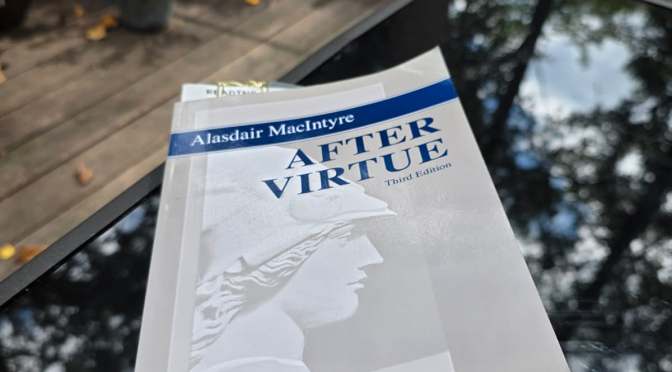
After Virtue, After Invasion

“Imagine that the natural sciences were to suffer the effects of a catastrophe. A series of environmental disasters are blamed by the general public on the scientists. Widespread riots occur, laboratories are burnt down, physicists are lynched, books and instruments are destroyed. Finally a Know-Nothing political movement takes power and successfully abolishes science teaching in schools and universities, imprisoning and executing the remaining scientists.”

Continue reading After Virtue, After Invasion

Influenza and Zoonosis

In my last post I used a photo of an old (positive) test result for COVID (this is also an old photo of my sweet baby, hence the grainy appearance) and I noticed it included Influenza A and B as possible results as well, which got me thinking about the flu and wondering how much people know what the flu even is. The question also ties into vaccines and how experts decide on which “strain” to use – and do people even know what they mean by strain?!

Ok, that’s a LOT to cover, so I’ll try to keep it all simple. First, let’s define what zoonosis is – this is a hot topic for One Health.

Continue reading Influenza and Zoonosis

A Haggis Hiatus

Hi, everyone! How have you been?

I just returned from my vacation in the UK (all around Scotland and then a stint to London) and decided to disconnect while I was gone, hence my silence over the past two weeks..

Can’t say I’m super thrilled to be back – the second we touched down in D.C., reality pelted us hard, right upside the head like a noxious smell you weren’t expecting. One sad or embarrassing story after another about the happenings in the grand U.S. of A. came flooding into our phones and I realized coming back was a terrible idea.

Sigh.

Continue reading A Haggis Hiatus

I Think We Are Being Invaded by Aliens

First there was one pile. Then a second. A third, fourth, fifth….I’ve lost count. I’ve stopped paying attention to how many piles I am finding, and have grown more interested in the color changes this life form is experiencing. From yellow to orangish to white. This extra terrestrial looking creature seems to bleach in the sun like coral in the reefs. It even looks like coral – well, up close it does. When you see it splattered about in a pile when it first appears, it definitely brings to mind the look of bile and foam that’s just been hacked up by your canine companion. The species: colloquially known as Dog Vomit Slime Mold.

Continue reading I Think We Are Being Invaded by Aliens

Today I Tasted the Devastation of a Wildfire

And I wasn’t even near it!

The air quality where I live has been generally poor, as of late. Not from one wildfire, but from two, plus a Haboob from the Middle East that blew sand halfway around the world to settle on the East Coast of the U.S.. It was the fire in New Jersey, however, that left a film in my mouth and throat and a grimy feel on my skin this past Saturday.

Continue reading Today I Tasted the Devastation of a Wildfire