A couple of weekends ago my friend hosted a power point party. In case you’ve not heard of this, this is where everyone puts together a power point on any topic they wish to discuss and presents it at the party. It sounds like work, and it sort of is, but it is also a lot of fun. I won’t detail all of the power points that were presented that day, but there was everything from how beavers are little ecosystem engineers, saving wetlands and forests to musing over what makes something a door or a window to using one’s own acid-fueled dreams to demonstrate the energy and water cost of AI by depicting said dreams as simple AI comics. That last one was both a comedy of comical comics as well as a sad realization to what we are doing to the environment for a few lolz.
Mine was less fun(ny), but I did make it interactive. I brought with me a sampling of all the edible weeds and native plants I found in my backyard on a charcuterie board, with some cheeses and an olive oil dressing to show people all of the free food to which they have access. Here are the slides from my presentation!
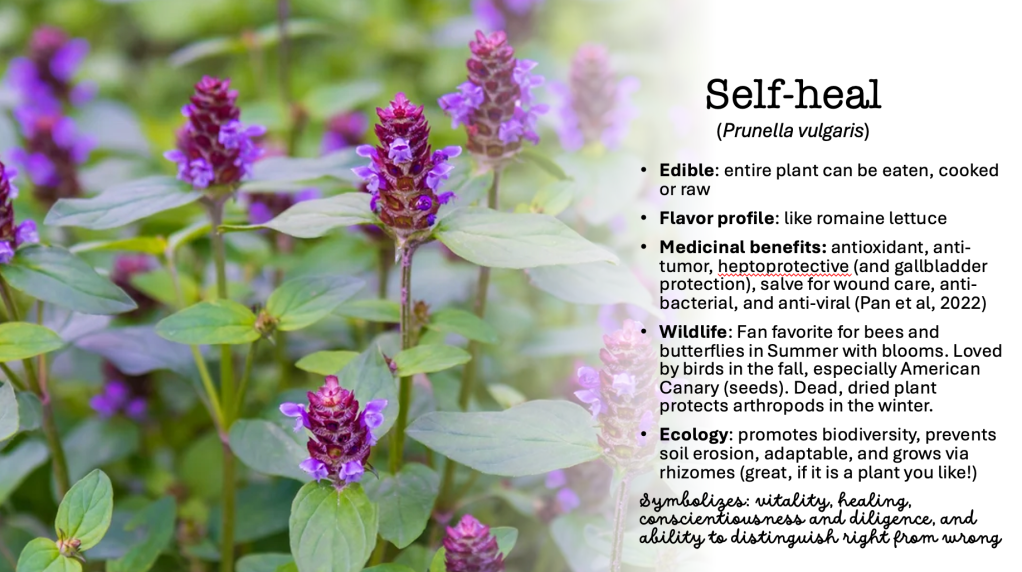
This one is documented throughout several pieces of literature, everything from older botany and medicinal texts to works of fiction. It is also documented in a lot of druid and Celtic healing documents and stories. For the peer reviewed article cited in the slide, click here.
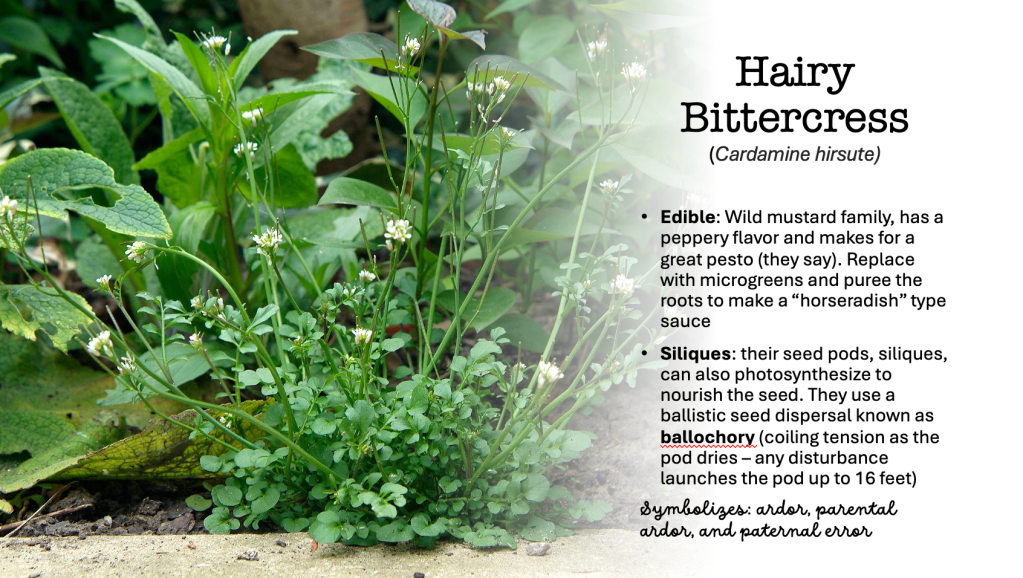
This was an audience favorite…for flavor. Those who recognized the weed from their yard were less than pleased with the seed dispersal abilities of this little fire cracker.
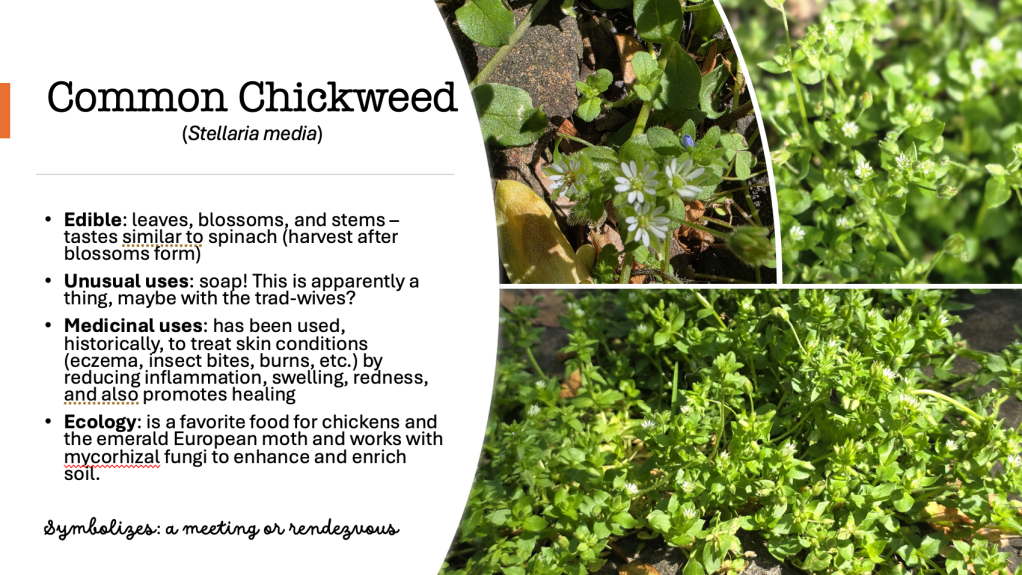
This one tasted like green peas to me, which freaked me out and I instantly went into panic mode that I had poisoned myself. For that I learned a valuable lesson. Even if you think you researched a plant to its fullest, you should also research their ecological doppelgängers. I did, and although it has at least two, the blossoms of the poisonous varietals are red and purple and look wildly different. So, *whew*! Crisis of unintentional poisoning, averted!
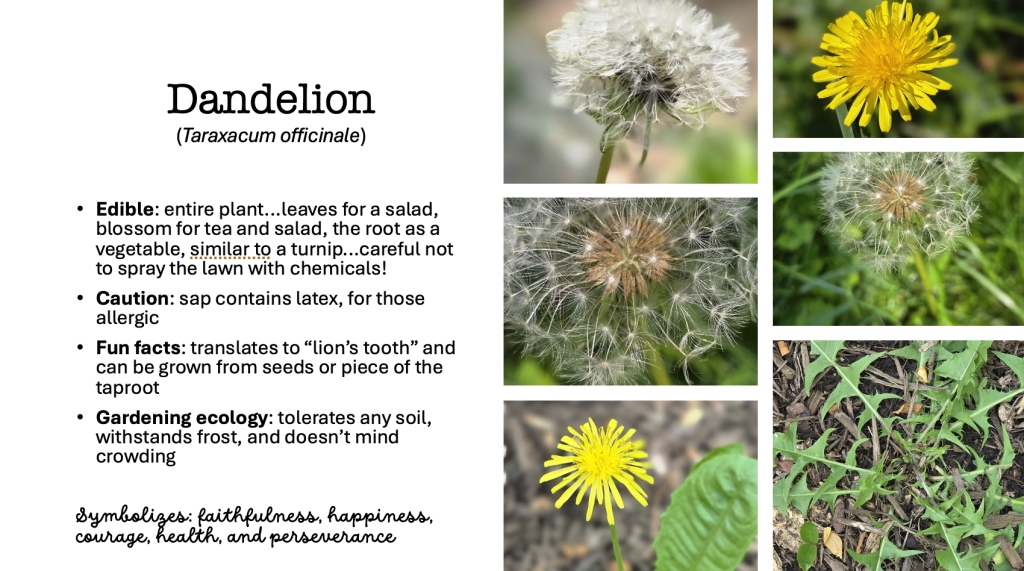
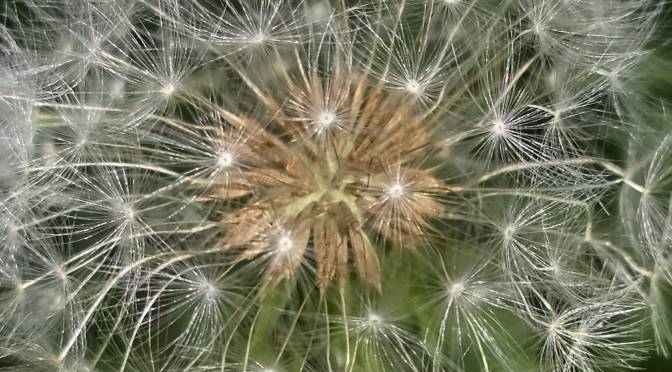
I’m sure at this point everyone knows they can consume dandelion, but a few fun bits of info I learned: the roots are also edible and can be eaten like a turnip, the roots can act as a diuretic, and there are a handful of states (New Mexico being one of them) where it is illegal to grow dandelions. My guess is they are not native to the region and dandelions have a way of making everywhere their home.
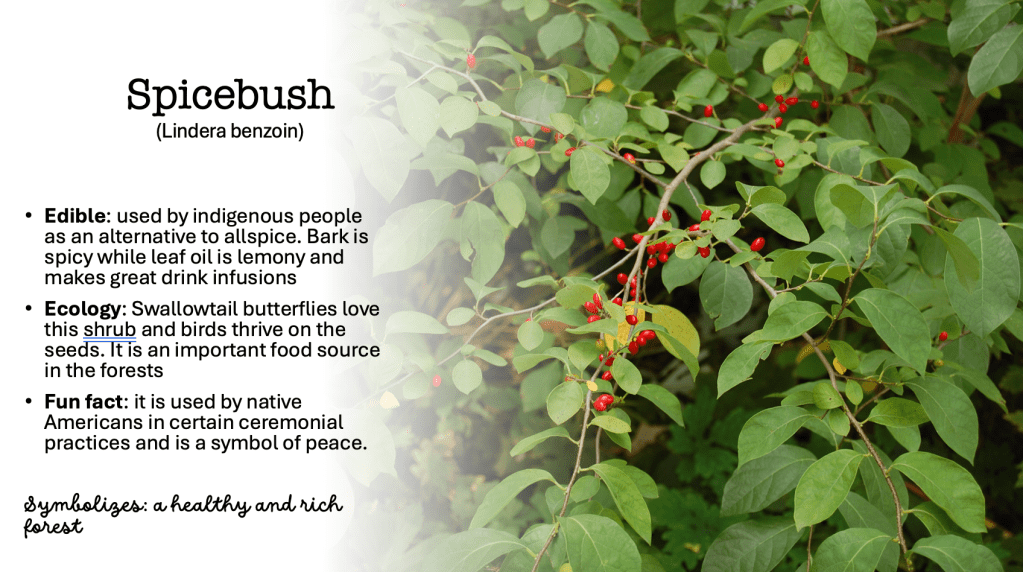
This was another favorite of the day. An incredibly important plant species to our forests in the Eastern U.S., it is also a somewhat forgotten gem. Used by the Cherokee, Chippewa, and other native people in the region for ceremonial and medicinal purposes, it is also a great alternative to store-bought cloves (harvesting the berries after they have turned red) and black pepper (harvesting the berries while they are still green). The leaves really do have a lemony flavor and the woody part is filled with a spicy scent. *Correction on the slide, it isn’t just the bark, but rather the entire twig. The branch and leaves make something similar to masala chai.
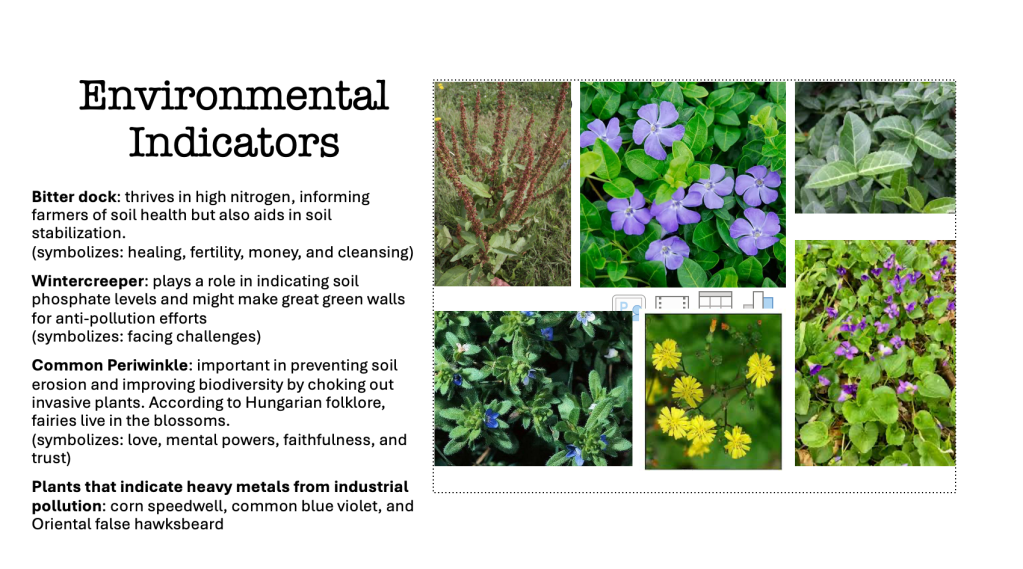
These plants were not edible plants (or, they might be, but I didn’t look into that particular trait), but I thought were incredibly beneficial yard and garden plants to keep and not kill. They serve as environmental indicators to detect high levels of nitrogen, phosphorous, and heavy metals – in case you need your soil to contain less or more of these elements. They can also extract these molecules from the soil, oftentimes leaving the soil healthier and more balanced.
My main point with this is that we should stop spraying yards with herbicides just to grow resource intensive grass when we have so many native plants that serve as food for the soil and wildlife, and make amazing environmental cleaners. Plus, most are flowering and that’s a triple bonus for the native pollinators! There are many reasons we don’t harvest these plants as food and sell them in the grocery stores. Sometimes it is just difficult to harvest (i.e. dandelion roots are small and irregularly shaped and hard to clean and peel), don’t ship well (delicate leaves on the bittercress and chickweed), but also more insidious reasons have all but ended the cultivation of native plants. White colonial settlers have historically forbidden the cultivation of foods used by indigenous people in order to end their way of life – a form of cultural genocide. I don’t know if that is the case for spicebush, but it certainly is possible.
Then, with that, I ended my slide show with this ridiculous compilation video of footage from my bird feeder that my sis-in-law got me.
Enjoy!
Discover more from One Health Stories
Subscribe to get the latest posts sent to your email.
 One Health Stories
Naughty Squirrel. I have a recipe for Dendilion stems. I sent it to you. My favorite flower next to sunflower. ❤
LikeLiked by 3 people
The squirrels are little pigs, but i cant help but laugh every time I open the app and see a squirrel going to town on the seeds. So bad.
LikeLike
Now there’s no question what your role will be in the group post-apocalypse. You will keep everyone from getting poisoned from their foraging!
LikeLiked by 1 person
I’m imagining me with a book, trying to identify the plant without technology and losing my shit in the forest. IDK! It could be wild spinach or poison musk weed! Who the hell knows with these drawings!
Later that night we’re all staring at one another to see who dies or gets the shits.
LikeLike