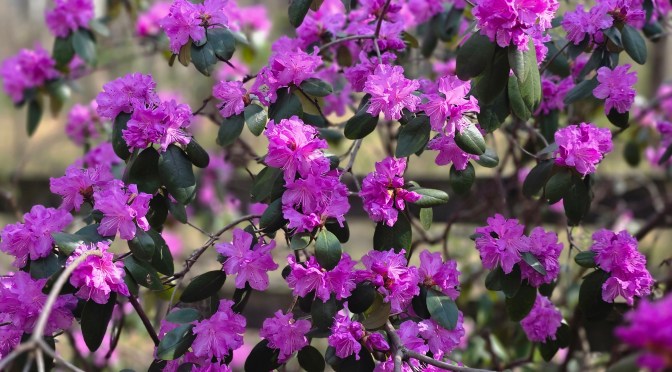
Last week, the world around me began to bloom. Mother nature pulled out her paint pallet and began to dab the Eastern U.S. in a thousand different colors we haven’t seen in months.
We aren’t the only ones who are waking up to see the new world. With every bud and blossom that emerges, so does another critter. To drink and feast on the sugars and chomp on the detritus in a dizzy display.
Two such critters that frequent our backyard: the bumbling bumble bee and the mighty paper wasp. For most insects that inhabit our backyard we tend to leave them alone to live as they will, but for some reason the paper wasps insist upon building their paper nests right by the door. Every. Single. Time. Then, they choose violence. I can’t say that they faired as well as they believed they might.
There may have been a lot of arm flailing and something akin to the Dancing Plague of 1518 before the humans claimed victory. I don’t say this with pride, although my skills are now legendary, but more as a frustration I feel toward the wasp. I wish for them to live and remain within the ecosystem (unlike my feelings towards mosquitoes – who can straight up return to the hell from which they spawned), but preferably live about five feet THAT WAY. Or that way. I don’t care which way, just…farther away from my door and sitting area.
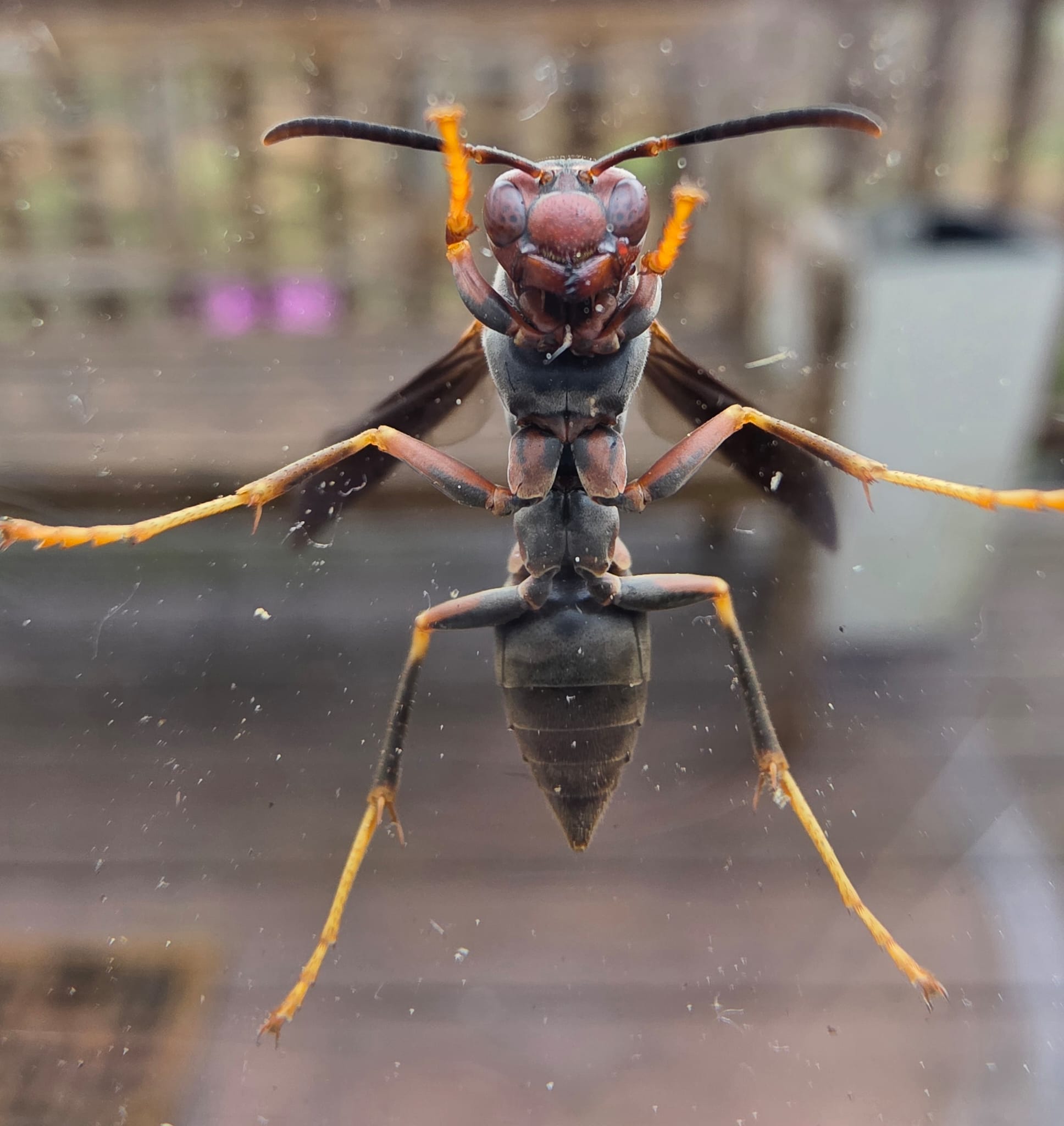
I’m not sure if this one below perished in the great Human – Wasp battle of 2026, but I do want to take a moment to appreciate her. She came to the window one day, splayed out and staring inside – or maybe not, maybe she was just resting and the window was a warm spot to land – begging for her picture to be taken.
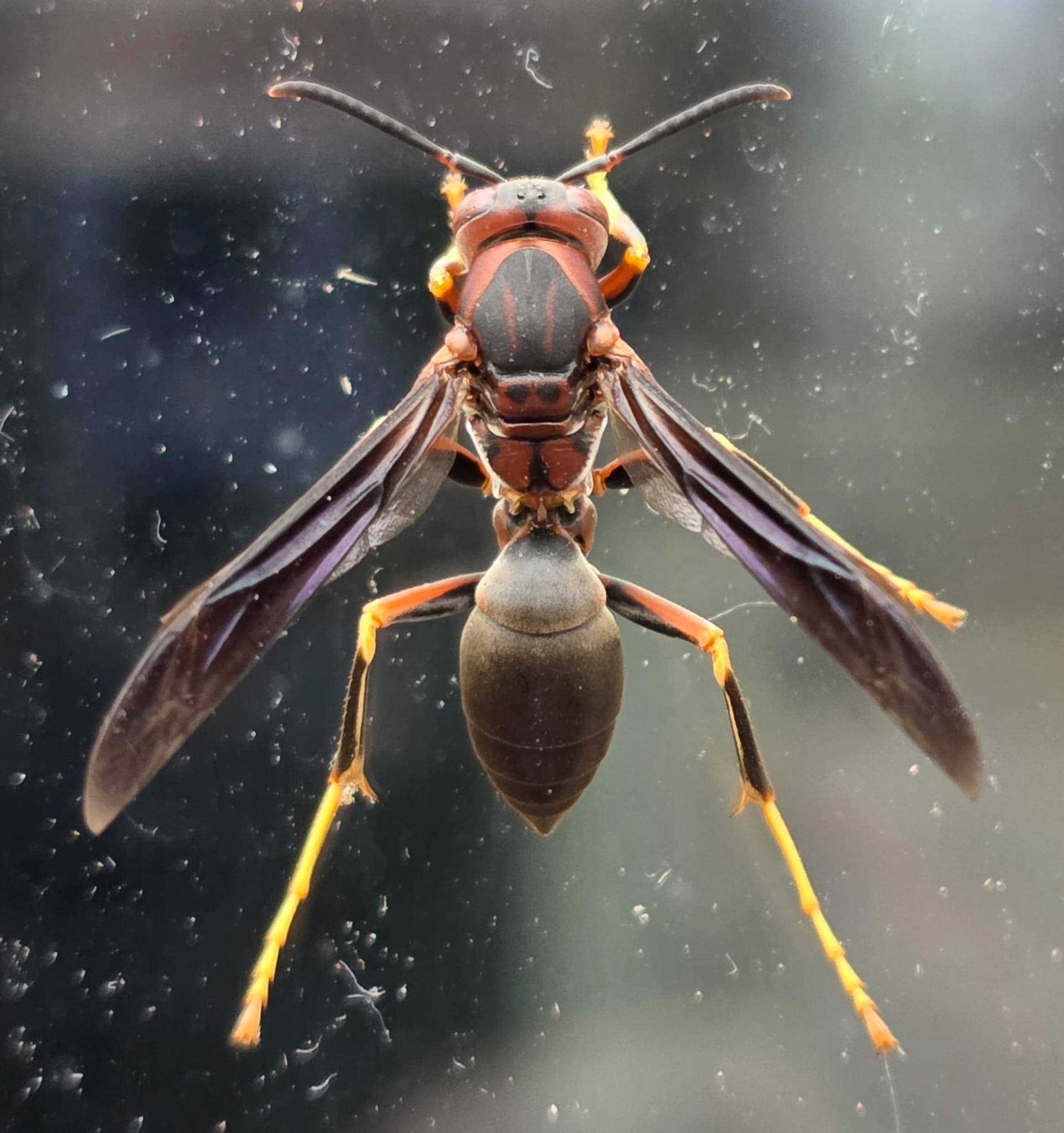
Some “fun” facts about the paper wasp: they live about a year, only the females can sting, and the queens, workers, and males all emerge in the spring. They build nests, then spend their time tending to the larvae, then die together in whole ritualistic death cult fashion (ok, not really that last part, but they do die together!)
The most interesting thing is that their vast color variation means they can recognize individual faces…and who could forget that face (zoom in to get a closer look)!
Meanwhile, my busy little bumble bee is busy being the cutest little chubby panda with wings, NOT inciting a war or disturbing the peace.
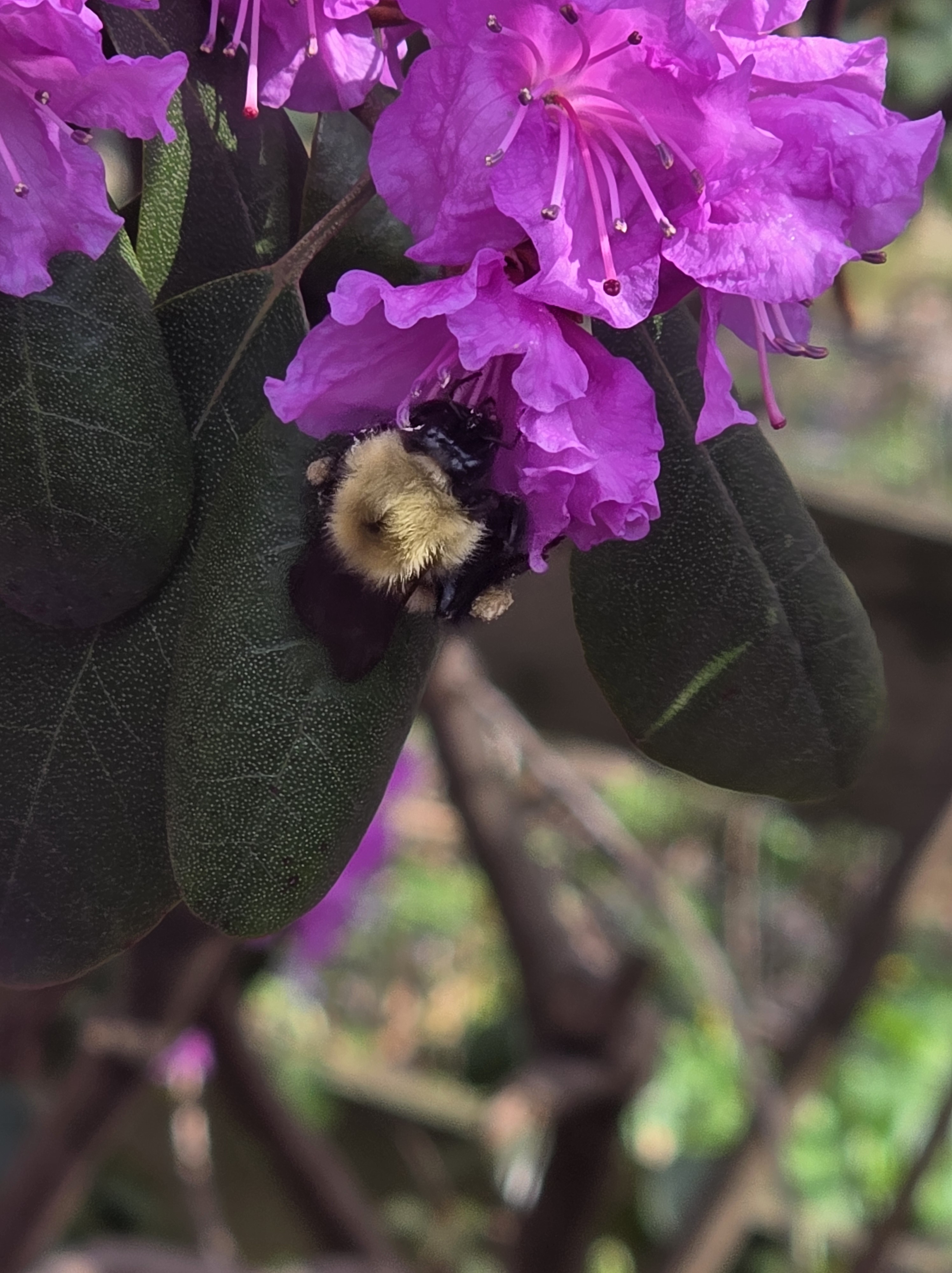
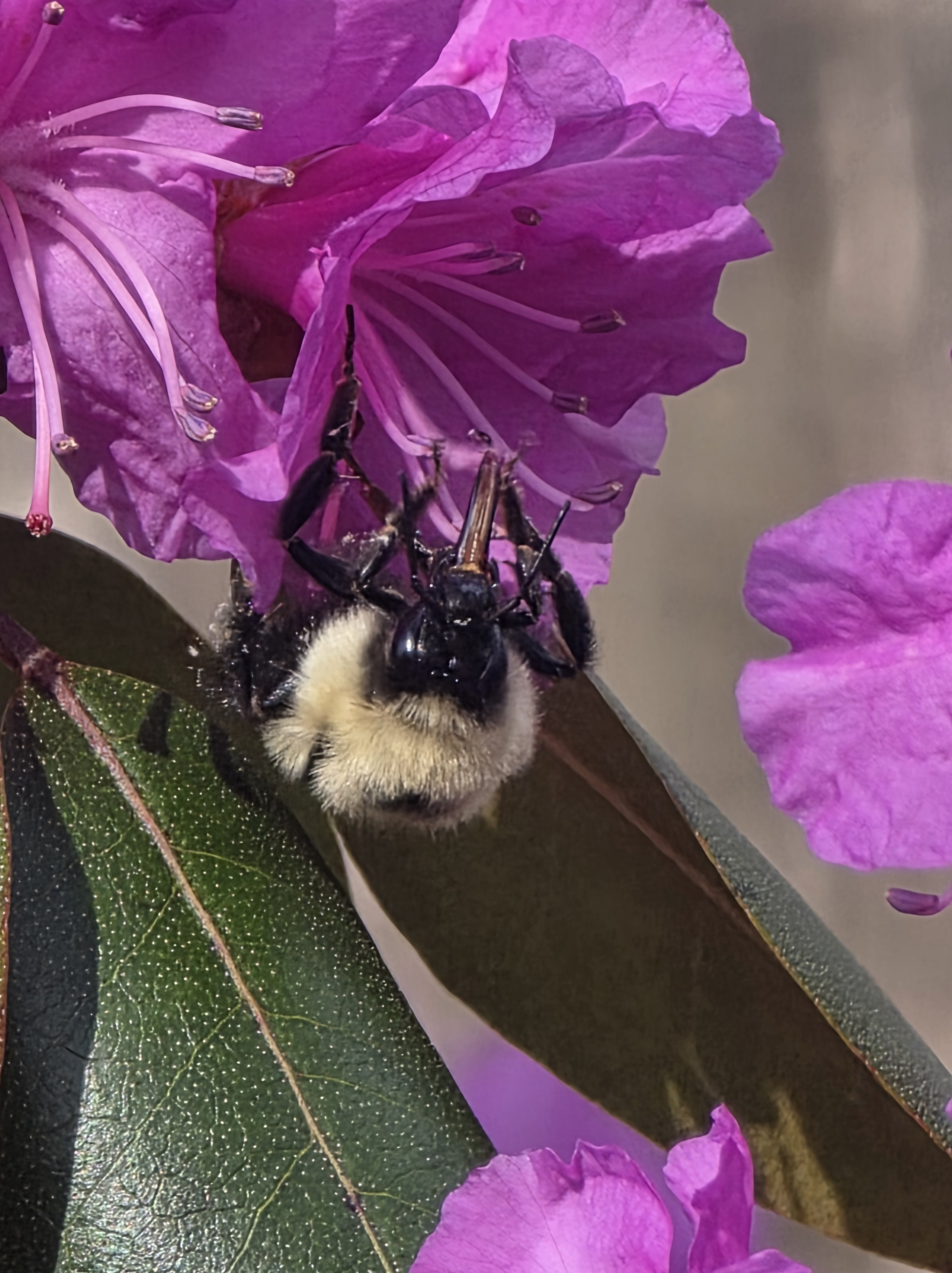
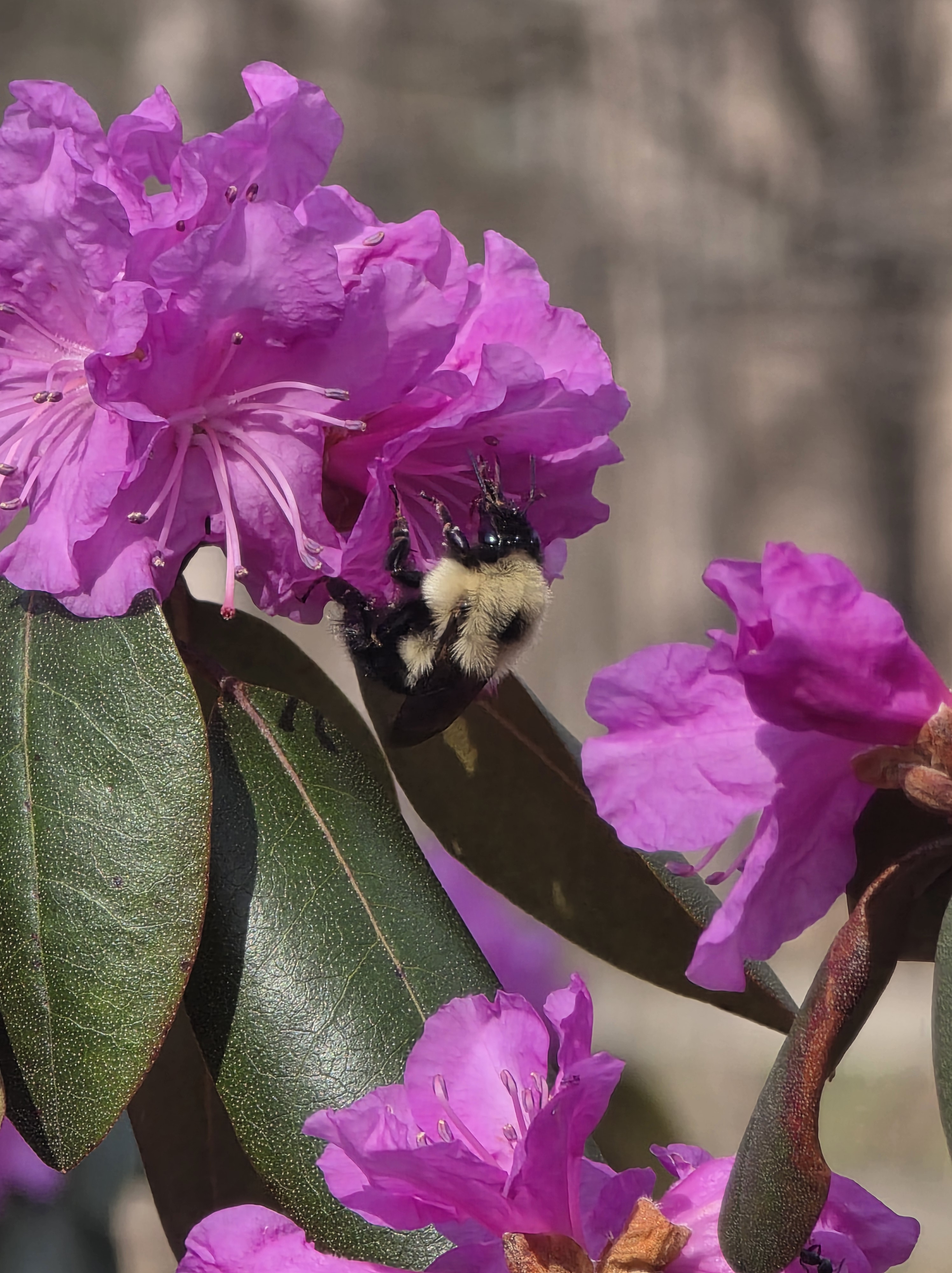
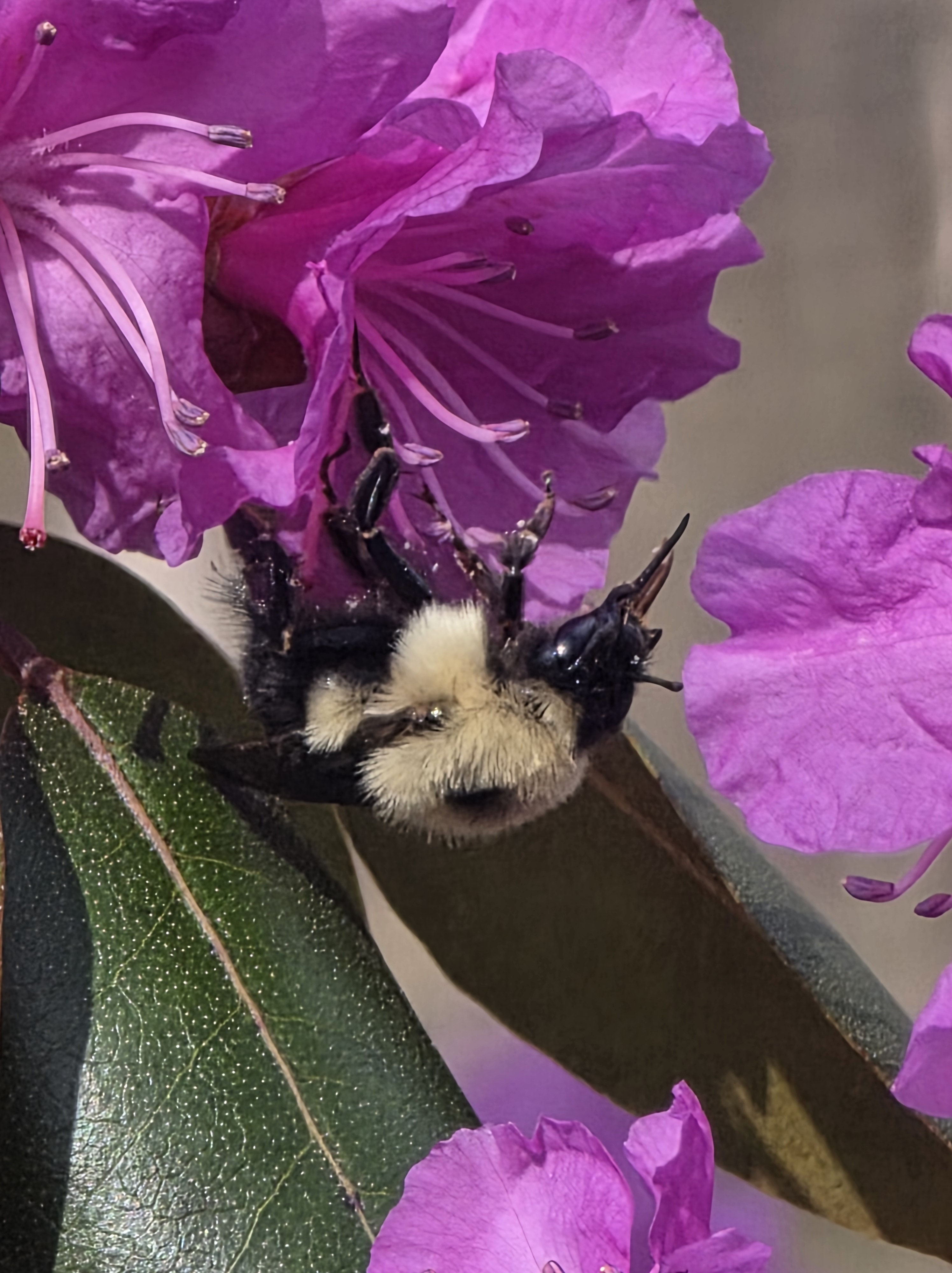
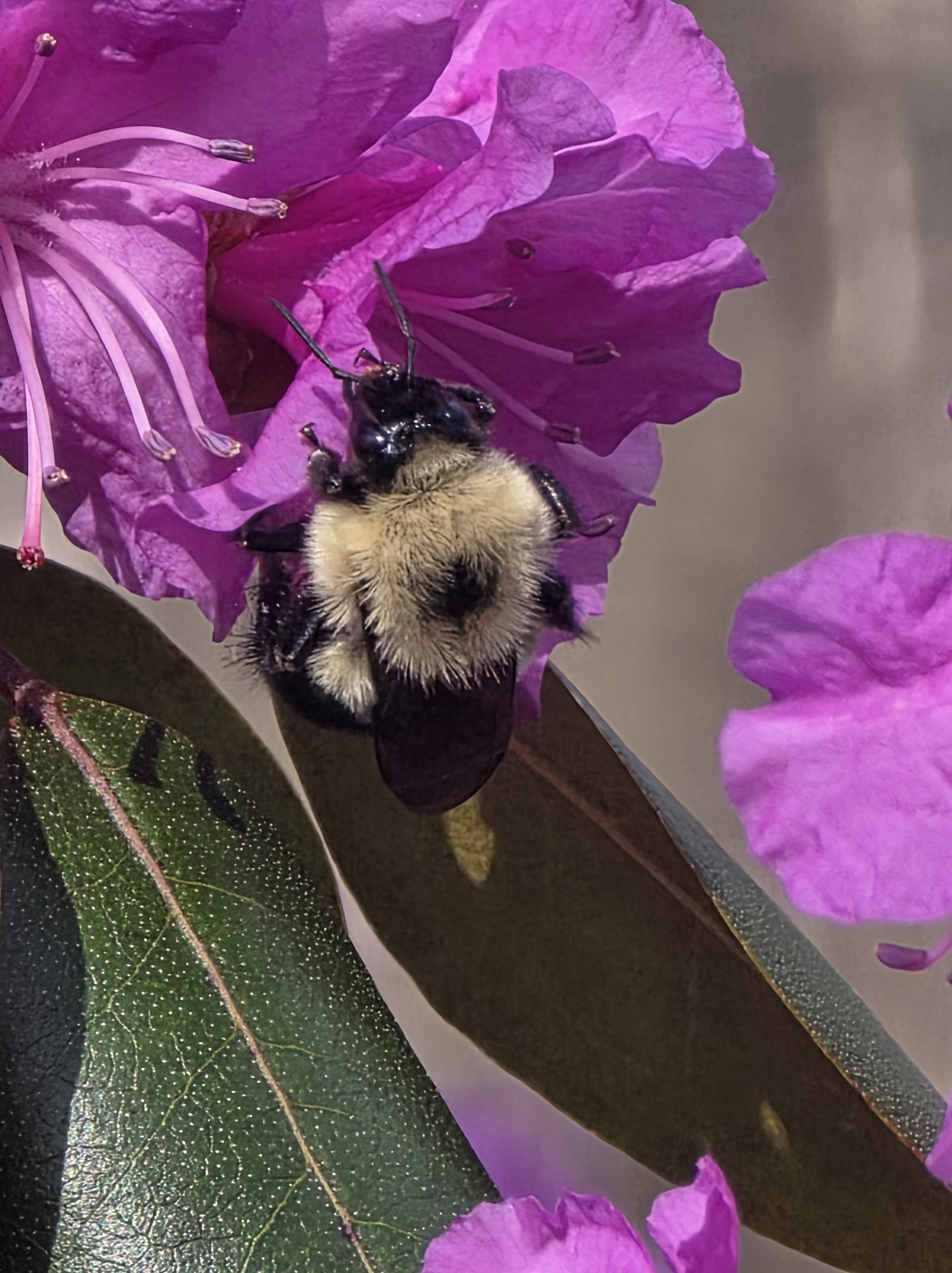
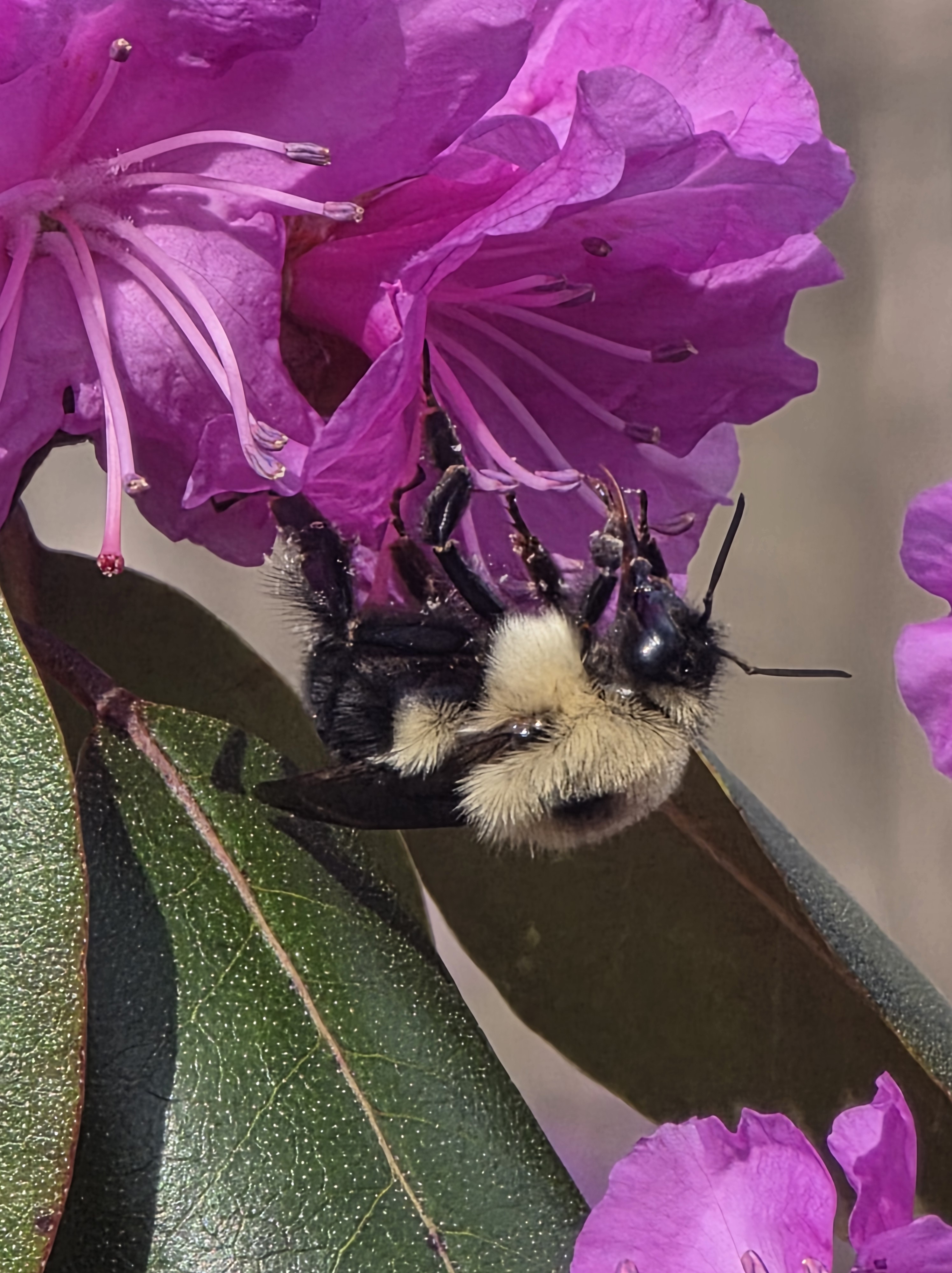
Some bumble bee facts: They do not have a barbed stinger like honey bees, so they will not die after stinging. That said, they are docile critters and only sting when threatened. Also, only the females have a stinger, like the paper wasp.
A note about conservation and biodiversity: everyone is always worried about the bees dying, but the bees that everyone seems to care so much about are the honey bees (why not…they produce something we want). Despite the risk of disease that can wipe out entire colonies, human threats, climate change, and other predators, the honey bee is not the concern. Neither is the paper wasp, for that matter. There are, however, quite a few bumble bee species that are endangered.
What can you do about this? Plant native, flowering species, give them space to build safe homes, and reduce (preferably, eliminate) your use of pesticides. Some great guides for creating your own certified wildlife habitat and how to get it certified can be found on the National Wildlife Federation site. Creating these spaces is helpful for all native wildlife, not just a single species.
One final fact to leave you with: there are about 4,000 native bees in the U.S. and about 400 here in Maryland. Roughly 1 in 4 bees is at risk of extinction and none of them benefit from human bee keeping or the honey industry – unless farmers are planting fields of untreated native wild flowers and clover. Now that spring is upon us and the weather is warming, go plant some things! The pollinators will thank you (ya know, in their own way).
Happy Spring (-:
Discover more from One Health Stories
Subscribe to get the latest posts sent to your email.


Very nice Desiree.
LikeLiked by 1 person
Thanks for the enlightening article! I had been viewing all pollinators equally, but now I know they have their own distinct qualities. Two things of the favorite facts (of many) that I learned from your article—I love that only females sting from a couple of types, and I didn’t realize that everyone’s wasps like to build near the openings in your house. For us, it was in front of upstairs windows. I wonder why that is? Circulation or temperature?
LikeLiked by 1 person
That’s a great question, actually. I need to look into that, bc the other nests we found last year were 1. By a window and 2. By the garage door. Or maybe they are just a**holes and want to harass us loll
LikeLike