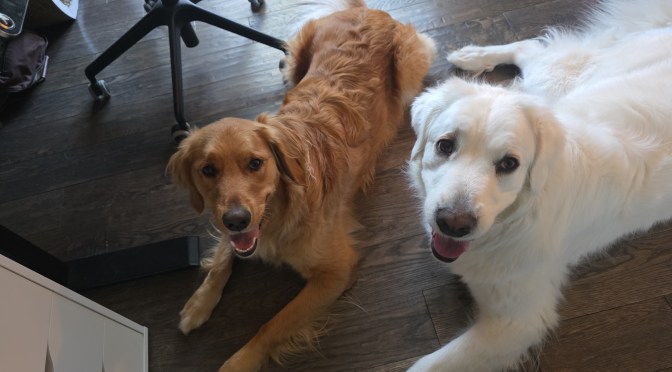
There is a lot of discussion around neurodiversity in humans these days – half my social media feed is now on late diagnosed women entering perimenopause – but is neurodiversity only a feature of the human brain? Can other animals have autism or ADHD? If they were dyslexic, how would we know or even test for it?
Our understanding of neurodiversity in the human population is still growing and evolving, yet we fall short so often, even rolling back helpful systems that were hanging on by a loose thread, poorly funded and unprotected. Politics are showing just how unstable our protections are. Even the terminology is problematic and the very word “neurotypical” is kind of misnomer. The purpose of the term ‘diversity’ indicates a wide range of differences amongst every human being, not just those who are “different” from what we consider the “normal” human. It stands to reason that we are ALL neurodiverse, and we should, instead, be focusing on what those differences are and how we can create spaces for everyone. But it also indicates an anthropocentric feature.
As more human development bleeds into wild spaces and our activities affect every part of our world and every ecosystem, there is an urge to move into a post-humanist perspective. Deconstructing the term (neurodiverse) and the diagnosis from one of human origin to one that is inclusive of all animals could provide a broader understanding for what it means to experience life. If we were to encompass the non-human world into our knowledge of neurodiversity, would the definition change? Would our approach to it change? Moreover, would we be forced to tap into a source of empathy and understanding we’ve long neglected?
One area this resonates most for me is in the concept of “dog training”. Most dog training out there is a standardized “one size fits all” type of training that claims some ability to turn your misbehaved dog into the dog you’ve always dreamed of having. The expected result is often the same for each, with the bare minimum standard that every dog “obey commands”. Now, I get the purpose… have polite pets. There are the features of training that are obviously necessary, such as keeping the pet and others safe and free from harm. No jumping on or lunging at people or other animals, no barking or growling, no running off or into the road to get hit by a car. Then there are specialty classes for agility, dock diving, off-leash, hunting, search and rescue, or service companion, to name a few, and these specialty courses often identify dogs who simply won’t succeed in those particular jobs or activities, labeling them as “drop outs”. Although, one article did suggest a possibility of providing some of these “drop outs” with new jobs more apt to their own specific neuro-needs, which I felt was a positive move forward.
Unfortunately, training often doesn’t explain the reason for the dog’s initial behaviour (or “failure”), accounting for why a dog might be responding a certain way. Even if they do provide a “reason”, it is often a simple rationalization for how we perceive the human-dog relationship should be (i.e. you, the “owner”, was not an alpha protector or you let them get away with certain behaviours). In other words, if a dog does not like to be pet, we find reasons that satisfy our need to portray dogs as a cuddly species that wants us in their space – man’s best friend – instead of even considering that touch might be overwhelming to them.
Furthermore, as humans, we like to place ourselves outside of the natural world and assume some higher station. We expect dogs and other animals to listen to us as we command them from our pedestal, but what if our commands cause them discomfort? What if performing feels like an itchy sweater or the whistles feel like scratching a chalkboard (sorry! I got myself with that phrase and now my hairs are standing on end)? A study by Morrill et al. identified only roughly 9% of a dog’s behaviour or personality was attributed to breed, while the rest was individual genetics. Independence vs biddability (the desire to execute commands) was one such trait that could be selected for by breed, but fear response, anxiety, sociability, and many of the characteristics we aim to alter or control in a dog were not part of the breed’s ethography (specific behaviours or innate, expected traits and habits of a species). One such gene potentially responsible for intraspecies neurodiversity in dogs was a gene linked to autism in humans (Shank3) whereby dogs with the same mutation displayed a low desire to interact with humans.
Tarragnat uses the term ethodivergent to describe the ways a species might contain variability and diversity of traits both within the individual and within the whole species, a parallel to neurodivergence in humans. He points out that:
…ethodivergent beings often counter the humanist behavioural norms imposed or expected from one’s species or community in a given context. Consequently, they tend to face ethonormative violence: horses who refuse to obey their riders and depressed or fearful cats who resist being petted and may even attack humans are often abandoned or euthanised. (Tarragnat, 2025)
This is important when we consider animal welfare and animal agency. While we do abandon humans who do not conform to what is “normal” or expected, imagine if we also euthanised them? It is not to say we should let our pets misbehave, bite, chew, or run amuck. Rather, I would argue that we should be considering if our furry companions will even thrive in certain situations by understanding their individual needs, the same way we do for our human children. This might possibly be just as important as the training we provide to keep them safe in our human societies.
Personal examples
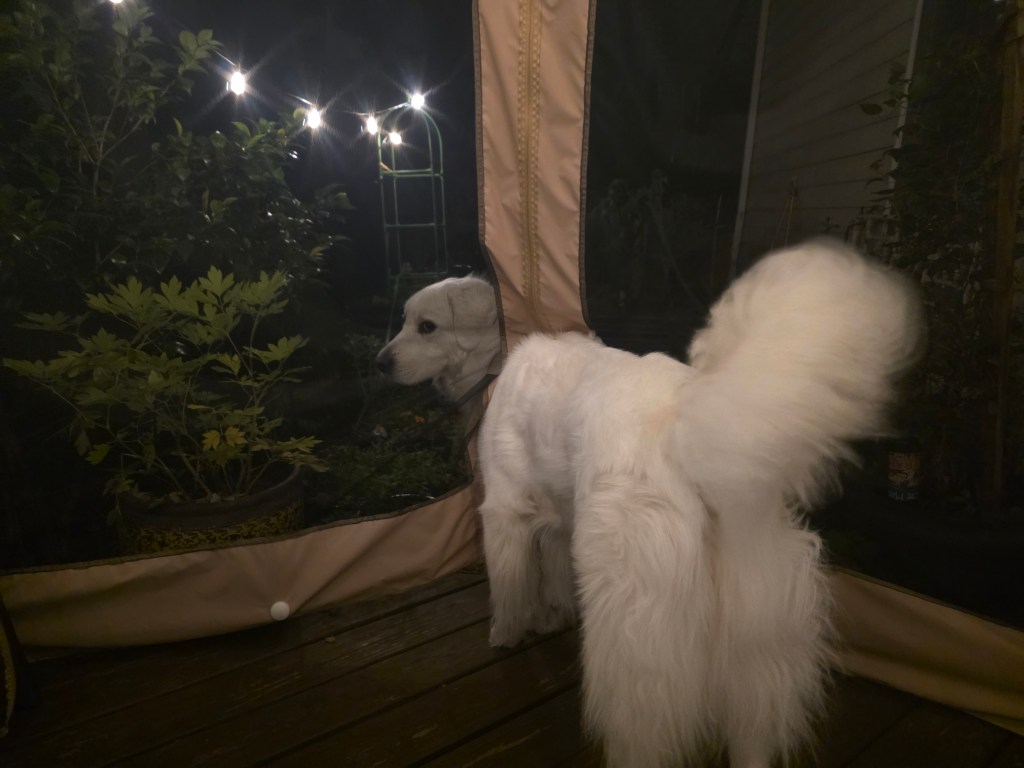
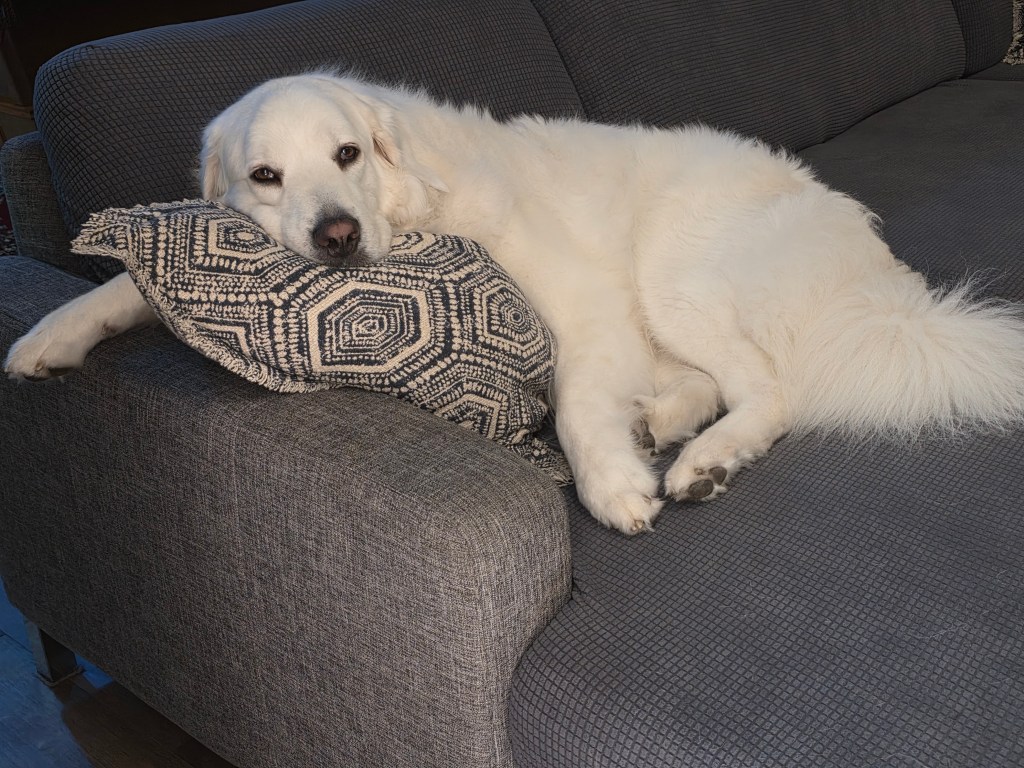
In our home we have two dogs – one is an English Cream Golden retriever (but we highly suspect she is half great pyrenees because there is no way this girl is pure GR):
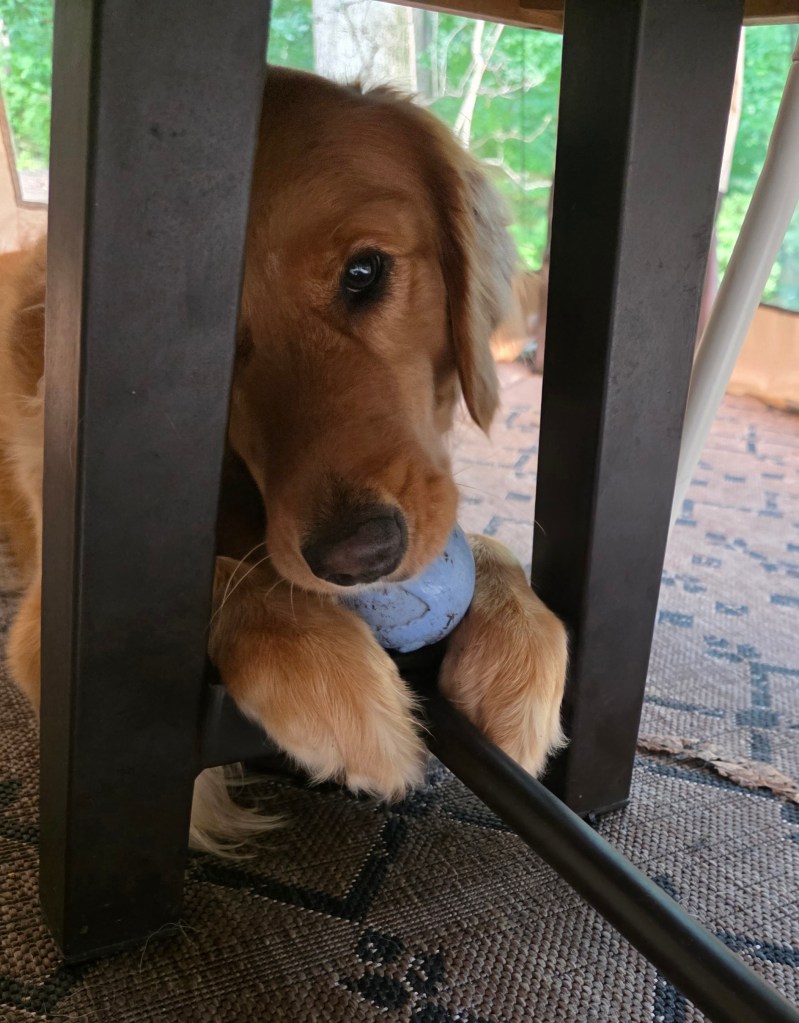
The other is a golden retriever, specifically a “field golden”, which is just a term to describe the goldens who were bred as hunting dogs as opposed to the American Standard “show” golden. The differences are mostly outward, aesthetic phenotypes and unimportant to this conversation.
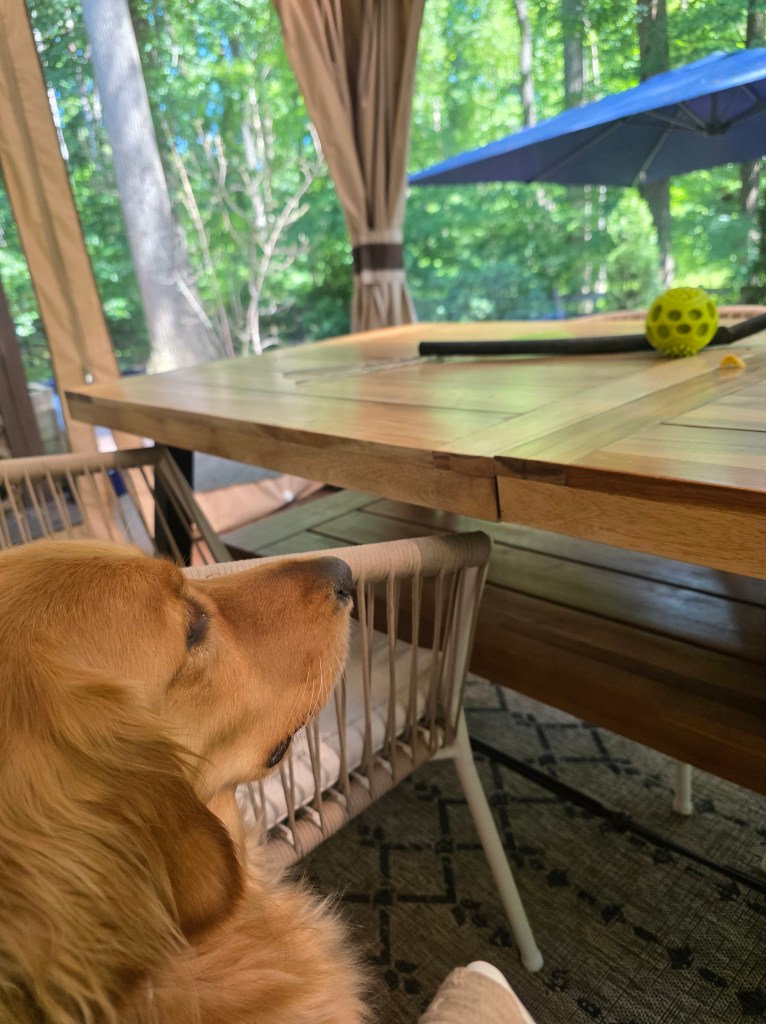
Each of them is unique with their own behaviours, likes, dislikes, anxieties, and silliness. They prefer different games, require different levels of physical affection, and have completely different fears. They also have different openness to various situations. For instance, our great white floof loves cuddles from me, tolerates them from others, but won’t seek out physical affection. Our fiery redhead, on the other hand, would probably respond well to a weighted blanket with robot hands for pets. She relentlessly harasses all human company until she successfully cons them to sit with her and pet her for hours.
Our (field) golden is also unyielding when it comes to her ball, wanting to repetitively play with it, stares at it until you pick it up and throw it for her, and grows ever more belligerent in her attempt to force compliance in the human ball-thrower. The suspiciously large, white golden is cerebral and manipulative and her play style seeks novelty and rules that are always changing (which is exhausting). I’m not saying that one has autistic traits while the other resembles a child with ADHD, but I am saying they are very neurodiverse. If we are to believe they are both goldens, then we have to assume that very little of their personality is attributed to breed. Now, I did admit a strong suspicion that the giant polar bear is maybe not all the “breeder” informed us on, which makes this an imperfect argument, but the point is not about who they are within their breed, but who they are as a whole.
For instance, the yeti learns tricks, words, patterns, and commands very quickly, but requires payment for her services – spins and sits are not free. The little otter, however, feels impossible to train at times, but is so eager to learn and figure out what you want. She loves to please, but is too excited to listen. They are amazing companions who can sometimes get overwhelmed in our human spaces, which does not mean we should use human therapies and logic to soothe them. There is reductive thinking in most of our methods for existing alongside non-human family members.
My Takeaway
The more we commune with animals outside of the human realm, encroaching into their spaces and interacting with them, the more we see, experience, and feel how similar we are to them. Endless videos of cows cuddling their human companions, donkeys playing with toys, or wildlife, such as foxes and bears, lingering near human dwellings when they are injured or starving, brings a different reality for these other-than-human animals into our minds. There are the ways we expect them to behave and the reasons for why we believe they might be “abnormal”, always anthropomorphizing them when they please us or dehumanizing them when they upset us when the reality is much more nuanced.
It is my hope that one day we see animals as individuals – unique beings containing multitudes who also belong to a larger organisational structure that is their given species.
As for my girls – it is quite apropos that our family should have two canine companions with so much [neuro]diversity. In the end, we chose each other, and that seems rather apt. They could have avoided us when we came to meet them, but they saw the chaos in our eyes said “those humans, there – that’s the family I want” – then curled up in our laps.
Discover more from One Health Stories
Subscribe to get the latest posts sent to your email.

