
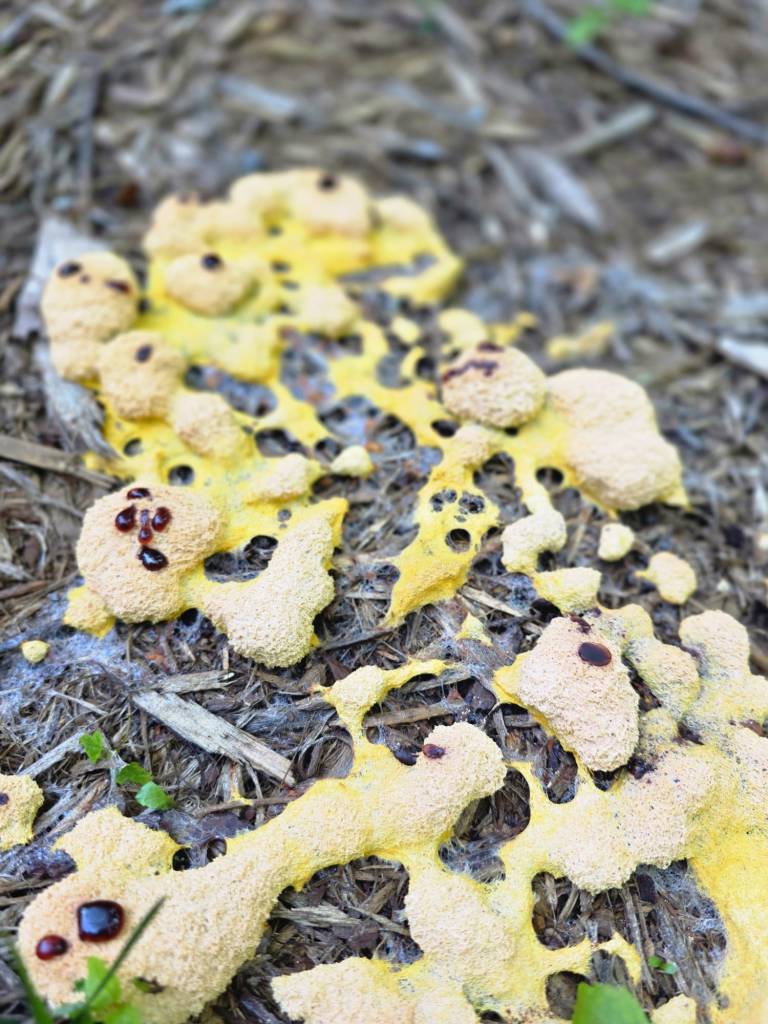
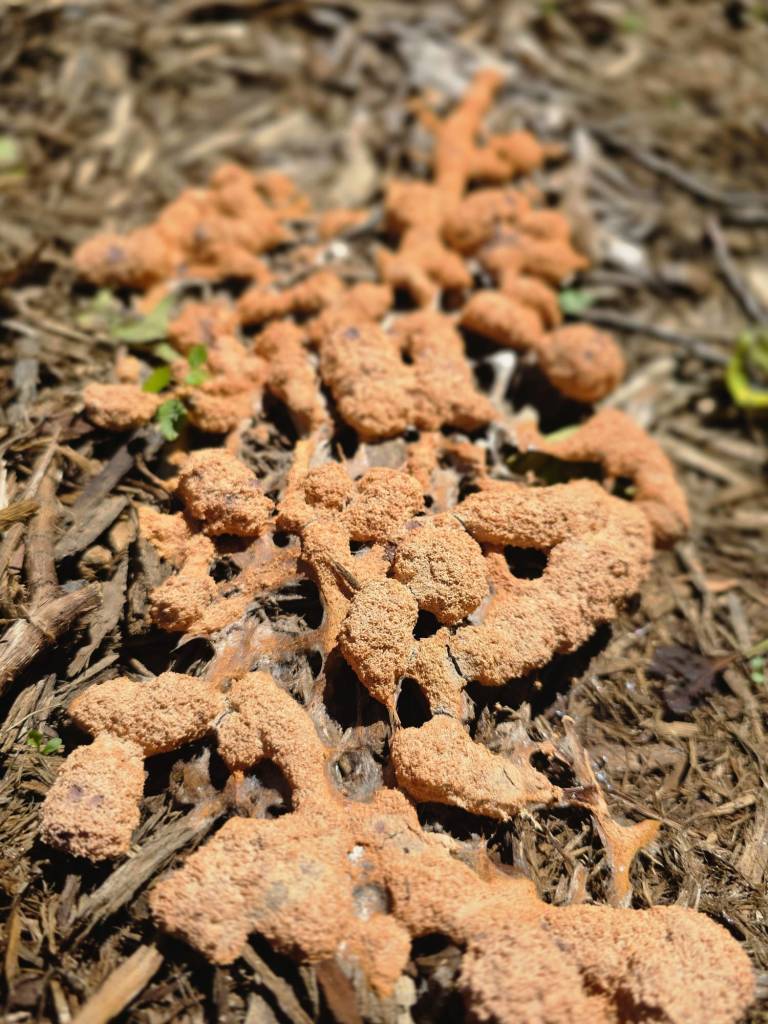
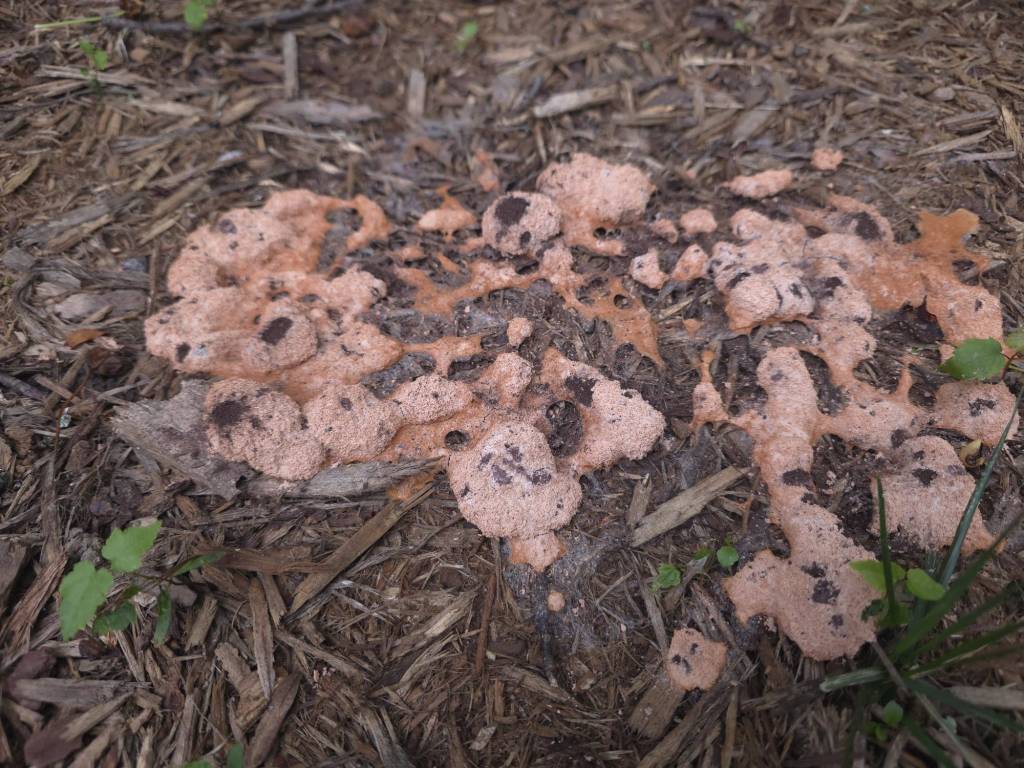
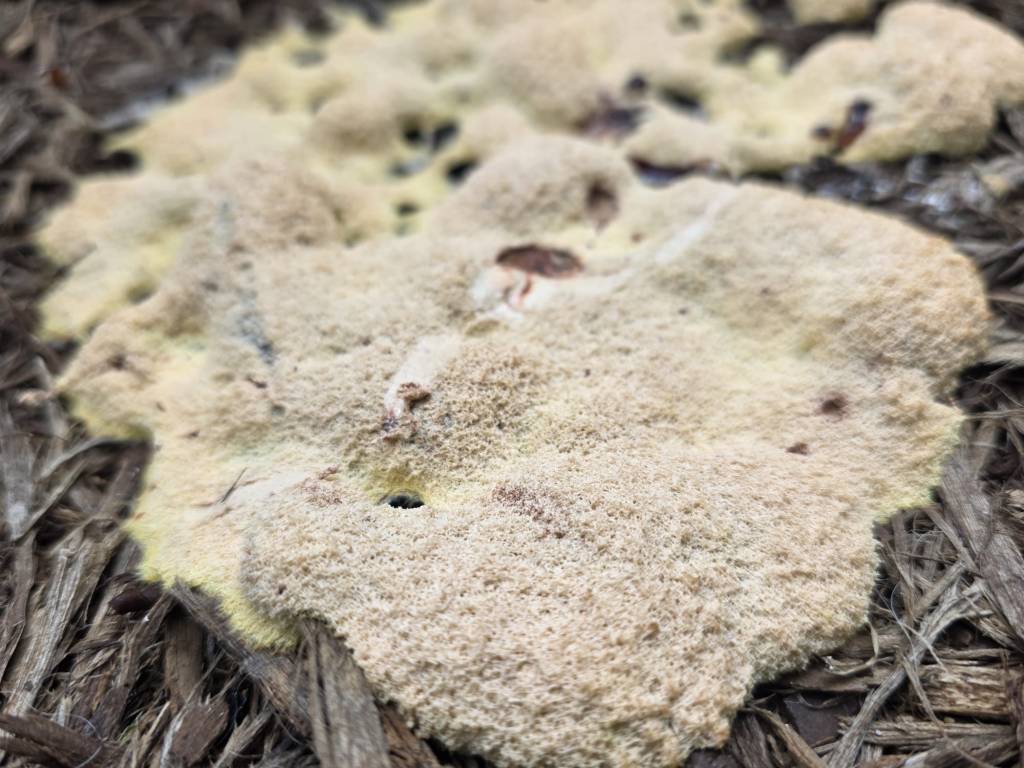
First there was one pile. Then a second. A third, fourth, fifth….I’ve lost count. I’ve stopped paying attention to how many piles I am finding, and have grown more interested in the color changes this life form is experiencing. From yellow to orangish to white. This extra terrestrial looking creature seems to bleach in the sun like coral in the reefs. It even looks like coral – well, up close it does. When you see it splattered about in a pile when it first appears, it definitely brings to mind the look of bile and foam that’s just been hacked up by your canine companion. The species: colloquially known as Dog Vomit Slime Mold.
What the hell is it, and why is it spawning all over my backyard this year, when I’ve never seen it before in my life?!
First off, it isn’t dog vomit and it doesn’t spawn from dog vomit, it only shares a similar appearance – sort of. The scientific name is Fuligo septica and comes from the phylum Amoebozoa (amoeboid protists). Referred to as “bark flower” (fleur de tan) by the French and “septic mucus” by the Swedes, it thrives in warm, moist climates (which we have had an abundance of lately with this heat wave and rain) and where there is mulch and decaying matter (which we have in spades in our backyard). It feeds off of decaying, organic material, certain bacteria, and some fungi (which we also have a lot of! See my mushroom post).
Here it is, looking all bright and sunshiney, matching the summer vibes. Were it not for the fact that I’ve cleaned up way too much dog puke in my life, I might see what the French botanist saw…but no.
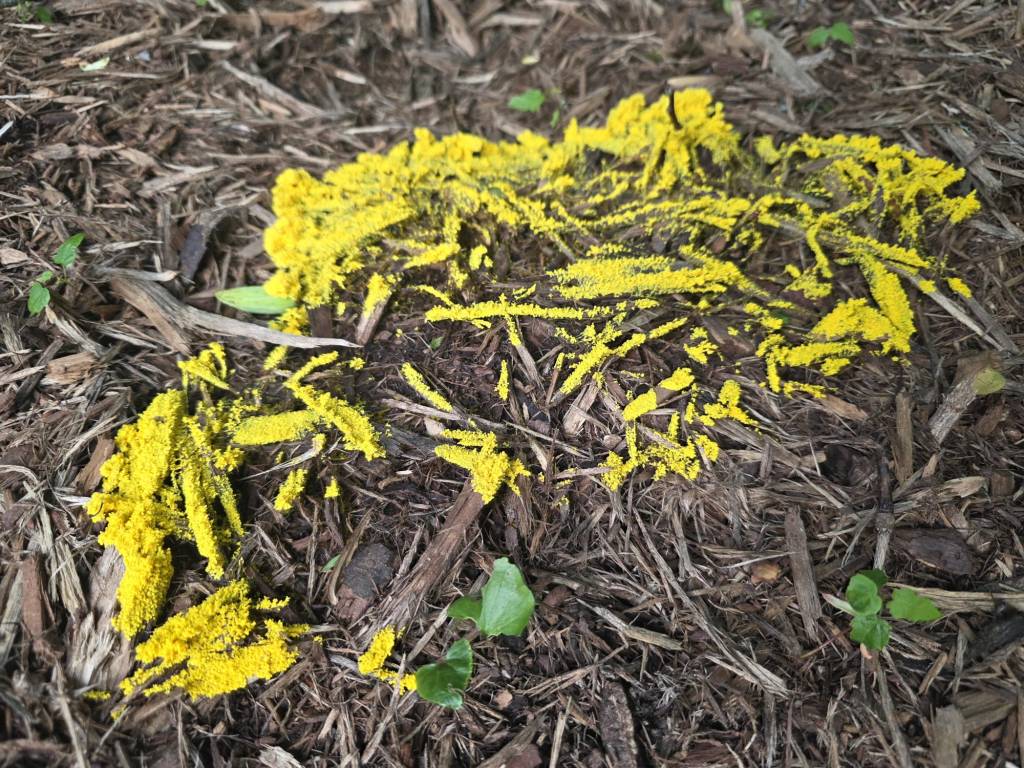
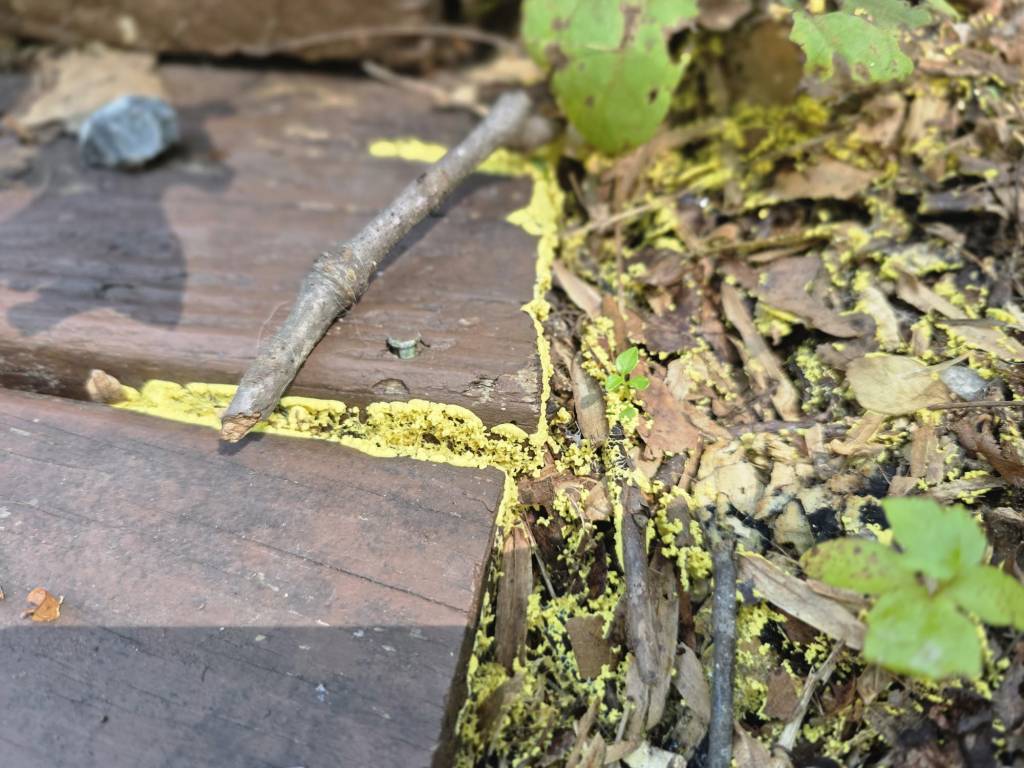
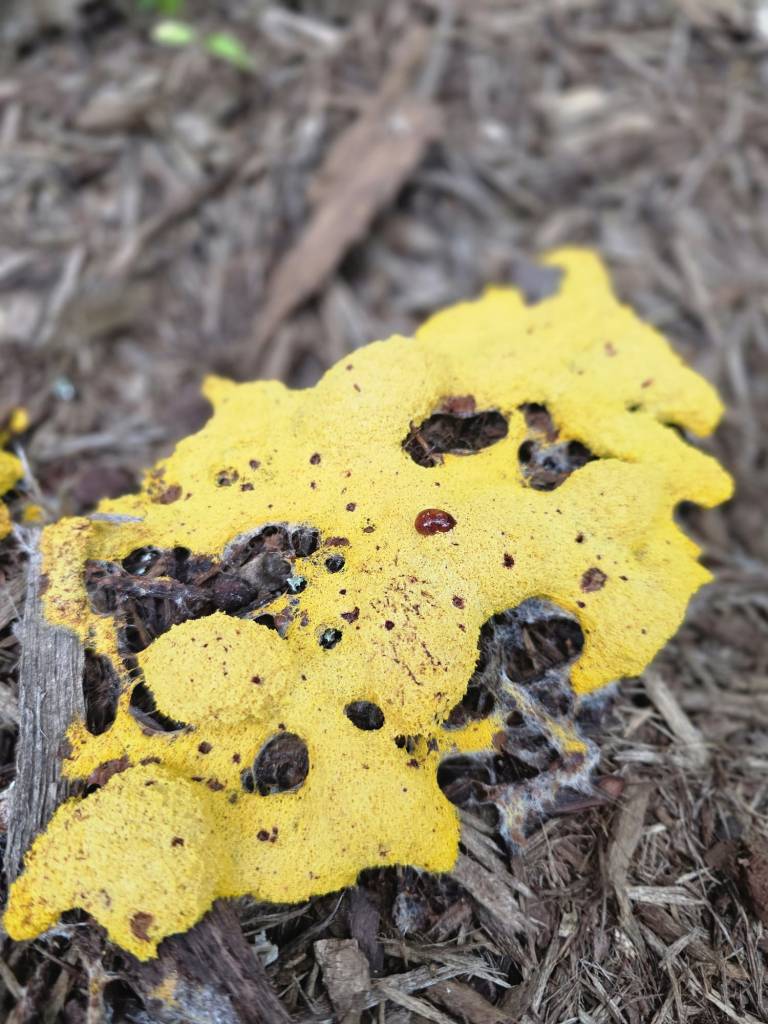
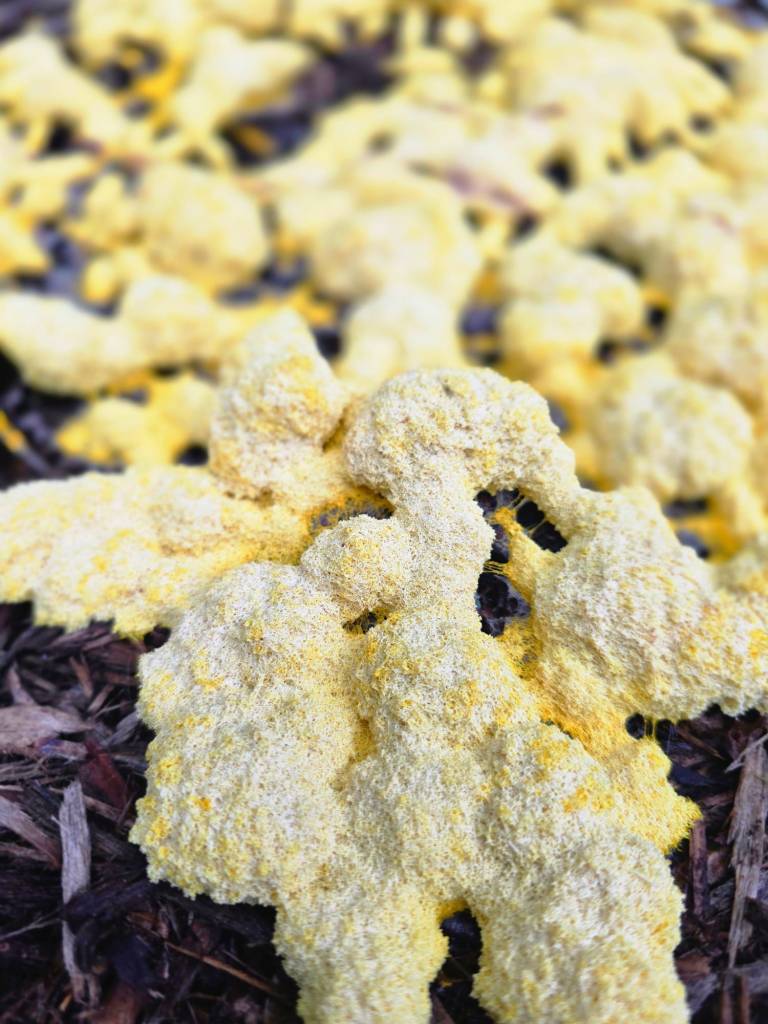
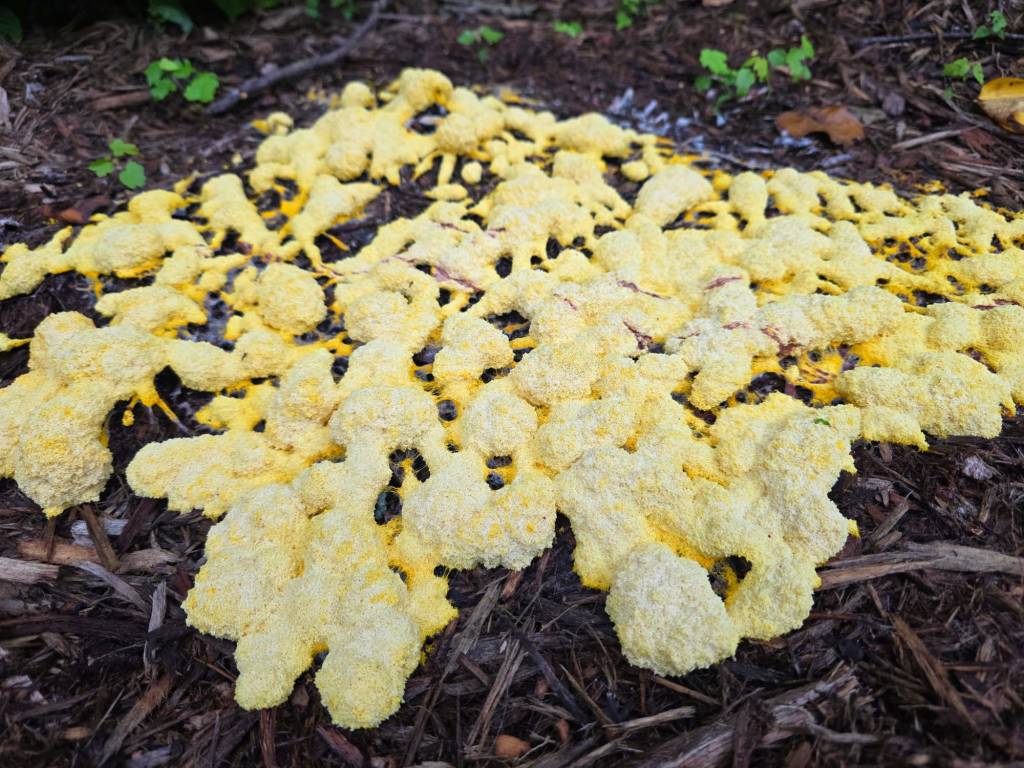
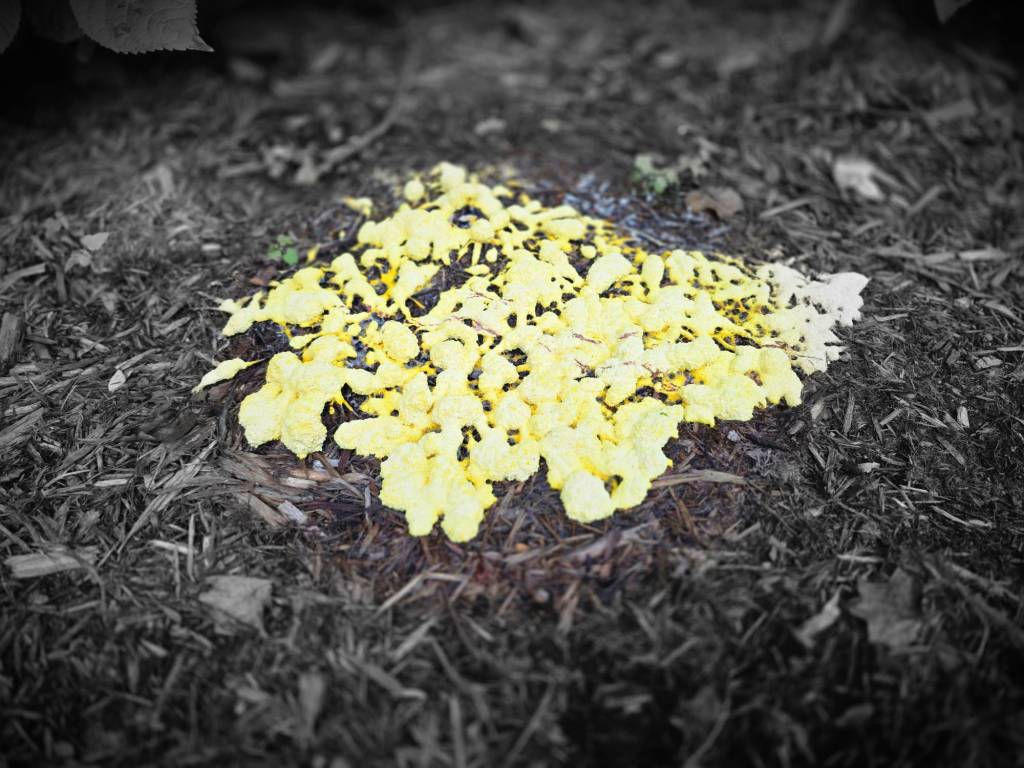
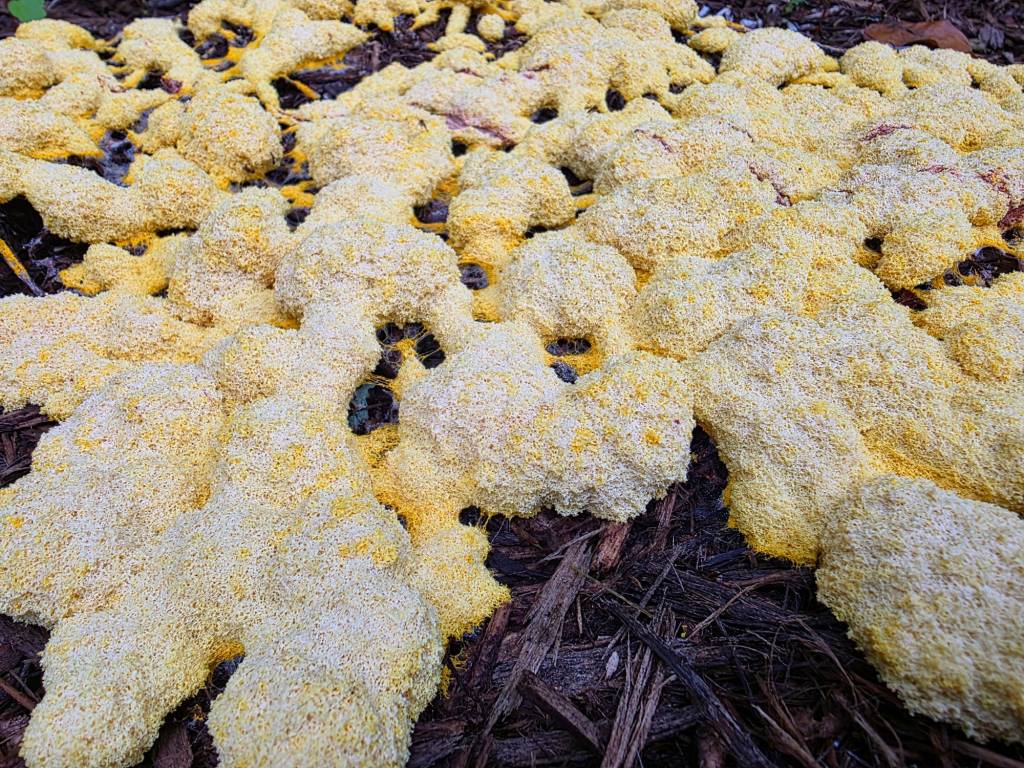
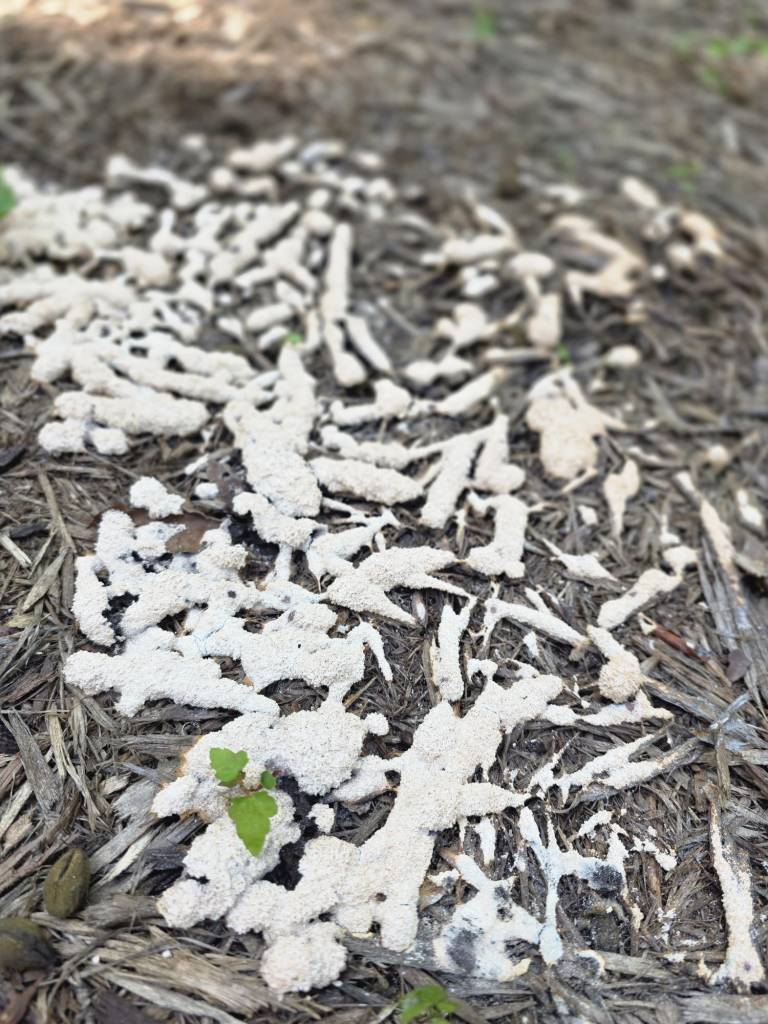
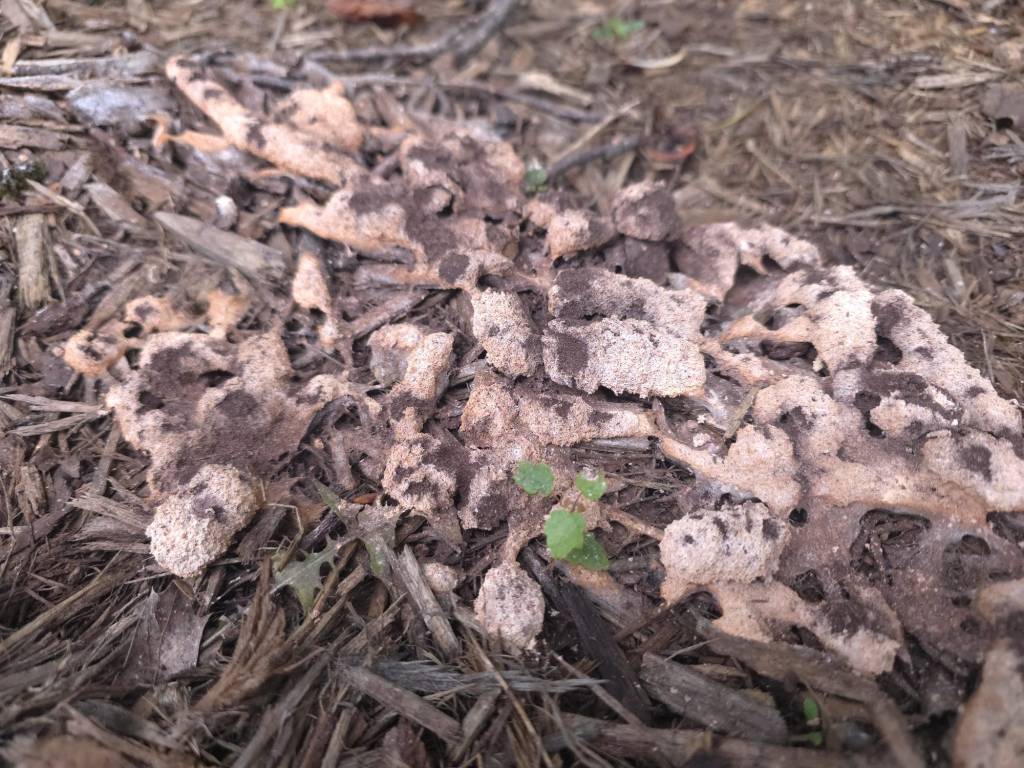
Then I started noticing it turning white after a while, which is why it made me think of bleached coral. It is like a maze of calcium deposits on the forest floor. (Fun fact: this stage of the slime mold here likely is showing off the amorphous calcium carbonate it produces, probably after it had been exposed to the direct sun for hours.)
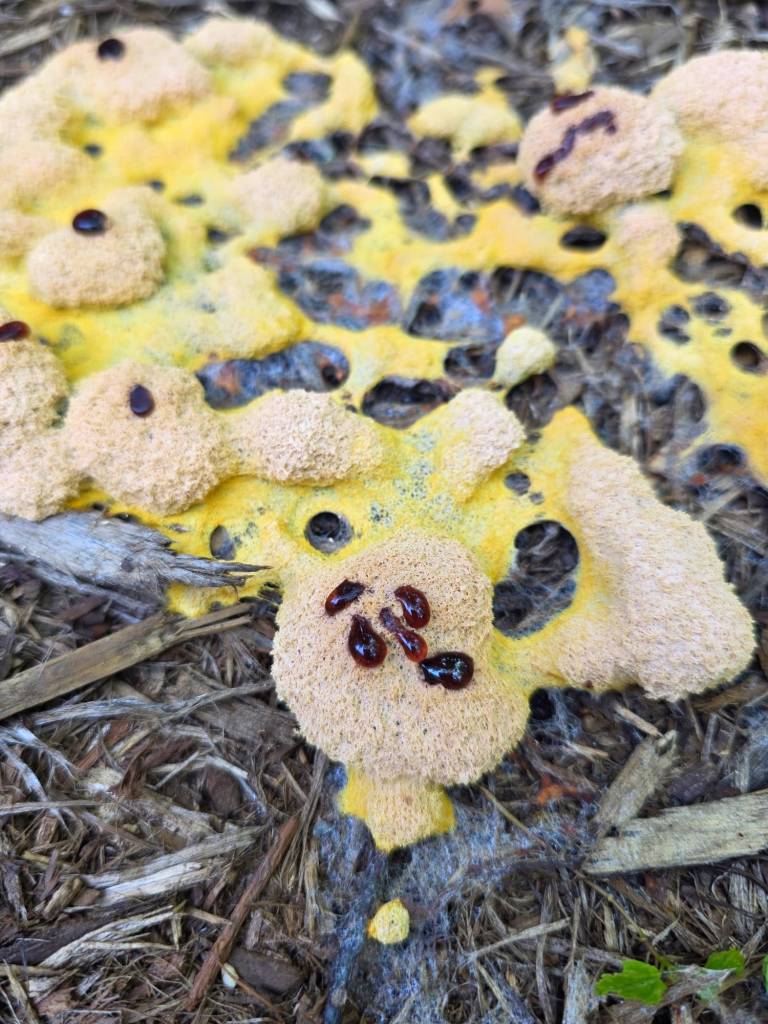
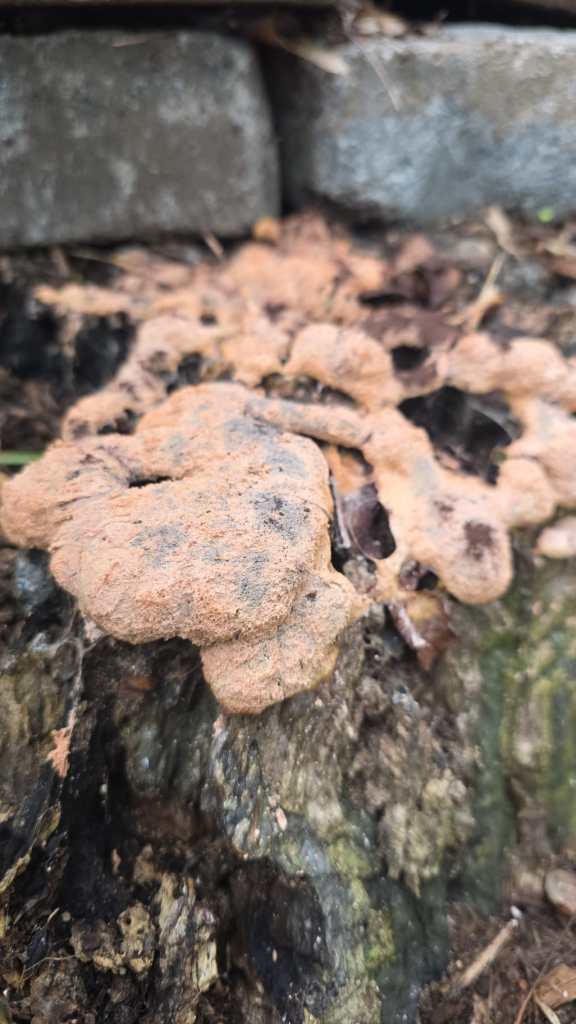
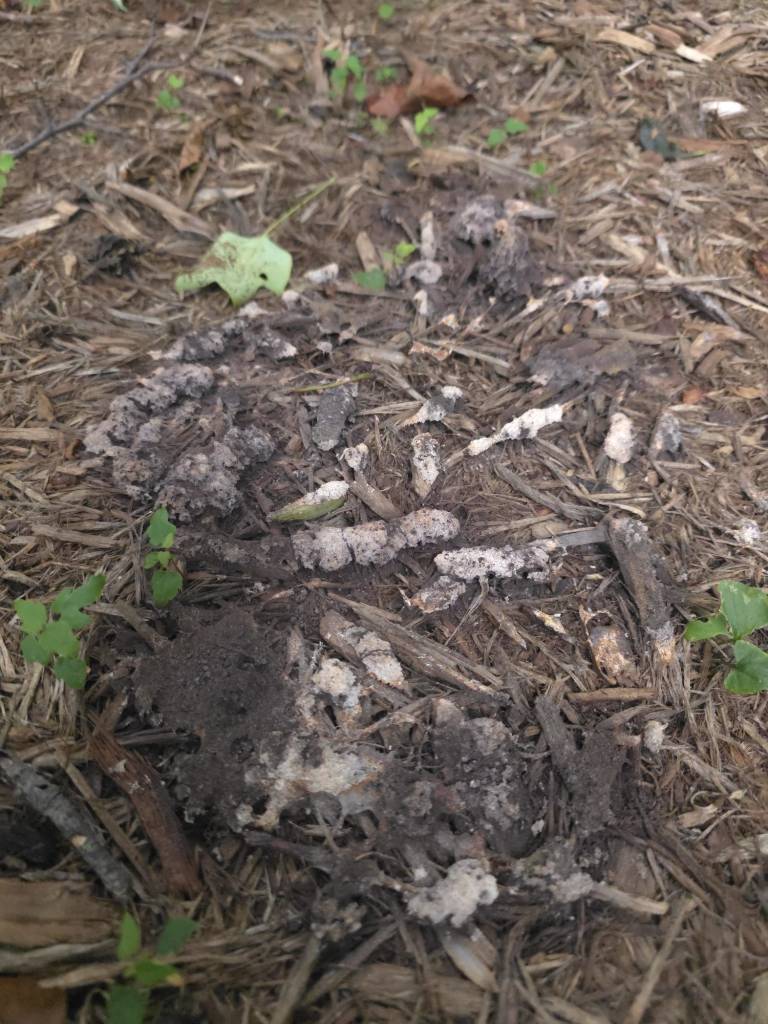
This wild being begins in a plasmodial form, slowly (VERY slowly) oozing around the forest ground, gobbling up dead stuff like a Roomba, if a Roomba were more semi-fluid-like and had a penchant for decaying matter and not the gobs of hairballs floating around my house at the moment (thanks, Sierra). Eventually it ages out, turning an orangish to brown color, releasing spores in a more powdery form, as seen below:
The most interesting things about slime molds, however, are all of the amazing chemicals, compounds, metabolites, and other molecules this family of organisms can produce. Studies (although not nearly enough of them) show an incredible level of cytotoxic and antimicrobial compounds as well as inhibitory properties against certain fungi, and its ability to increase the efficacy of other antimicrobial compounds. Research into the benefits for human medicine has slowly been evaluated over the years; however, little (yet promising) efforts have been made into understanding slime molds in agriculture. It was suggested that some of the compounds they produce help protect plants against pathogens and could potentially be a natural replacement for synthetic sprays.
Using it in its natural form (allowing it to grow in an environment), however, might prove difficult, as it might not survive in all climates, which means isolating the compounds from the slime mold. Either way, in my latest experiment of allowing my backyard to shape into a wild, natural (yet somewhat controlled) landscape, I’m finding the biodiversity increasing with every season. Not everything that has taken hold in my backyard is aesthetically pleasing (by my eyes) or particularly harmless to us and the dogs, but you can’t deny how fascinating it is to see one species appear shortly after the emergence of another as though they need one another to thrive. I can’t wait to see what presents itself next!
Side Quest: I wanted to name this piece “This is Not a Vomitorium” when I learned that vomitorium is not at all what I thought it was. I’ve spent my entire life thinking Romans were basically living a bulimic lifestyle, with a fancy room to vomit as a community.
In case you also didn’t know, the real definition is super boring, unless you’re a fan of architecture or historical buildings – it’s just the passageway in or out of a stadium, named a bit after purging, but more in the way people spill out of a stadium after a show. Boring!
Discover more from One Health Stories
Subscribe to get the latest posts sent to your email.


Great, descriptive names for that slime! I would have called it a mushroom and not realized how complex it was. I admire how you kept from poking it with a stick so that you could watch it change over time.
LikeLike