

At first, you might hear the term “food desert” and assume it has more to do with the environment’s ability to support crop growth. Not to worry, humans have made an impressive commitment to growing produce and livestock in unlikely places – often to the detriment of said environment.
No…rather, a food desert has to do with an individual’s access to fresh produce and healthy food. The problem with the term is the subjectivity behind it. Who is defining what a food desert is and for what purpose? Often, as is here in the U.S., the government tends to define terms and assign the parameters, usually for the purpose of building policy. As a result, they often end up leaving out several factors of consideration.
- How the U.S. Government Defines a Food Desert
- What’s Missing?
- My One Health Take
- Wrapping Up
- Maryland Resources
How the U.S. Government Defines a Food Desert
So, as for how the USDA, Treasury Department, and Health and Human Services define a food desert is as follows:
Low-income census tracts with a substantial number or share of residents with low levels of access to retail outlets selling healthy and affordable foods are defined as food deserts. A census tract is a small, relatively permanent subdivision of a county that usually contains between 1,000 and 8,000 people but generally averages around 4,000 people. (Taken from the Economic Research Service page, USDA site)
It’s a pragmatic definition that reads like a data point for a bureaucratic urban planning play book, checking off the boxes of each stakeholder in vague terms. Not to disparage urban planners by any means; but the humanity is missing from this definition. The metrics by which the Federal government measures a “retail outlet selling healthy and affordable food” is a supermarket that accepts SNAP (Supplemental Nutrition Assistance Program) benefits and has earnings of around $2 million and contains each of the major food departments. The metrics by which they measure accessibility does consider households with a car, access to public transit, or varying degrees of proximity to such stores, should it necessitate walking.
What’s Missing?
Measuring these factors and defining a food desert does not, however, solve the problem of their existence (to see if you live in a food desert, feel free too play around with the mapping tool here on the USDA site). It also fails to consider, as I’ve stated before, the humanity. In other words, they don’t ask the following questions:
Are the super markets open 24/7 to accommodate shift work?
Do they carry culturally appropriate foods for the respective communities to which they belong (remember when we were a Nation proud to be a “melting pot”)?
Do they have diet-specific foods (i.e. gluten-free, sugar-free, dairy-free or other allergy/food-sensitive alternatives)?
Is the public transit efficient, or just merely “existent” (even in Germany we waited on delayed busses, out in the cold or rain)?
Are the markets managed properly and well-stocked to support the local population? This sometimes means bringing in products before snow closes the only road into a community.
Are they ADA accessible (i.e. wheelchair accessible, equipped with brail, or allow service animals, etc.)?
Are the shelves predominately lined with ultra processed foods, high in sugar, salt, and refined carbs, made cheaply, and with low quality ingredients? Or are there healthy options that factor in dietary restrictions and diversity of produce (tinned or fresh)?
Much of the global population lives in urban centers and is therefor land poor, which means no access to garden spaces. Much of the global north is also subjected to seasonal fluctuations and western societal demands, meaning a dependency on weather patterns and a time deficit for tending and nurturing a garden. As such, there is a strong dependency on grocery markets. With so much of them brimming with ultra processed foods, it is no wonder there is a myriad of health problems and diseases that are directly related to diet.
Adding to the burden, these diseases are concentrated in higher proportions within minority groups and poor communities, which is obvious given their poor access to fresh, healthy food. Unfortunately, they are also the same groups who have difficulty accessing quality healthcare – both in terms of physical proximity and affordability. America, and many other places in the world, essentially punish people for being poor. We blame them for their situation while simultaneously setting them up for failure, health problems, and reduced well-being. (For a slightly deeper dive into food deserts, I recommend this page by the Annie E. Casey Foundation).

My One Health Take
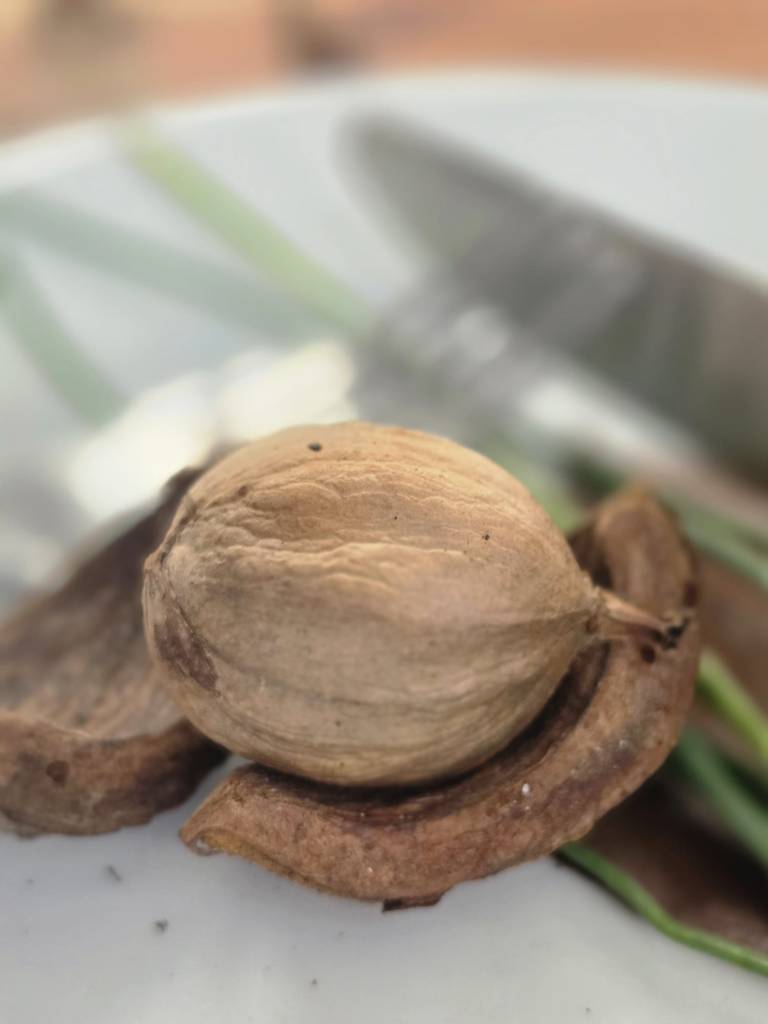
Whilst the concept of a food desert is a human focus, it isn’t without its burden to the animals and the environment. We have even colonized the lands and the food systems to the point of starvation in a land of abundance. I have never seen anyone harvesting the acorns and black walnuts that drop in my neighborhood and are inevitably sucked up by the street sweepers.
The economy is another factor. I do not live in a food desert, as it is currently defined; however, I am living firmly within a strained economy suffering from extremely high grocery prices, despite access and abundance. Then there are the ethical considerations. If I go into a high end market that claims to sell ethically sourced meats, produce, and fair trade staples, the cost is more staggering than the price at an “average” store for such items. If I walk into a discount grocery store, the prices are visibly lower and my final cost is half that of the high end shop, but often at a detriment to the environment and animal welfare. Demand for lower prices and more food always seems to lead to the exploitation and maltreatment of animals and the natural ecology.
Who could blame a family for choosing to purchase a package of chicken breast that would dominate the latest issue of Busty Chicks or fish farmed from the Atlantic? And it is also no wonder that our pets have also been suffering from similar diseases of modernity, as the cheaper pet foods on the market are as processed and low quality as the human options.
The conversation of nutrition and access to food is incredibly complicated in modern society – it raises issues of income, accessibility, time, waste, connection, pressure, and stress. If you don’t have money, time, or access, you face increased pressure and stress to purchase cheap foods that won’t spoil and will endure the trip from the store to your home, all the while having little to no time to consider the impact to your health or the systems around you. It also demands we consider how we have created food deserts by adulterating the lands and waters that have served communities and tribes for generation upon generation, forcing them into a reliance on our western systems that have fallen so corrupt.
There is also a hidden cost, a theme that runs through nearly every piece of my writing. We have come to depend so deeply on the capitalistic prison we have built ourselves into, making it almost impossible to restructure our food systems into one that benefits us all. A gratitude for our land and the natural economy that functions to create life-giving nutrients, continuously regenerating. We no longer preserve our bounty from the summer and fall harvests, we import exotic foods that ripen en route, and we provide an abundance for those who can afford it whilst depriving those who cannot – which also ends in a great deal of waste.

Wrapping Up
My point in this somewhat lengthy post was to introduce the topic of food deserts; but, it is also to challenge how we think about our hunger crises around the world and how we consider solutions.
Are we listening to the communities themselves – the experts of their lands and unique needs? Are we learning from our environments how to build regenerative systems? Are we considering the welfare of production and all of the other-than-human animals?
I would love to hear your input or insight. Do you have a community that steps up to combat hunger where you live? Are they learning to live with the land, or placing greater pressures on it? If you live in Maryland, below are some helpful resources. It is an incomplete list, but I’m happy to add more links for resources in other states and even other countries.
Maryland Resources
Farm to School Program: https://mda.maryland.gov/farm_to_school/Pages/farm_to_school.aspx
Food Donation Program:
https://mda.maryland.gov/maryland_products/Pages/Maryland-Food-Donation-Pilot-Program.aspx
Farmer’s Market Nutrition Program:
https://mda.maryland.gov/maryland_products/pages/farmers_market_dir.aspx
Discover more from One Health Stories
Subscribe to get the latest posts sent to your email.
 One Health Stories