
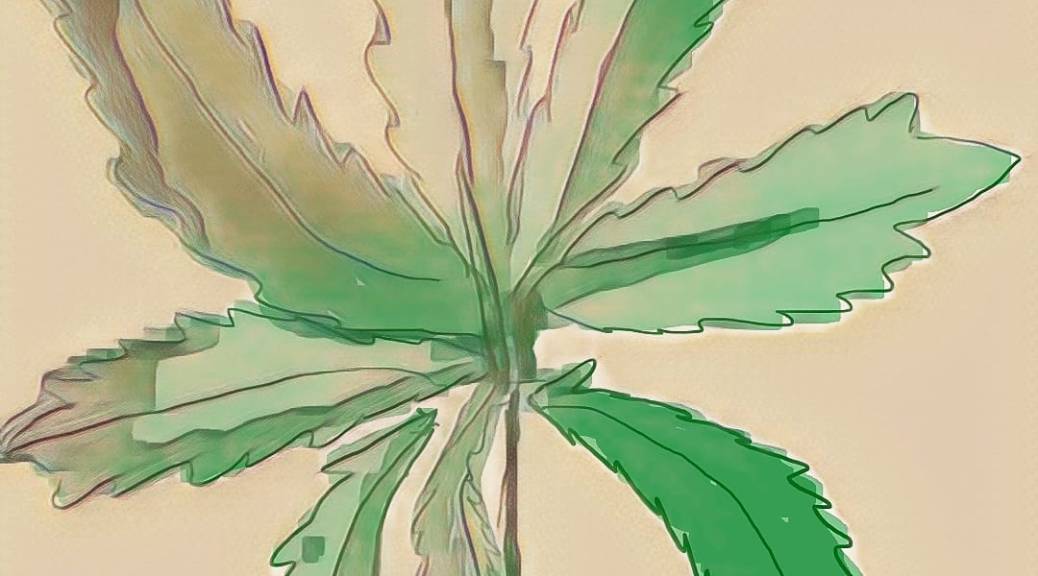
There has been a smell in the air these days, pretty much everywhere I go now: the grocery store, festivals…my backyard. It has the scent of someone who has wandered the forest for days without access to a shower or any modern hygienic amenities, having spent their time wrestling skunks and other manner of wildlife. When you smell it, you are all too aware of what it is, and has become a rather ubiquitous odor in modern society, of late. The grand smell of weed. Marijuana. Mary Jane? Pot! Reefer?! Okay, it has a lot of names in English, and can even go by their vernacular ‘sativa’ and ‘idica’, partially bastardizing the generally agreed-upon species delineation. The reasons for all of the various nicknames is likely as diverse as the names themselves. The real (albeit, general) name, however, is Cannabis (or Hemp, more on that in a second). There is even a debate on taxonomy and classification (is there one plant with different phenotypes or three separate species? The jury is still out).
WTF is it, eh?
What on Earth is the cannabis plant and from where did it come?
For starters, it is important to know that it is most commonly found to be a dioecious plant. This means that it requires a male and a female plant to pollinate and propagate. Monoecious plants grow as a single plant with both male and female components (or, two blossoms) and hermaphroditic is when there is one plant with a single flower that produces both male and female organs. Other examples of dioecious plants are kiwi, spinach, holly, and ginkgo. There have been documented cases of monoecious and hermaphroditic cannabis plants, but neither appears particularly common. The taller, male plant is generally cultivated for hemp production (even referred to as hemp in order to differentiate it) while the shorter, female is generally cultivated for, well….let’s say “medicinal purposes” (and referred to as marijuana). I do wonder what the numbers are for medicinal vs recreational uses. It’s probably recreational…definitely. Anyhow, that said, both plants can produce THC in different quantities. The male plant is just better at giving us CBD, hash, and hemp.
The second thing to know is that it is actually an herb. I’ve never studied botany, so I’m not entirely certain I know what makes something an herb. According to Merriam-Webster, there are two definitions. The botanist might classify something as an herb if it is not a woody plant and dies down at the end of the growing season. The non-botanist would say it is a plant prized for medicinal or culinary properties and has an aromatic characteristic. Okay, so what is a strawBERRY, then? Shit….it’s an herb.
Side quest: Berries are any SIMPLE fleshy fruit that has a lot of seeds and grows from a single ovary and a single blossom and does NOT have a stone (such as peaches or cherries). Examples are bananas, grapes, and even oranges. Blackberries and raspberries are an aggregate fruit (multiple ovaries from a single blossom), meaning each of the tiny little round parts of a blackberry is a single, individual fruit with its own seed that is clumped up with a whole bunch of tiny little fruits, but they aren’t actual berries! Blueberries and cranberries are true berries and strawberries are another aggregate fruit AND an herb.
So bananas are berries, raspberries are not, and blueberries are, and, as always, tomatoes are fruit (and berries). I don’t know what is real anymore.
(https://www.britannica.com/science/berry-plant-reproductive-body)
As for where the cannabis plant originated, or is considered indigenous, most experts agree that Asia is the motherland. I saw a few sites claim Asia, Africa, and the Americas and, while there do seem to be some historical references of uses in parts of Africa and the Americas – even the term “pot” is derived from the Mexican name for Marijuana (“Potaguaya” or “potacion de guaya”) – it is hard to say if it actually hailed from these places. It stands to reason that it was at least imported and cultivated by humans for its many uses for quite a long time.
Ecology and Environment
My interest in understanding where it grows natively is connected to my interest in understanding the ecology of the plant (sorry, HERB). What animals eat it? Do pollinators rely on it? So much of the information online has to do with human uses and thereby our farming practices surrounding it. On that note, it is important to say that most of the hemp and marijuana grown today is grown much the same way that other crops are grown. A 2021 study by Zheng et al took an in-depth analysis of the environmental effects of both indoor and outdoor growing, as well as the environmental impact of the processing. As a nutrient and water intensive crop, there is a great deal of pollution and environmental damage from both indoor and outdoor growing, as well as high levels of Volatile Organic Compounds (VOCs) released from the plants themselves. This creates health hazards for the farmers, increased greenhouse gases (primarily from indoor lighting and HVAC systems), causes soil erosion (due to harvesting) and deforestation, and strains the water supplies, both in terms of usage and pollution.
On the flip side of that argument, some studies show a high potential for bioremediation effects, as the hemp plants appear to absorb heavy metals from the soil. There are some data out there that suggest it might be beneficial for: sequestering large amounts of carbon, PREVENTING soil erosion, and providing pollinators with pollen during strained blooming seasons. All of these positives, however, fail to account for human behaviour. Once the cannabis becomes a crop (especially a large one) all of those benefits are nulled. Hemp products, however, could serve as a sustainable resource for certain manufactured products (i.e. paper and textiles) and also do not require the use of pesticides. But I still don’t know where it is from! (I swear, if it doesn’t have a human or economic benefit, the data are simply buried in the Nethersphere).
A Tancig et al article claimed that hemp seeds have been discovered in Japan and China as far back as 8000 BCE and 4000 BCE, respectively; whereas, records from human history show that the Spanish brought it to the Americas in 1545. [Edit: another article suggests it was first brought to the Americas (starting in Canada) around 1606.] This particular article refers to hemp (distinguishing it from ‘marijuana’), which did have me wondering if this was merely the male plant and used only for the hemp fibres?
McPartland and Naraine, who specify wild-type of Cannabis as C. sativa var. ruderalis, discuss seed dispersal in their 2018 study which names various birds and insects dining on the seeds of the plant, as they tracked where the seeds were being deposited. In the mammalian world McPartland and Naraine state that “horses, cattle, goats, deer, dik-dik, rabbits, hamsters, field voles, rats, and mice” have been identified as consumers of cannabis as well as raccoons and even a brown bear in Italy. So, at least we sort of understand what is using this vegetation as a food source, even if it doesn’t help identify where feral cannabis originated, but I feel pretty confident in saying it started out in Asia, then migrated out so long ago that it has become wild in so many ecosystems. Incidentally, the term “weed” is aptly named, as it does grow well in nearly any terrain where the soil has been disturbed and makes a great urban plant (I’m seeing a future for cannabis in city planning!), even being a good food source for pigeons and doves.
The potential for feral or cultivated strains to properly flourish in certain ecosystems is most likely hindered by human regulations. If smoking or consuming THC in any form is illegal, then explaining why you have cannabis growing on your property might be pretty difficult, even where it has become wild. Laws and policies vary from country to country and state to state, but innocently growing a plant or two because you think they are pretty could potentially spell trouble for you. Which is actually an injustice to the poor plant. Cannabis never asked anyone to dry and smoke its body.
Summary
1. We don’t know where it originated, but most believe Asia (possibly even areas of Siberia and the Himalayas)
2. It grows well in just about any terrain
3. As a crop it is no different than other crops and is resource intense, with the added drawbacks of increased VOCs and greenhouse gases when grown indoors
4. No one knows if it is one species or 1,000, but it is an herb (and a raspberry is not a berry but an orange IS a berry and NOPE, not doing it. Taxonomy can eat a D)
5. Mostly birds and rodents have been known to consume the cannabis plant/seeds, but many other mammals and insects are also responsible for consuming and distributing seeds
6. Humans have been using it for thousands of years and the many diverse compounds found in the plant have a great potential for medical uses and, finally,
7. It smells like a$$ and I know what you did…yes, you…dude in the snack aisle at Wegmans. I smell you!
Discover more from One Health Stories
Subscribe to get the latest posts sent to your email.
 One Health Stories
Interesting article! I remember hearing for years that hemp was supposedly the cure to many environmental issues, like deforestation. I’d read that it was stronger for paper production and didn’t require as many chemicals to produce. It sounds like the truth is more nuanced. And interesting that hemp is the male and marijuana is the female version of the plant! Thanks for “edjumicating” me in an entertaining way!
LikeLike
Thanks! That’s super interesting. I was finding a lot of contradictory information on so much of it as well and it’s such a challenge to know what is real (like berries! lol). My guess is that it probably could help (it can also improve soil health), but we like to misbehave with our farming practices haha. I’ll have to dig a little deeper on that and see if it was referencing cannabis or ‘hemp’, specifically!
LikeLike