
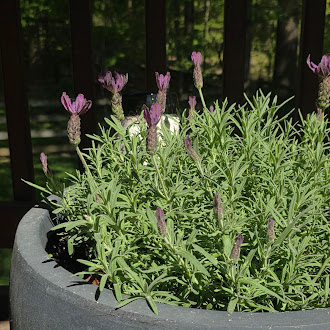
There are many things about having more than one culture that have been a blessing and a curse. Never really knowing which one you belong to or relate to is high up there. You also tend to see boundary lines differently than those who feel a strong sense of belonging to a very specific place. Always existing just a little bit outside of a culture used to bother me, but I think as I’ve gotten older I am more….ambivalent about it. That perspective extends beyond the intangible fealty to culture and civilizations and into the physical world.
Often times – or maybe it is every time – when painters begin a landscape painting they must first add the base layer: the layer that exists in the background. In creating this layer, they apply a color near the top that might serve as the sky, then another layer at the bottom to become the grass, ocean, or forest. Somewhere in the middle is a space where both colors collide, but not necessarily in a hard line. Rather, the painter blends them together and blue gradually gives way to green. It isn’t until the artist adds layer upon layer do the two spaces look distinct. As metaphors go, I’m not implying that I lack layers, or by extension, culture. I think I, along with all of the other multi and third culture kids out there, live in the blended space. I love both the sky and the sea and the earth, but I’m not always sure to which one I belong.
I am a blend of both culture. I’ve learned how to live, be, operate, and do things from my American father AND my German mother. Although, having been the primary care taker, it’s possible I sometimes come across very “German” to my peers. And although my brother and I did not have accents when we spoke English, I learned we had been saying things, well…wrong (we learned a lot of English from a German mother who was also learning English). We were also the only kids in school who said “AHH dē-das” instead of “uh DEEEE des” for the brand Adidas. Anyhow, side quest: over. My point is that we were both and neither at the same time.
When it came to gardening, I remember my mother was already an avid organic gardener back in the 80s. You’d find egg shells and coffee grounds in her garden beds, which I found odd and embarrassing, and she certainly was not calling it “organic” gardening or any other name. It was just….gardening. My father, on the other hand, raised in Phoenix, AZ (where we were living), was a man who saw no problem with grass in the desert and would sit out there with the hose, watering the lawn by hand. He wasn’t trying to be wasteful – he just didn’t know any better. This was common and, sadly, still happening today.
Being juxtaposed to an all American backdrop, much of what my mother did was “unusual” and it wouldn’t be until much later on that her strange ways would become normalized in this country. Don’t get me wrong, Germany also has demons hiding in their agricultural industry, but if wrongness or harm were on a sliding scale, it would be safe to say that the country from which she learned about gardening is, well, less wrong and less harmful in their practice. And it is also untrue to say that there were not American’s already using regenerative and “organic” farming practices. In fact, it was not that long ago that this country had more small farms and I am certain that some of those farming cultures and practices were passed down. That said, in a small 1980’s U.S city…chances are unlikely.
It took me years to really care much about gardening. When my interests did grow, they were more theoretical in nature. I was fascinated with soil science, chaos gardening, native plant gardening, container gardening (we were in apartments in Germany), gardening with chickens and goats, gardening for arthropods! FOREST GARDENING?! MUSHROOM GARDENING! 😳🤪😱😵💫😵💫😫😂 They were theoretical because my interest would change from day to day, search to search, and book to book. It was overwhelming to know which option was best. Hitch that trailer to the ADHD caravan hauling it around and the best I had was a few potted plants that eventually died and a relentless mint plant that was pretty useful when I wanted a Hugo spritzer or a mojito.
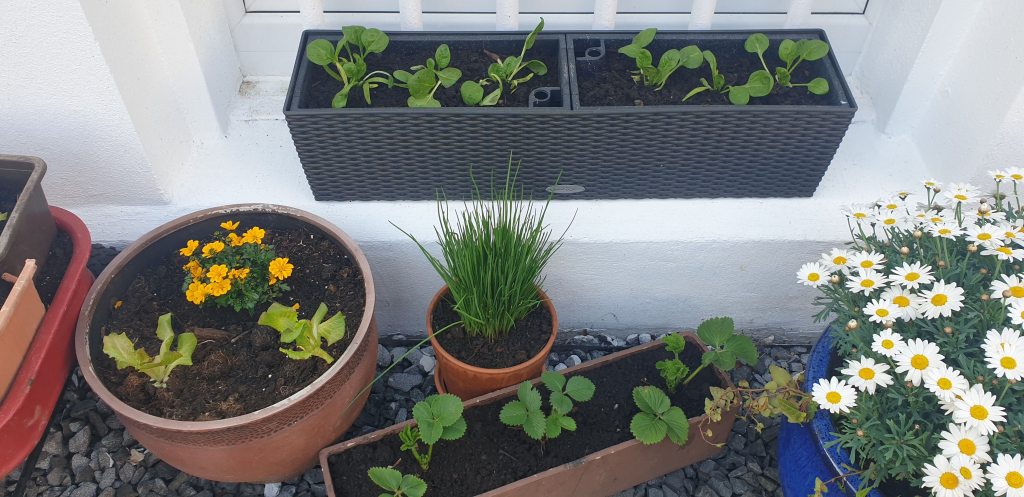
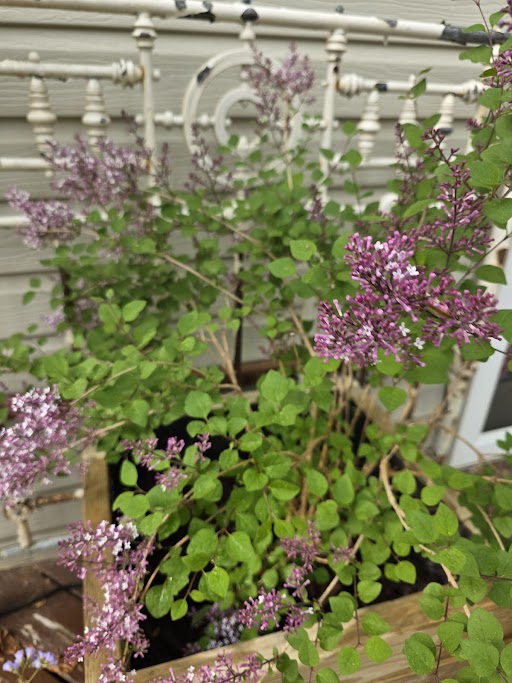
My grandfather in Germany had a garden in the gartenplatz in his town and it was lush and beautiful and was filled with various roses, fruits, and vegetables. As a child, it was always the thing I looked most forward to visiting when we went to Germany. What I learned, retroactively, from his garden was he grew foods he and my grandmother enjoyed eating, he grew flowers that he liked, and they were all plants that were well suited to the environment. I won’t claim they were all native. That much I don’t know, but I certainly don’t recall anything exotic. So, today I’m attempting the same, and, although I have other reasons for why I’ve turned theory into practice, if you stroll through my garden space (still evolving) what you will also notice is my culture. There are memories of trips to France, Spain, Italy, and our life in Germany, whether through sight, taste, or even the seating. There are native plants in the ground and in pots to work with the local ecosystem. Our back yard is growing into a multi-culture space, like our family. Gardening, alone, didn’t help me find a place in this world, but it’s nice to think it has played a role.
Discover more from One Health Stories
Subscribe to get the latest posts sent to your email.
 One Health Stories