As the demands of summer have presented themselves, I am becoming rather aware at how infrequent my posts are being written and published – not particularly great for readership. Finding the time and willpower to write while on vacation is not something I’ve yet conquered. We recently flew out to Colorado and Utah and saw so many amazing sites, including Arches National Park, Black Canyon of the Gunnison, and went to the Aspen area to hike around Maroon Bells, each of which demands its own post, which I will attempt over the coming days. Today, however, I want to talk about chipmunks.
Now, my knowledge of chipmunks is not particularly vast. I know that Alvin, Simon, and Theodore made some pretty sweet tunes for a three year old and Chip and Dale had their names commandeered by a strip club, which is, honestly, kind of messed up. If I ever went into the business of sexually exploitative capitalism, I don’t think a children’s character would come to mind, but shrouded beneath the subtextual perversion of the Tickle Me Elmo doll and the unnatural measurements of Barbie, I suppose I’m not really shocked by any of this. We do have a convicted President who was BFFs with a (now deceased) pedophile, so I digress. Back to my knowledge of chipmunks…they are adorable, skittish little critters with cheeks chock full of munchies…and that’s it. For the most part, anyhow.
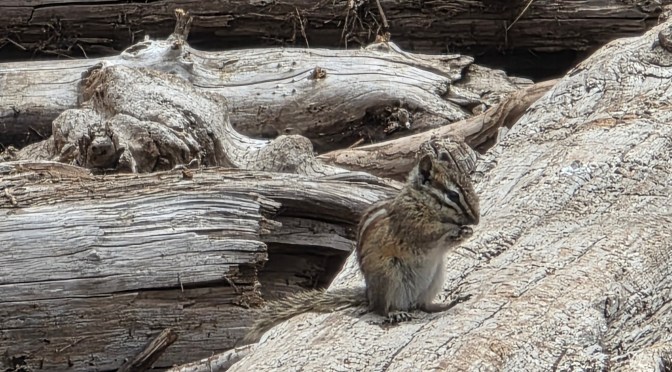
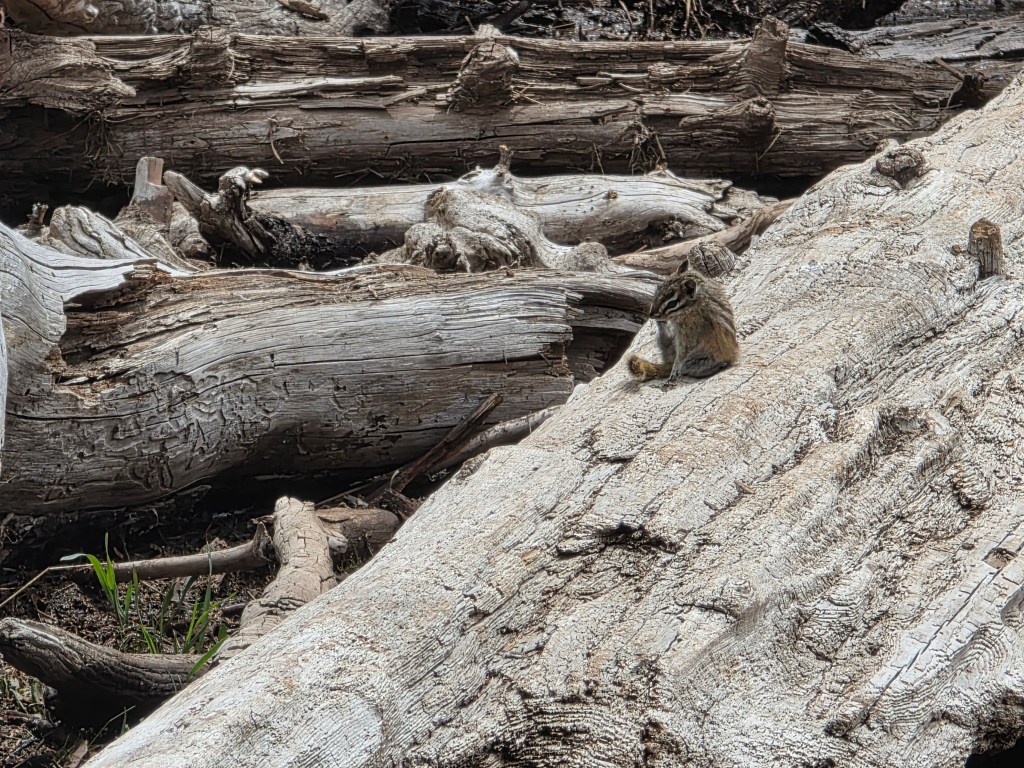
So, while atop a mountain at Maroon Bells, sitting by a lake with a patch of felled trees along the beach, we found ourselves in awe of the rather large colony of chipmunks we had observed, scrambling in and about the mess of tree trunks and twigs. As they played (or perhaps fought), groomed, and ate unfazed by our presence, I wondered if this was their ideal ecosystem. It makes sense. It offers up shelter from predators, contains a host of bugs and plant material for food, and they are horizontal – perfect for ground dwelling animals.
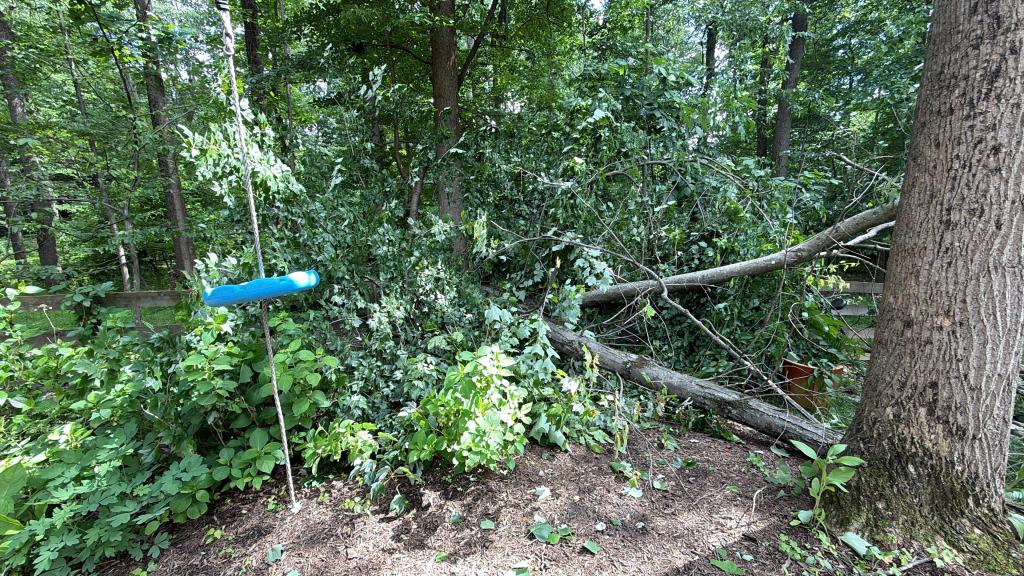
This is all slightly amusing as the very next day I would receive a text from my friend telling me that a giant tree had just fallen into our yard, crashing onto our fence. Not the activity I was expecting to deal with upon my return, but we were able to remove the tree with help from the same friend. Anyhow, it has now been nearly three weeks since the tree has fallen and I’ve begun to see a substantially greater number of chipmunks in the back yard, emanating from the fallen tree.
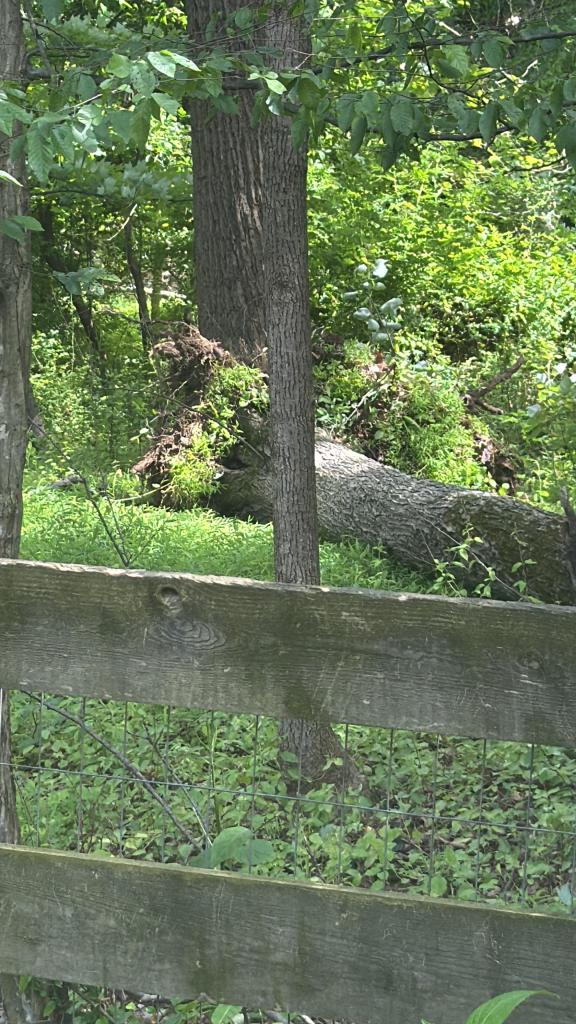
I’m not sure how long our new neighbors will live there, however, given the fox I just saw lurking, brazenly, near the woodpile of forest rubble. Although, no matter how many times I tell her not to get involved, our youngest dog continues to meddle in the affairs of nature, so it is possible she will become an unintended champion for the chipmunks (despite trying to capture them herself any time they cross the threshold of the fence). Nevertheless, I still wanted to know…are felled trees and decaying wood a chipmunk favourite?! I had to find out more.
Things I learned about the chipmunk12
First of all, chipmunks are, apparently, squirrels. This seems like something I should have known, but here we are. They are terrestrial squirrels, meaning they live the majority of their lives on the ground, burrowing little tunnels for shelter and storing their food for winter. That’s not to say they can’t climb the way their common squirrel brethren can. In fact, they are excellent climbers, with one species (Hopi chipmunk) living much of their life scrambling up and down cliff faces and another (Uinta chipmunk) also nesting in trees. That said, do they like felled trees and all that they provide? Yes. Spending most of their time on the ground, my suspicions for if and why they enjoy the ecosystem of a fallen tree were, in fact, correct. Bugs, fungi, and sometimes easy to grab nuts are all part of that deal.
Now, I suspected insects to be on the menu, as well as berries and nuts, but what I had not expected to see was carrion! Chipmunks eat dead animals? I suppose it isn’t their top shelf choice, but it is still a part of their diet! Along the same vein of food, one source suggested they could house up to a gallon of nuts and seeds in their underground den to last them through the winter, which I find impressive. They are little Costco card carriers, bulk buying for their large walk-in pantry. Their pantry, by the way, being on the lower level tunnel system, which is so European of them to have an Earthen cellar with all of their perishables. That leads me to another unknown fact (for me)…there are no chipmunks in Europe! Chipmunks are, apparently, endemic to the Americas, apart from a singular Siberian Chipmunk species whose range spans from Russia to Japan.
I’m sure there is much more about these jumpy little foragers that I don’t know, but it’s Monday and Mondays demand a slower pace. I wish I had snapped a few more photos, or even a video, of the Maroon Bell chipmunks and I wish our backyard friends didn’t scurry off every time I get up to snap a picture of them, but please enjoy the two images I was able to get. Happy Monday, everyone!
- https://www.britannica.com/animal/chipmunk ↩︎
- https://www.vtfishandwildlife.com/learn-more/vermont-critters/mammals/eastern-chipmunk ↩︎
Discover more from One Health Stories
Subscribe to get the latest posts sent to your email.


Love my Squirrels in my back yard.
LikeLiked by 1 person