
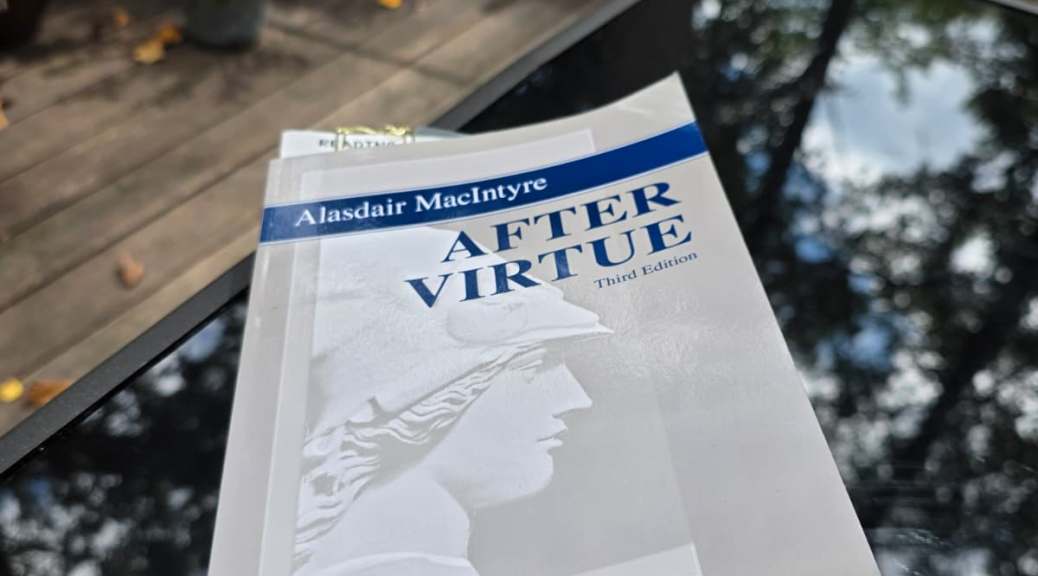
“Imagine that the natural sciences were to suffer the effects of a catastrophe. A series of environmental disasters are blamed by the general public on the scientists. Widespread riots occur, laboratories are burnt down, physicists are lynched, books and instruments are destroyed. Finally a Know-Nothing political movement takes power and successfully abolishes science teaching in schools and universities, imprisoning and executing the remaining scientists.”
This is how After Virtue by Alasdair MacIntyre begins. The original book was published in 1981 with the most recent, 3rd edition, from 2007. The title of chapter one is called A Disquieting Suggestion.
Disquieting, indeed. Not because the very thought of something like this has been written about as a fictional tale, but because of how close we we are edging into this hypothetical scenario with real-world possibilities. We have already seen a Know-Nothing political movement gain power and Congressional representatives claim that scientists and democrats control the weather. We have seen the banning of books in libraries and schools, the government assert its will over universities, and the metaphorical torching of our long-standing scientific and public health institutions, and their top scientists with them.
He goes on to describe a period of enlightenment that follows in which populations bring science and scientific reasoning back into their teachings and understanding of the world, but the preserved knowledge is broken and piecemeal after the destruction of our books and writings and no longer represents true scientific findings, and those who were trained as scientists or held the knowledge in their minds are long gone. MacIntyre hypothesizes that we are currently in such a phase, not with science, but rather with morality. The language of morality is disordered because the books and works from which we draw our philosophical ideas of morality are missing the contexts with which they were written.
Any argument can be presented logically and with impersonal rationality, but will often appear as a maelstrom of antagonistic wills, crashing and colliding with one another. It is the context in which our fundamental moral arguments were born that is missing. The cultures and spaces in which they were written are gone, yet our use of these philosophies remains. Contemporary philosophers then built new ideas on top of those older ideas.
It is a fascinating idea, to be sure and, although I’d love to dive more into this hypothesis, what I really want to talk about is the implication it holds within our current era. When MacIntyre wrote this book, home internet and social media had not even been incepted. We have come to a place where argument and discourse occur on an endless continuum, across the world, and without thought or fear of repercussion. I came across one such argument recently that I’d like to share – it is an idea that I find myself grappling with, often.
A post had passed through my social media feed for obvious reason. The algorithms know I appreciate topics on ecology and the environment. It was an ecology educator (possibly at a conservation center somewhere) who had blogged about something they had recently felt some level of conflict towards. Their center had been teaching young children about invasive species and what to do should you come across one. The recommended practice is to kill the species (stomp it, pull it out of the ground, etc.). While attending a conference on conservation ecology, a discussion was raised on how nature finds the balance needed when presented with an invasive pest. The speakers also suggested the idea that language alters how we feel about a species and rather than saying “invasive” we, instead, say “non-native”.
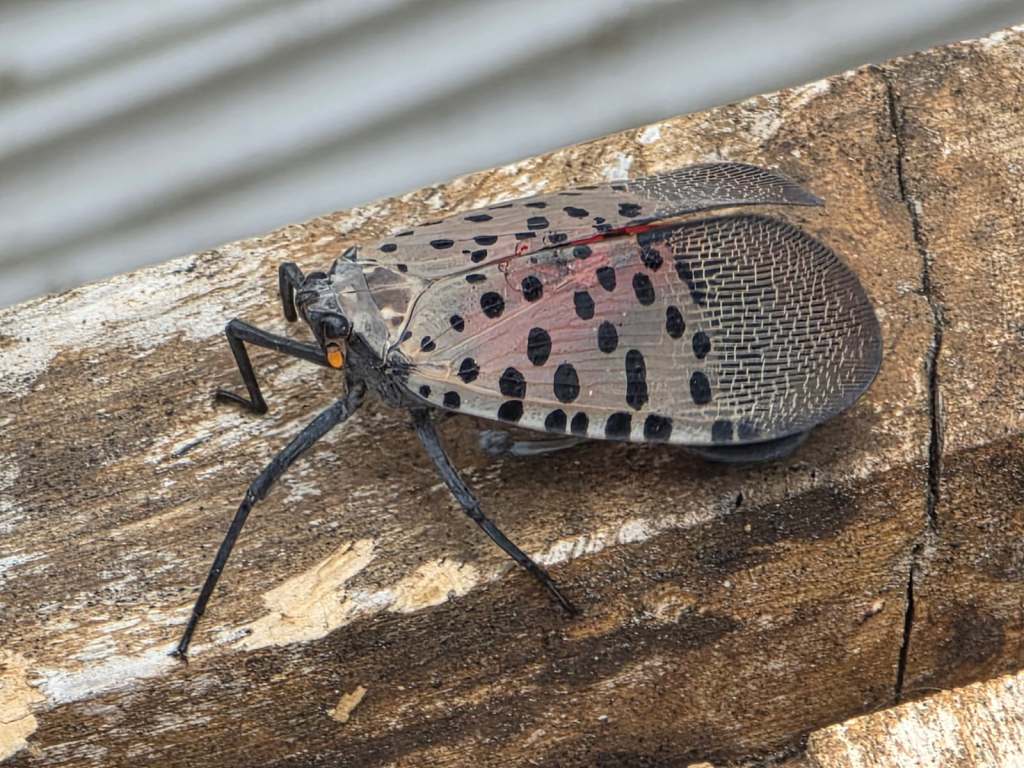
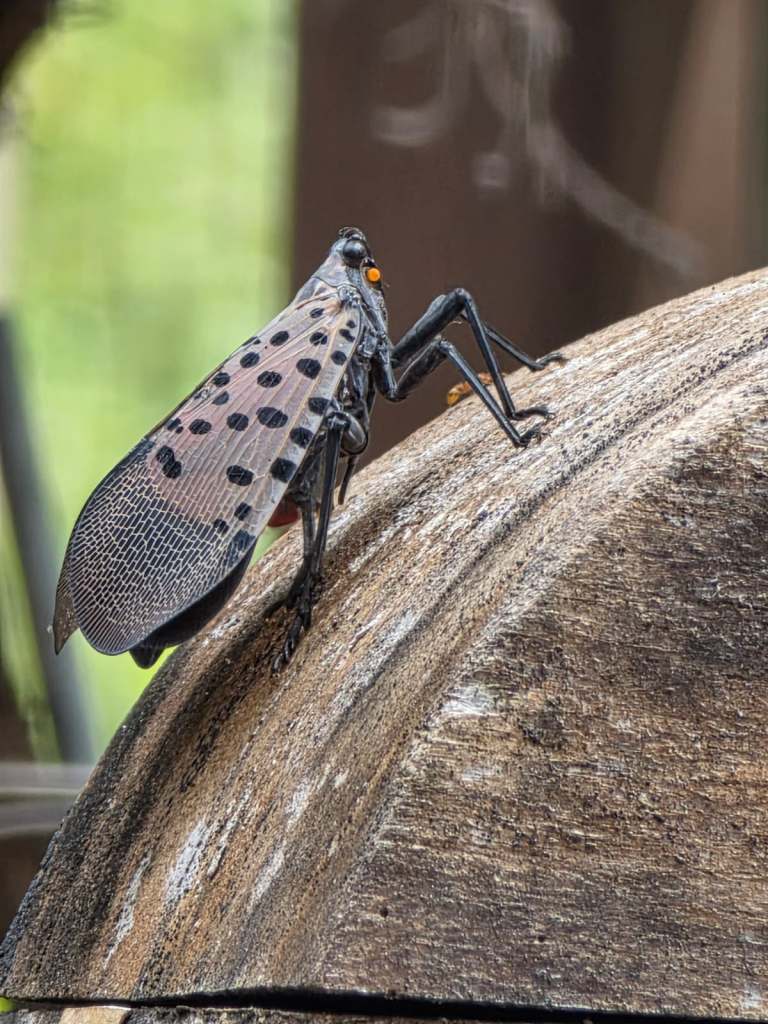
Essentially, they had been discussing lantern flies, and this ecologist came away with a new view that perhaps teaching young children to kill, kill, kill, was not necessarily a healthy or optimal method, but rather to show compassion and allow the birds and bats to handle the lantern flies. Teach the children to say non-native, and be more inquisitive about the ecological problems we face. The intended purpose for this post, to me, seemed to be more of a thought experiment and to engage with other ways of viewing our ecological challenges.
This idea, however, did not resonate well with many of the readers and they promptly took to defending the trees, plants, and other wildlife affected by the destruction these lantern flies bring to local ecosystems. I read many arguments in that feed and the thing I found most frustrating was that…they were all right.
Or, no one was wrong?
Or…they all had valid arguments.
They were rational, even if not without emotion. They were logical (“humans introduced them here, so humans should be the ones to remove them and protect the local environments” or “adults have a duty to teaching children empathy in a world so plagued by rotting morals” or “who are we to decide who lives and dies” – this should sound familiar if you read my recent post on the cost of doing the right thing).
The truth is, the sentiment that each argument holds is not just missing the context of its origin, but the context of modern life has not been considered in its own right. Do we need new moral philosophies, not built upon past ideas? Do we trust that our historical knowledge is complete enough to draw upon past ideas and understand the context with which these philosophies were inspired?
Once a thing happens, it is often too late. We can’t go back and undo the introduction of the lantern fly to the East Coast of the U.S. We can only move forward. Does moving forward on this even have room for moral consideration? GASP! I feel insidious even suggesting that.
This is what I will say…last year I smashed every nymph that came near me. I even tried to feed a few to my little jumping spider pals that call my deck their home. The little ones were intimidated and wouldn’t go near them, but one of the larger spiders attacked with great enthusiasm. This year I was overwhelmed by the numbers and gave up. Our trees have been stressed and dropping leaves all summer, for what reason I am uncertain – perhaps it is in part because of the lantern flies, or maybe the drought and heat – but as time went on, I noticed their numbers dwindle until they were practically inconsequential. I still see a few here and there, and they have likely laid eggs all over the trees in the forest by my house, but I won’t know that until spring. The point is, the outcome by each August was the same as far as I could tell. Without a proper study, there is no way of knowing.
These “different schools of thought” may never be resolved. Sometimes I think we just throw pasta at the wall to see if our methods worked. Perhaps someone out there has a third option they would like to share! I would very much like to ask Alasdair MacIntyre (who is now deceased) to please finish the story of the world where science was destroyed. How did these societies carry on? Did they eventually conduct their own experiments to produce clean and accurate scientific theories? Did they live with the mess until it destroyed them? I never did like unfinished stories, and if his hypothesis is true, then I also won’t ever see a resolution to this one in my lifetime.
In any case, this is the latest book I am reading and it hurts my brain, but in a good way. When I eventually finish it in 10 years, I may come back and revise this post. Cheers, everyone!
Discover more from One Health Stories
Subscribe to get the latest posts sent to your email.
 One Health Stories