UPDATED: I was floundering in one of my unfocussed days, typing a million disparate thoughts, unable to make them meld properly. This is, perhaps, partly to do with the inherent abstract nature of art and the subjectivity surrounding it. I want to say something, but I am unable to find the right words in the right order. I’ve not rewritten, but I’ve tweeked a few lines to make them more cohesive.
I’ve been thinking a lot about how we use art in activism lately. We create signs for protests, write songs and stories, make documentaries…. City streets are littered with graffiti – everything from murals depicting a civil rights event to simple written messages.
According to the Oxford dictionary (online), the term activism either has German or French origin and has undergone some slight evolution over the years from being a philosophical term asserting that action leads to the discovery of truth (early 1900s) to a term utilized to show support of pro-German policies during the first world war (1914ish, and nope) to our current definition, an act that aims to bring about social or political change. What that act is, varies. “Artivism” is the use of art as a medium for activism.
Based on the philosophical and modern definitions, I see this expression of art and activism as being more than just protesting, petitioning, or tying one’s self to a tree. I see it as action for bringing an issue to light, causing sustainable change, and sometimes an action intended to disrupt the status quo.
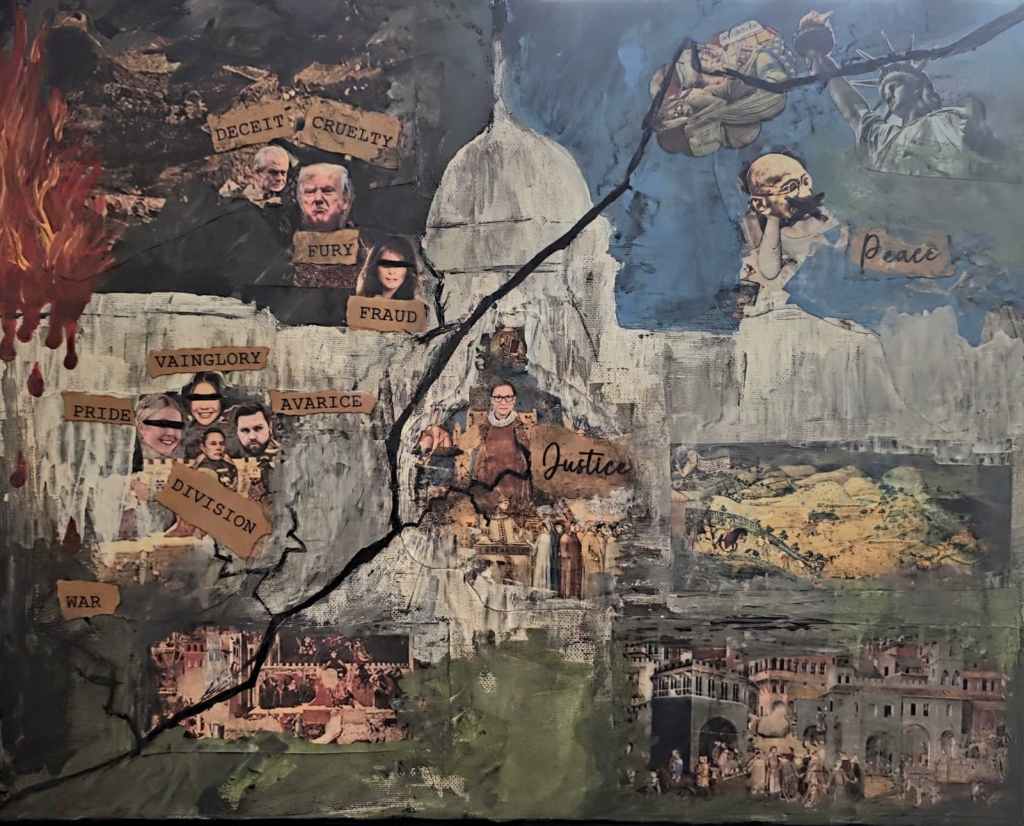
What is the intended action and how long will it endure? Is it a protest or a sculpture made of plastic and other anthropogenic waste from the oceans? Maybe it is a song that people will sing for years to come, or maybe it is a simple petition meant to collect several voices, united onto a single document. Each of these actions has a different audience, purpose, and potential lifespan. Not all are necessarily “artivism”, but most do incorporate some element of art, nonetheless.
My favorite artivism is that which is evocative and elicits an emotional response. In my post, Brick and Mortar Brought Us Back, I talk about poetry and the power of prose and community. Along those same lines, I’ve always been a big fan of Pink Floyd and their anti-war, anti-oppression lyrics, as well as interpretive dance that draws on pain and conversations around abuse and loss. But the most powerful to me has always been the combination of mixed media.
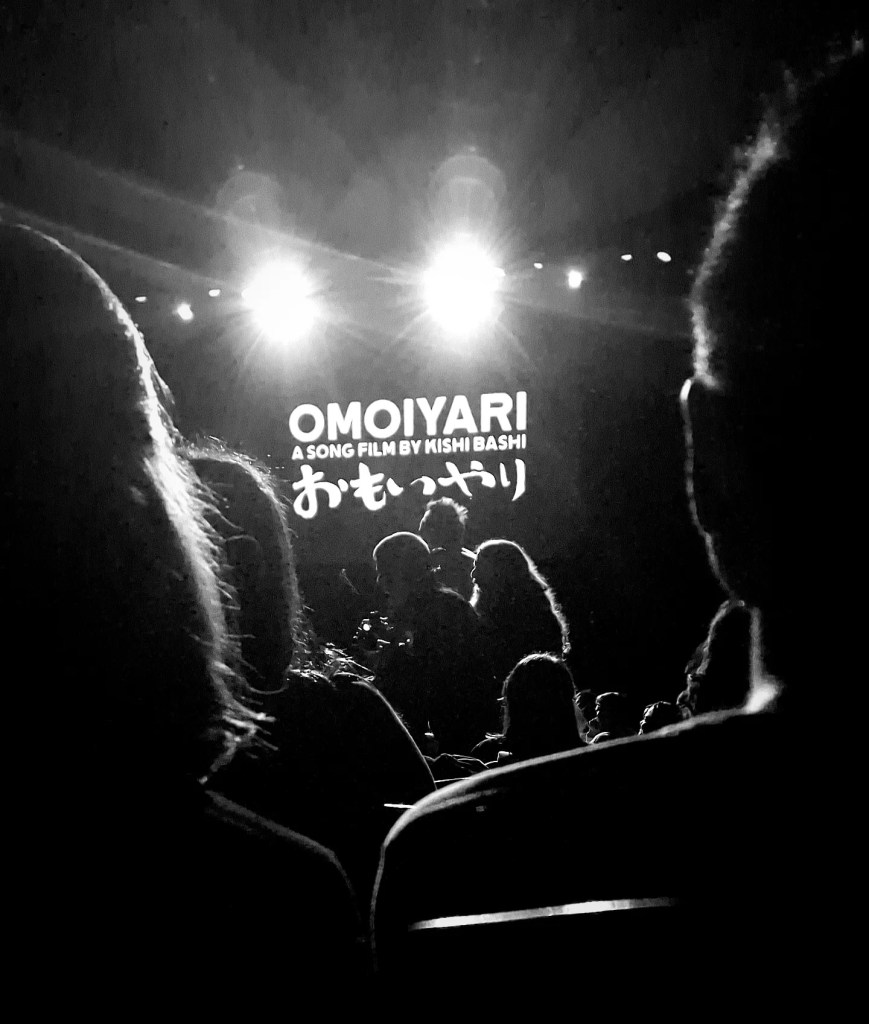
A year ago or so now we attended a Kishi Bashi concert as he was touring the US promoting his latest project, Omoiyari: A Songfilm by Kishi Bashi. If you don’t know who he is, go look him up now. He’s amazing. His music is amazing and he is a talented violinist. He composed music alongside a documentary he made on Asian culture in America and the incarceration of Japanese-Americans during WWII. It’s release could not have been more aptly timed – months before the COVID-19 pandemic was about to hit the World. It gained traction with the increase in Asian racism, thanks to the abhorrent rhetoric of our President during the pandemic (Trump, not Biden). For me, it also highlighted the conversation around generational trauma for most immigrant families. The land of possibilities has a dark side that many long-established American families may not fully understand. Suffice it to say, the show was artivism in the most elegant and visceral way.
Art makes me better – a better person, a more empathetic person, and a more open person. Whether I am creating it or observing the work of another, it is, in essence, the most raw and authentic version of someone, their pain, their joy, and their message. There is an alien race in the Doctor Who series called the Ood. The (original) Ood carry their brains in their hands. They are a peaceful, communal race who rely on trust, empathy, and cooperation. They don’t necessarily live this way as a preference, but out of a necessity. Whenever I’ve been open and honest with others, shared my artwork or my feelings, I’ve found myself in that space with the Ood, with my proverbial brain or heart in my hand. It makes us vulnerable and the vulnerability makes us better.
I am really interested in knowing what form of art you find the most inspiring when it comes to activism and advocacy. Since people seem shy to chime in in the comments section, I’ll add a poll. Either way, I’d love to hear from everyone!
Side Quest: there was a notorious street artist tag all around the Main-Taunus region of Germany of a tooth with the word “Karies” (or sometimes just the word and no tooth). I always wanted to know the story there. Was this a dental student turned graffiti artist or a graffiti artist turned dental student? Was it someone who felt burned by the candy industry and was raising awareness of the side effects of excess sugar consumption?! I’ll never know. I have pictures of this graffiti tag, buried somewhere in a folder on my HD. If I find one, I’ll update this section and add it.
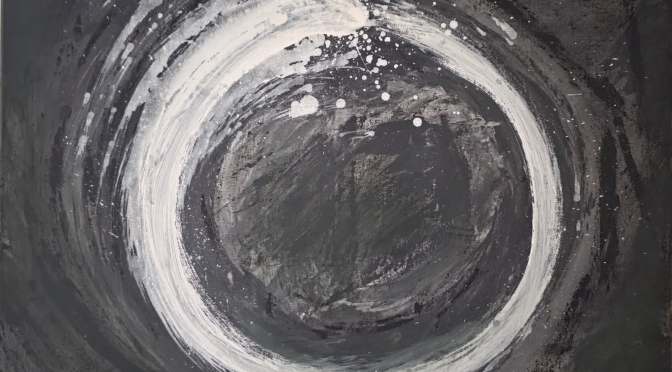
A note on my cover art for this post: this symbol is called Enso. I am not a ‘symbologist’ or into iconography by any means, but I do love this symbol. It has its roots in Chinese and Japanese culture and Buddhism. It means many things, but essentially it is: interconnectedness, impermanence, enlightenment, authenticity, imperfection, and the acceptance that life is many things, good and bad. It is incomplete and simple and can be a symbol of contemplation and mindfulness.
Discover more from One Health Stories
Subscribe to get the latest posts sent to your email.


I remember seeing Karies tagged all over the place, too! I thought it was a street gang with a not very scary name!
LikeLiked by 1 person
I’ve searched in English and in German for the answer. I found one German article/blog that mentions it, but it was merely about the use of tags in street art and the culture/purpose behind street art – a way of saying “I was here” while also being an act of rebellion (but it also not being a serious crime, so there is safety there). Nothing specific to Karies! Gah!
LikeLike