
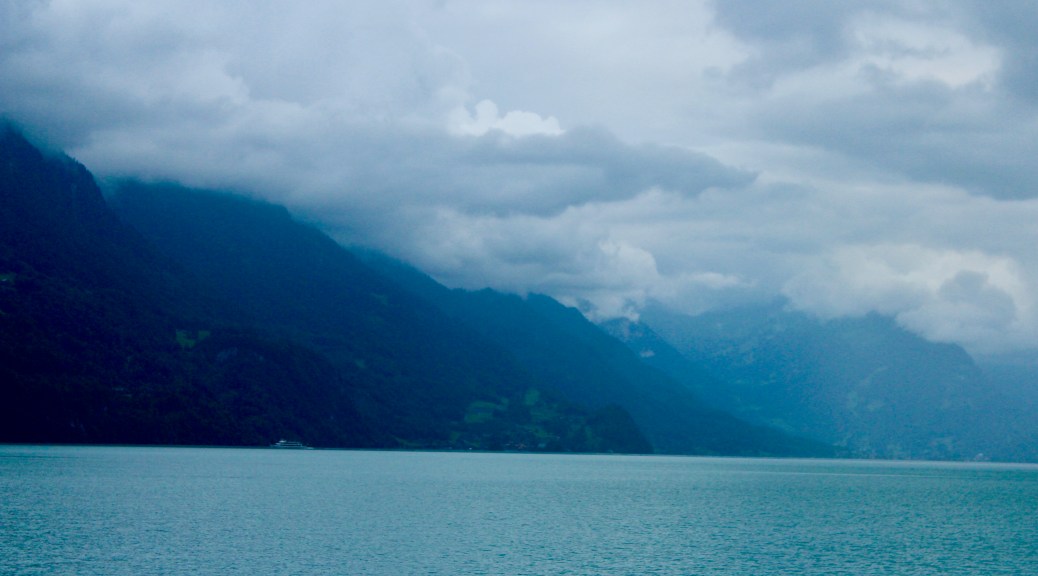
It was a cloudy day when my friend and I agreed to meet up. I had asked her if she would sit and chat with me about her artwork. Unfortunately, just after we grabbed our pastries and coffee, it began to sprinkle and we decided to head back to my house. Although I recorded our conversation, my dogs decided to be a handful – either trying to swipe our pastries, force us to play ball, or bark at imaginary invaders. This, amongst other things, made for a terrible recording, but still…a thoughtful, albeit distracting, conversation.
First, you need to know why I wanted to chat with Kris (she/her). Kris started out as a hospice nurse and has recently moved into palliative care – a branch of medicine that focuses on quality of life care during treatment of disease, often terminal, while also offering support to the families during that transition. I was curious about her artwork, as it is inspired and borne out of death and her experiences with it. I first saw the art to which I am referring after the death of her cat, Poe; but, we will get to that in a bit.
Turning back to the morning of our talk, settling into a covered space outside, we wanted to be encapsulated by the tall trees – tulip poplar, hickory, and oak – and the sounds of life around us. As we were situating ourselves, a white-throated sparrow appeared. Kris’s favourite bird, as I would learn. She tells me they are migratory then demonstrates their call for me and suddenly nothing else matters. She is connected to that moment, listening for another whistle. After a few moments pass, she says:
“I just hope that she’s still around when I’m dying…because I kind of think that I want to be hearing the white-throated sparrow in my last breaths. Maybe someone will have to play a recording for me to shepherd me out”
Then a few more heartbeats of silence.

To understand Kris’s art, I think you need to understand Kris. Or, rather, her relationship with death, I suppose. It isn’t a story of tragedy, at least not what she shared with me. It was simply a choice she made when she was very young to “lean into the idea of death and dying as part of the continuum of life”. She can’t point to one single event that moved her to find beauty in death or accept it as part of our nature in being with nature, but rather a culmination of events from her uncle dying to finding the fallen animals in the wild.
Even a friend of hers who practices the art of ancient horoscope reading and star charts saw death written into her mystical fabric. Her openness to the unknown and comfort with uncertainty has a calming effect and I realized that, even if I am agnostic in my own spirituality, her friend was not wrong and she is, most definitely, in the right field to leave her mark on the world.
Before we ever made it to her artwork, she shared some insight into her field. First, she expressed how deeply disconnected and unprepared we are for death in the West. I had mused, for a moment, on my experience with growing up in the desert and feeling the presence of the people who shaped the land before the Europeans settled. Sitting in the quiet of the desert always offered more spiritual connection for me than any church could.
“…as the colonizers, we have a history of violence and death and taking what’s not ours…culturally…we don’t need to think about [death] until it is right on top of us, the dying part of life.”
She believes we are doing ourselves a disservice by not talking about it. We should be teaching children in an age-appropriate way, to create less fear and more connection to something we will all one day have to experience.
“…it causes death to be much more difficult emotionally, spiritually, physically…”
Her experience has also left her realizing that there is no consistent correlation with faith and acceptance of death. Every death is different and has taught her compassion and understanding for those who are grieving, but she also speaks compassionately about the idea of grief, writ large. She says we are on a continuum, not a wheel, where we are continuously experiencing grief in some form, be it a break up, job loss, grief for the environment or for someone else’s suffering, war, or death.
Unfortunately, dealing with people in their worst moments leaves her and her colleagues open to abuse and harmful words. The mistreatment, although difficult, she knows is borne out of grief and deep pain and isn’t a reflection of her, but rather a reflection of the sorrow and fear of the grieving families. So I asked her how she deals with it all. Having to watch someone slip away, witnessing endless tears, and becoming the target of someone’s anger.
Boundaries – both at work and in her personal life. Essentially, don’t carry someone else’s grief when dealing with the strain and drain of caring for others. Additionally, she writes. She said that she writes by taking grief and connecting it with nature and it is here where she finds healing.
“We are all connected in this symbiotic relationship, together.”
A thought that has been on my mind for so long. Our interbeing and the ways we affect one another.
I asked her what art form she prefers, if she has a preference at all. Although she was hesitant to answer, she decided that writing was her favourite expression…
“It’s a form of art that feels entirely complete. I feel like when I’ve written a poem it is borne out of being fully formed. All of this verse inside me is exiting fully whole. It’s a crazy feeling. I feel like I’m not even the one writing it. There is a balloon full of words that needs to break free, and it floats out…a release…physiological sigh. Freedom to express without having any boundaries.”
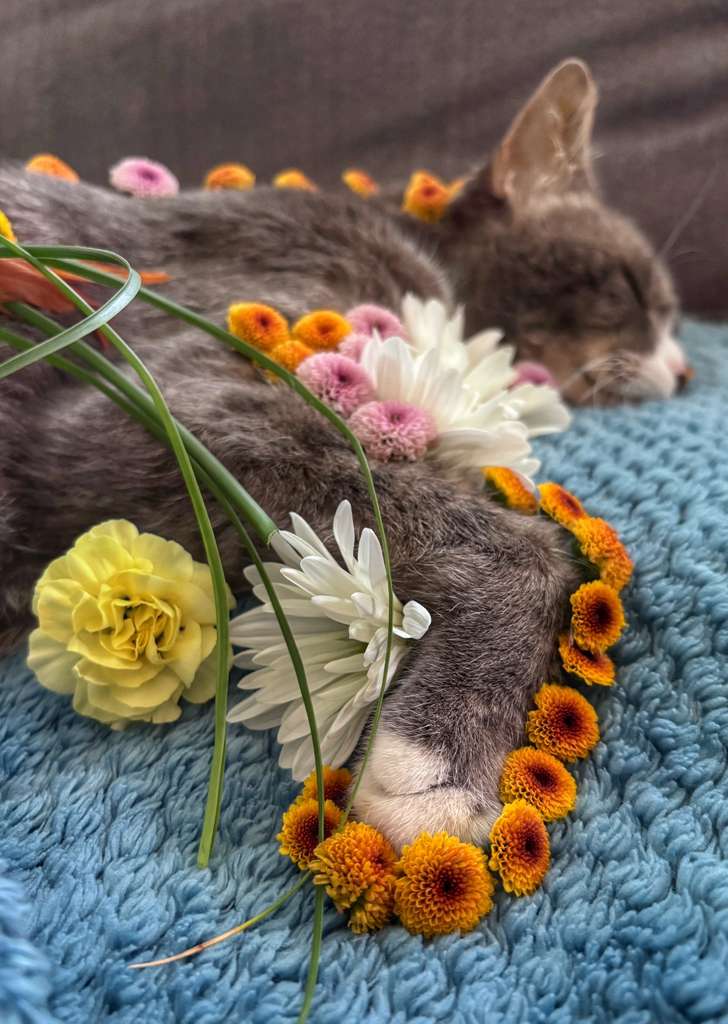
I asked if I could share some of her writing and images for this piece and she graciously said yes. First, she wrote a poem for Poe, to honor her death and gratitude for the life of her beloved companion. Second, she shared a ceremonial practice of hers that I found myself in awe of – and this is the artistic space I was initially drawn to. Of this practice she said,
“It was awful and beautiful….while these rituals we were completing were happening, I just felt like something inside me was breaking and rebuilding all at the same time ad infinitum. Honoring her death in that way has helped me so much to deal with grief and loss because it was thoughtful, it was intentional, it was respectful, and transcendent to give that goodbye to her, and it has helped me feel a lot of gratitude for her life and I think we can do that with all life that lives and things that die. To know that that living thing was seen – not that it needs to be seen by a human eye for it to matter – but it’s just one way that I feel like I can connect with the natural world and death in [a] way that helps me to feel a little bit less busy in my brain with all of the noise and static of living everyday life.”
It is a simple gesture of gratitude for the life that was lost and does not ask to be noticed. She simply does it to connect to something bigger than her. Surrounding the dead with the beauty of nature, itself, is the ritual. Flowers, leaves, stones, and other gifts the Earth beckons us to discover.
Gentle soul,
supernova.
Born as nebula,
blinding light,
the echo of your
spirit lives
in me.
“The art of placing the flowers around her still Self…there was sort of a beautiful sorrow in that process.”
It’s truly beautiful – both in its aesthetics and in the gratitude I can feel from this practice. Having lost two dogs, both in the cold and unfeeling space of the veterinary office, I can appreciate the longing for a farewell that embraces connection to the life and death of a loved one.
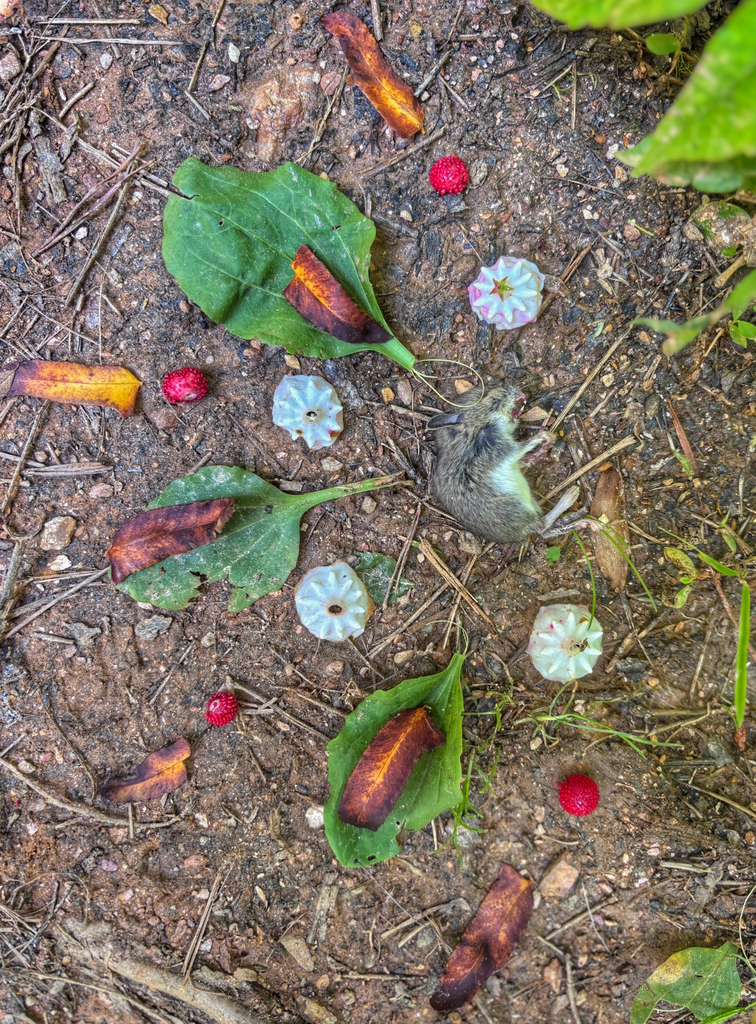
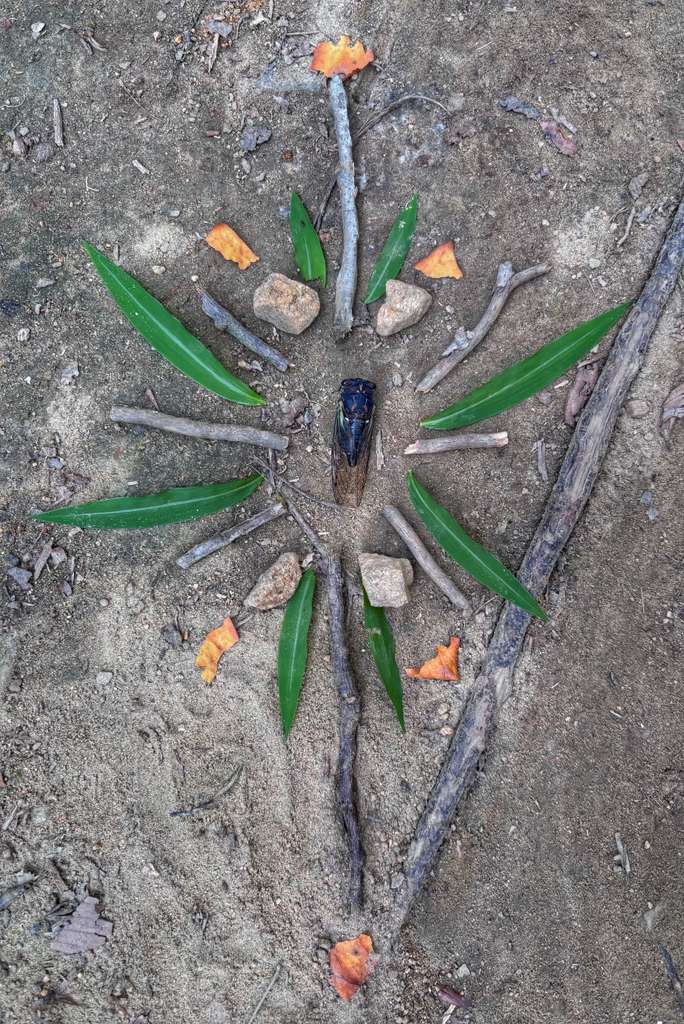
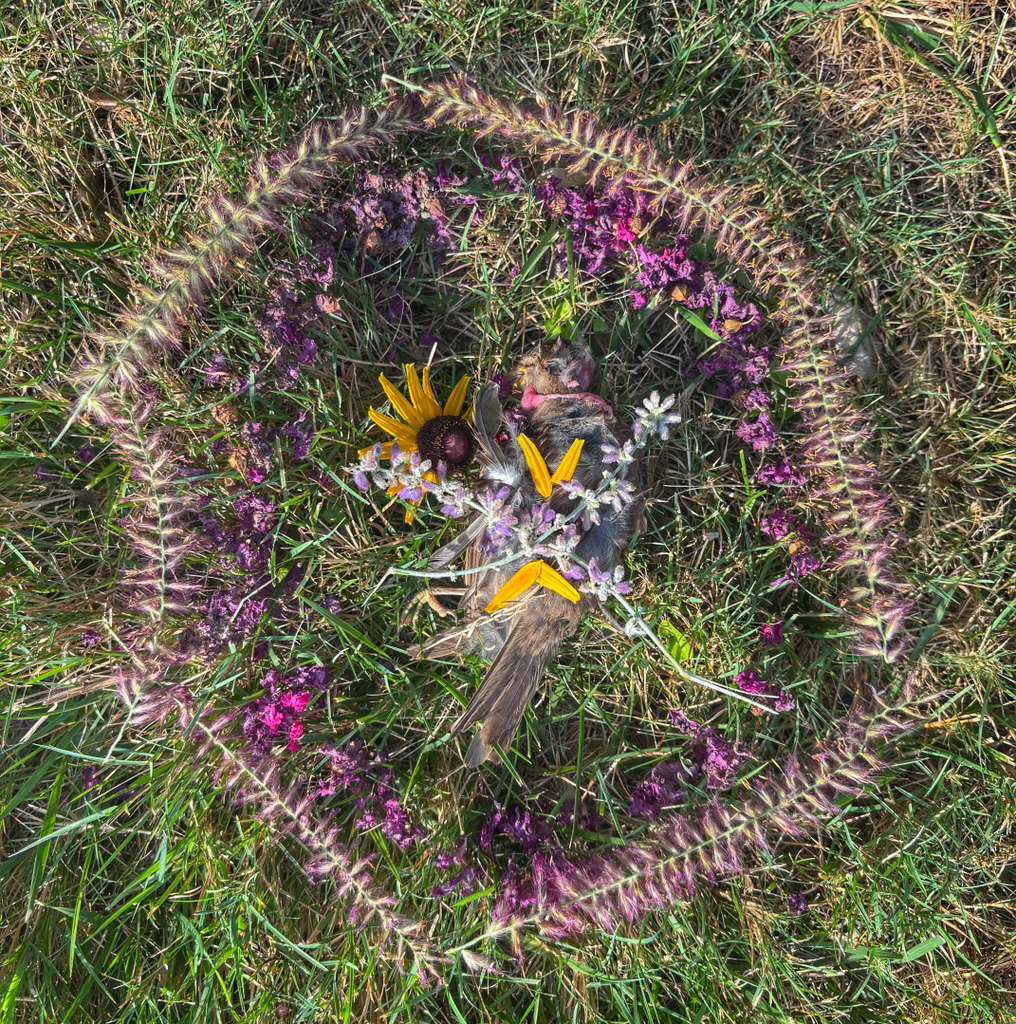
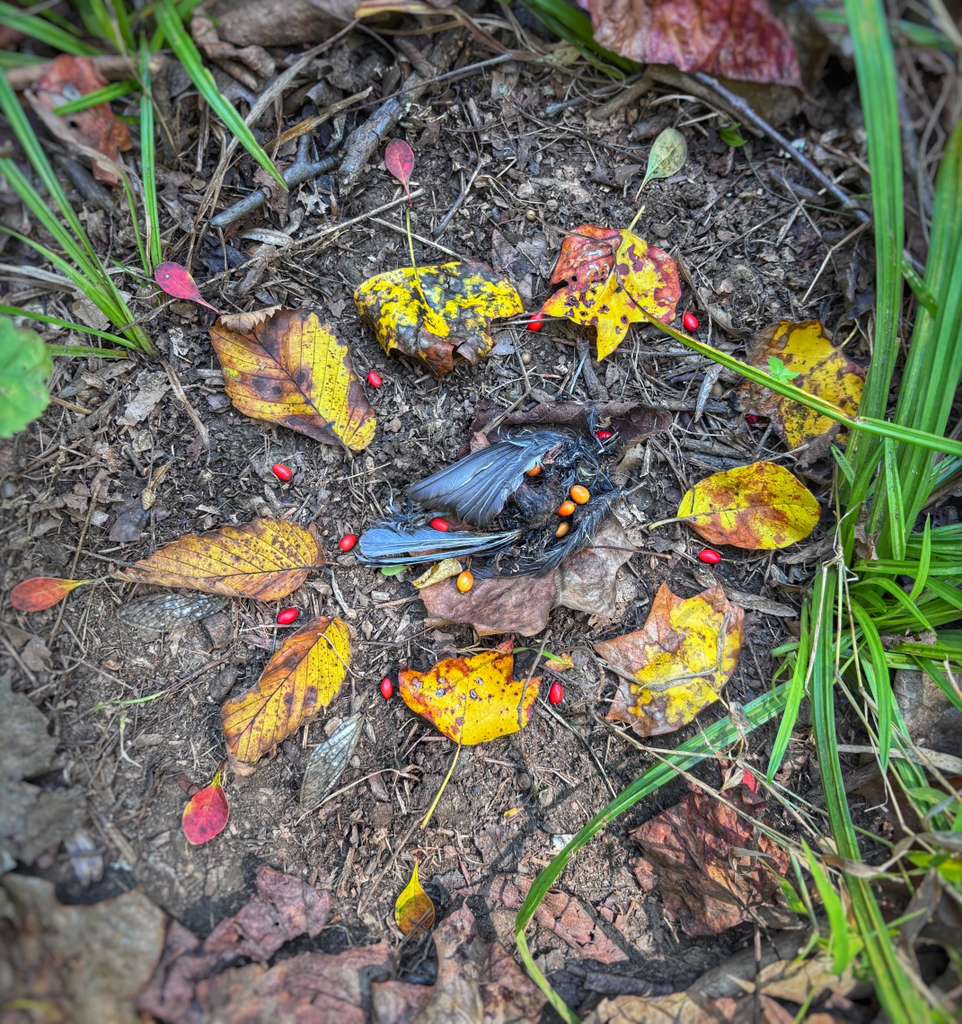
I’ve added another poem for Poe and more images at the bottom of this piece.
The way she untangles the difficulty of death is inspiring, so I wondered if she saw a benefit to bringing art into the hospice and palliative care spaces. Her answer? “Absolutely.” From the enriching experiences with music therapy, especially in dementia patients, to the simple enjoyment of being read to, patient care is greatly improved when artistic expression is brought into the spaces of dying. She even recalls caring for a music composer who wrote compositions until his last breath. While the body may be at its end, the soul can still find healing in the final days.
Unfortunately, this is where our conversation ended, rather abruptly (we lost track of time and she had to rush off), so I asked if we could continue our discussion on another day – I have so many more questions – making this a little bit of a To Be Continued…. I really enjoyed chatting with her this past weekend and hope you all found something inspiring in her words. I have no doubt that people are craving that interrelationship with the natural world. The less we feel we are a part of it, the deeper our anxieties root down into our being. We are not above or outside of nature, not in life, not in death.
“I want to hear the sounds of the forest when I’m dying – we didn’t create any of it…..it’s just there.”
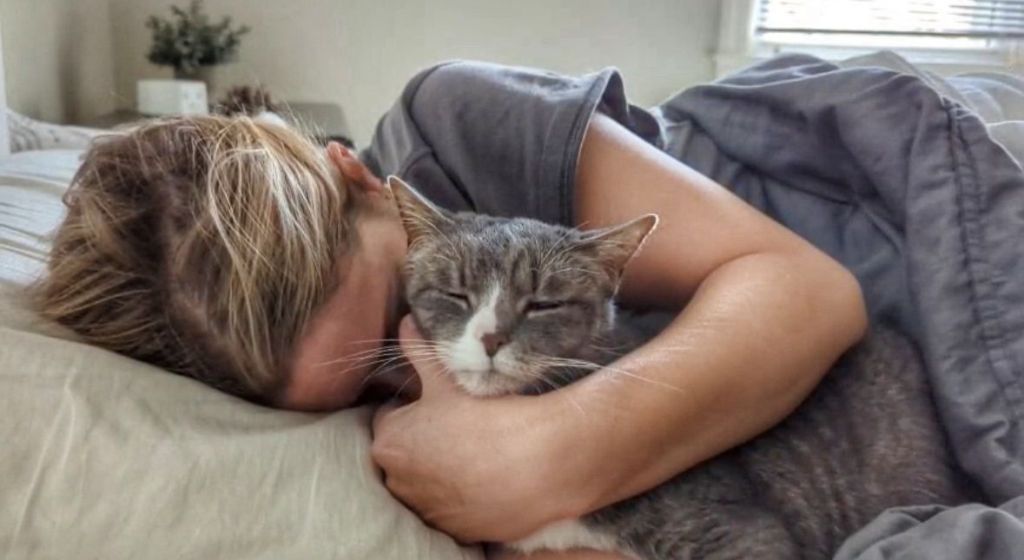
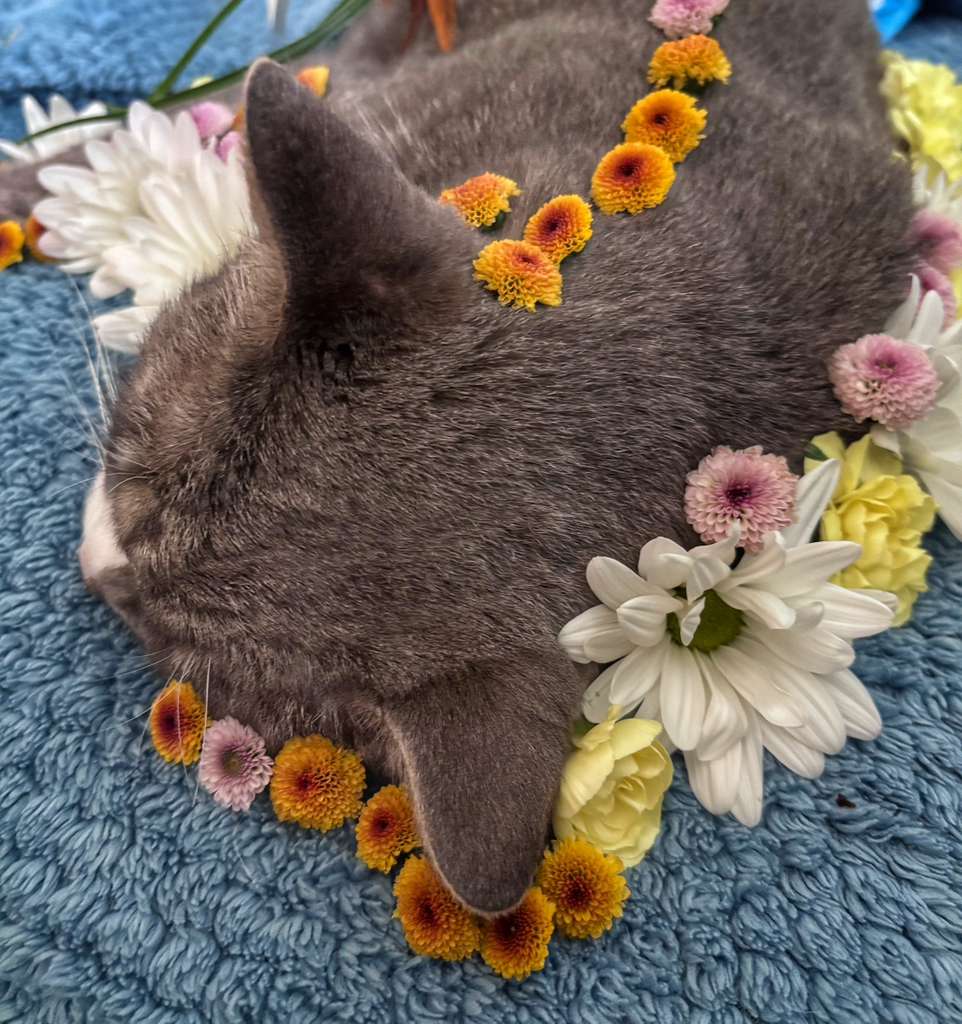
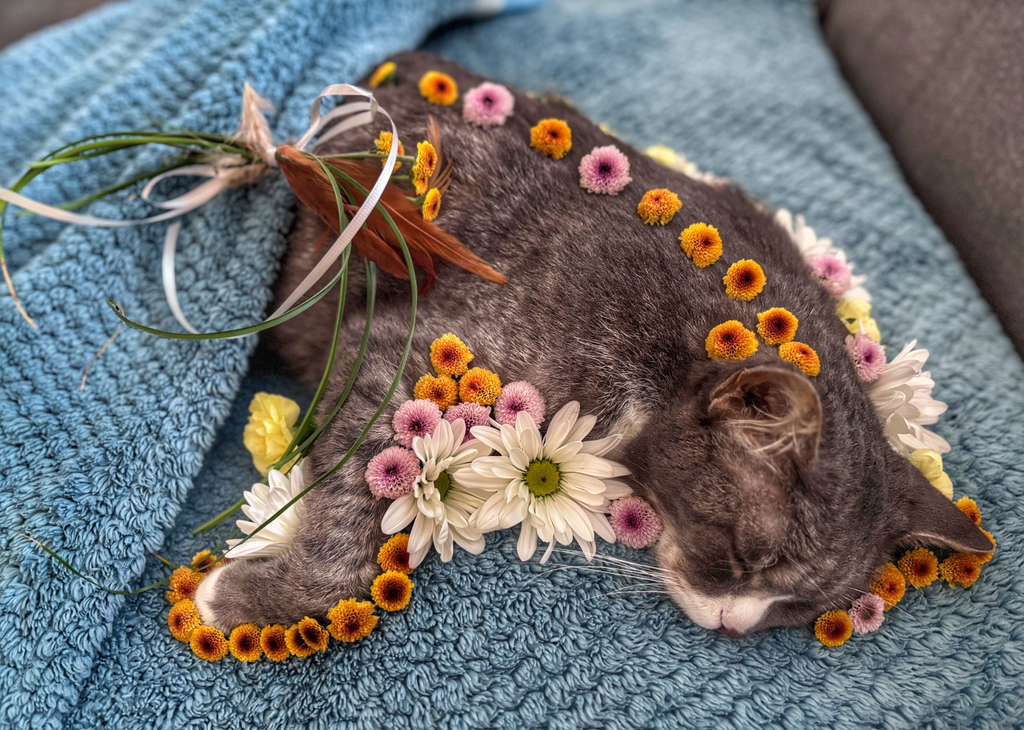
How to Say Goodbye to Poe
~ Kris M.

How much love goes into a gaze?
How much love pours into
your softness, into your
sweet face, into your
warmth in winter, into your
silent precious meow?
How terrible to say goodbye,
and goodbye, and goodbye
before I am ready, before I have
made plain to the whole world that you
carry my heart within your own
tiny body, wrapped up inside,
a solar system of gratitude
which, given more time,
would surely conquer all.
How to say goodbye to Poe:
I  loved you at first sight,
I loved you every day,
I will love you
all of my days.
[Note: all quotes are from Kris]
Discover more from One Health Stories
Subscribe to get the latest posts sent to your email.
 One Health Stories