
When people see me, they see an American. I sound American. I live in America. I have an American partner and son. I was born in America. But what exists on the surface is not always true. I’m also half German.
Something happened this week that shook me a bit. It has happened before, but the rumbles were softer. Not because I cared less, but because the epicenter of the quake that would shake my world was more distant. It was further away. Today the gap between me and a potentially devastating end to my past, present, and possibly my future way of knowing who I was, am, and will be is shrinking.
It’s been about 15 to 20 years since my grandfather (opa) and grandmother (oma) passed away, leaving behind only those of my mother’s generation and younger. They were always important in my life; however, as a child, I was closest to my cousins and then my aunts and uncles. Perhaps it was simply age gap. Or maybe my resistance to speaking German once I reached a certain age, mostly out of fear and embarrassment. Whatever the case, I can feel the grip on my German heritage slowly loosen.
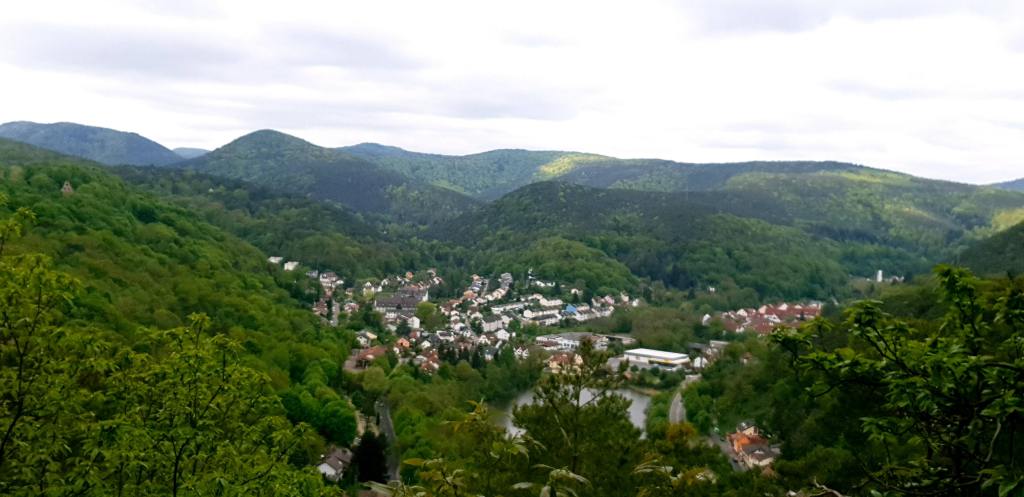
My memories…
Exploring dark forests
Eating ice cream
Wandering through fields
Twirling in the garden
Splashing on the balcony
Catching lady bugs on a snow mountain
Running on cobblestone
Ziplines in hidden play grounds
First, my mom stopped speaking German in the house (unless she didn’t want others to know what she was saying) – this didn’t bother me.
Then, I moved out and found my own path – this was exciting.
Then I had a child of my own and he didn’t know German – this bothered me some, but not enough to do anything about it (although, after living there, he did end up learning).
After that my grandparents passed away – this felt sad and somehow empty, much in the same way you feel a loss when a forest you explored as a child has been cleared away for another development. You notice a horizon begin to shape into something unrecognizable, but over time you begin to accept it.
Then, my mother got her U.S. citizenship, forcing her to give up her German passport – this one is complicated. I think sometimes I feel upset with her for doing that. But it wasn’t my choice to make. I think her priorities shifted entirely to her kids and grandchildren; but I guess I had always hoped she would be the bridge to that world.
Then, this week, we lost my uncle. The first of their generation to go. This bothers me a lot. It feels like a new chapter in our family’s story – one I’d rather skip and not read.
The shaking of the quake strengthened, and I suddenly felt that I could no longer claim my German heritage passively. If I want to keep it, I must fight for it.
There is a deeper sadness I feel in the face of it all. Westerners, European descendants, have traditions and customs, but their strength to bond us is tenuous. They live on mostly through families maintaining them – but our transient nature to live apart is breaking that connection.
In the end, it is that word, connection, that’s plaguing my thoughts, of late.
When I stand, feet planted, eyes closed, I imagine those connections with my cousins, my aunts and uncles, brother, parents, friends, my cultures, the places from which I came, I can see the threads that bond us grow more stretched and tense – as my world begins to shake harder and harder, plates colliding, sacrificing culture, language, and ways of interacting with the world, I also begin to feel a sense of my identity shifting and swaying in and out of a resolve for who I am and how I got here and a feeling of being lost.
While one culture slips through my fingers the other is being smashed to rubble. Maybe it is the times. Maybe it is my age. The loss of my uncle has made me realize, however, that connection isn’t necessarily given. We need to hold onto it, or else we may lose it. We lost our connection to Italy when my grandmother’s parents died of the Spanish Flu and we lost our connections to Greece and Yugoslavia when my paternal great grandparents immigrated to the U.S. through Ellis Island. Things tend to go missing, even cultural identities, sometimes traded for new ones that drape over us like ill-fitting clothes.
I grieve the loss of my uncle, for what he meant to me and my world, but I also grieve his loss for my aunt, his children, grand children, and everyone else who loved him and will feel his absence. He may not have been a cultural cornerstone for me in his life, but he is becoming one in his death – at the very least, a symbol of what I stand to lose if I continue to let those connections stretch past their limits, weaken, and snap.
Bis zum nächsten Mal. Tschüss, Onkel R.
Discover more from One Health Stories
Subscribe to get the latest posts sent to your email.
 One Health Stories