
This is a reboot of a post I made a year ago when I first started my blog. It is no less relevant today – maybe even more so with our current political leadership obstinately ignoring environmental health concerns and families struggling with a government shutdown. That said, here is a piece on Halloween!
As I’ve decided to launch this blog site on Halloween day, it seemed appropriate to make it the topic of my first One Health blog post. Halloween, in the United States, is a time of fun, festivities, an excuse to dress up as your favourite character, and submit to the debauchery that one can only get away with on all hallows eve. It’s definitely one of my favourite times of year. My friends and I typically set up a spectacular display in the front yard, designed to terrify and amuse trick-or-treaters. A few times, we scared the sh*t out of some of the older visitors which resulted in costume pieces flung off in horror and left behind as they ran away, screaming. I can’t help it – I find joy in this, unapologetically. However, what goes into building a new set every year, with a new theme, new costumes, and the restocking of candy? What exactly is the true cost of this holiday?
The human cost: Halloween in the U.S. generally marks the beginning of our months-long relationship to confectionaries, from trick-or-treating to Christmas cookies to Valentine’s Day and onward to Easter. Essentially, we have nearly seven months straight dedicated to sugar, thanks to spectacular marketing strategies – and all of them geared towards future consumers, our children. According to Statista, we consumed roughly 11.2 million metric tons of sugar in 2023-24 and while much of those sugars are hidden in unsuspecting foods, a sizable portion is part of the candies, cakes, cookies, etc. that we knowingly choose to consume everyday. The CDC, Harvard Health, and many other researchers attest that many of our preventable diseases, such as type 2 diabetes, tooth decay, certain cardiovascular diseases, and obesity are caused by excessive sugar consumption [note: the term obesity here is used to denote an individual whose health and wellbeing has been adversely affected by excessive weight gain, acknowledging that some individuals are considered “obese”, despite being healthy, active individuals].
The environmental cost: The wrappers that litter the streets and end up in landfills, the water-intensive sugar plantations, or the cocoa plantations, both crops contributing to biodiversity loss, are among some of the many hidden costs from our relationship to commercial holidays. None of these are necessarily specific to halloween; however, let us consider what IS unique to Halloween: the one-time-worn-then-discarded costume. Children, who grow and change in size from year to year, are some of the biggest drivers for this waste product. Environment and Energy Leader reported that an average of 35 million costumes are dumped into the landfill each year, most of them made up of non-natural fibres. Some of us save our costumes as adults and reuse them, and sometimes we bring them to second-hand stores to be worn by another in future years; however, the sad truth is that they generally all end up in the landfill eventually. As I sit here writing this, I know I sound like a buzzkill to one of our most celebrated “holidays” in the U.S., but none of this means no more trick-or-treating and no more costumes. Instead, swinging back over to the human health component, maybe we can tap into our creative spirit and return to the days of making our costumes out of items around the house!? The European Parliament has an infograph that contains alarming data from the textile industry. A few bits of the data you can find here (per person in the year 2020): 400 square meters of land used, 9 cubic metres of water, and 391kg of raw materials, further explaining that 20% of our “global clean water pollution” comes from the dyeing and finishing products. Sadder yet, only 1% of clothes is recycled into new clothes – although I think shopping at second-hand shops is maintaining a fairly steady upward trend these days. It is slowly coming to light the role that the fashion industry is playing in the destruction of Earth and its resources, and in the case of Halloween, the fashion is niche and fleeting. A moment in time where one can be a princess, super hero, or ghoul, then promptly shed their outer skin and return to their humanly, mortal self with nary a thought to what those 2-4 hours of fun meant to Mother Nature.
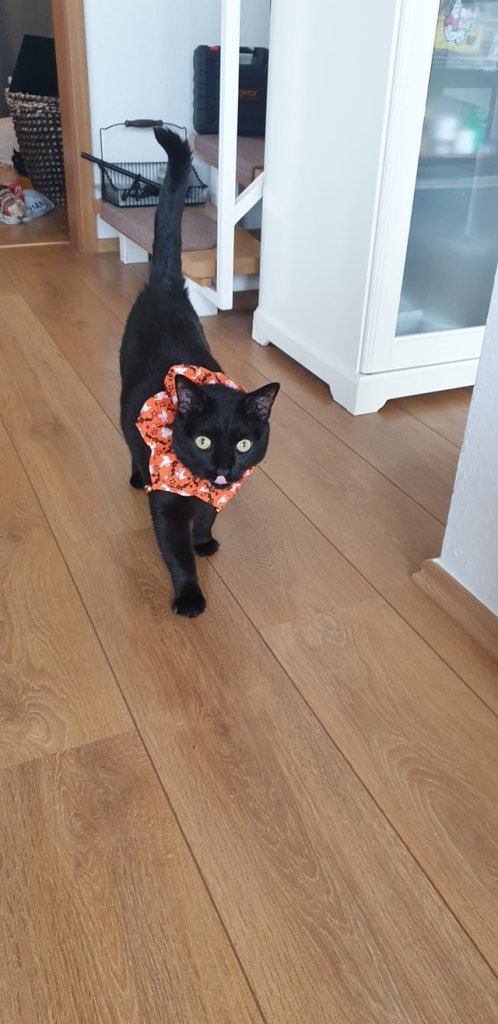
The animal cost: I think if you asked my dogs and cat, they would argue the biggest burden to them is when I try to wrestle bat wings on them because they are so damn adorable looking like little hybrid critters on a day aptly designed for monsters and creatures of the unknown; but the truth is that our wildlife, big or small, microbial or apex, aquatic or terrestrial is affected by everything I’ve mentioned above. They rely on clean water, untaxed by pollution, and native ecosystems rich with biodiversity. Other potential problems arise when we cover our homes in fake spider webs, which can harm all manner of animals as birds and insects get tangled up inside them. Our heavy demand on confectionaries and holiday foods burdens the farm animals as all of our candies and sweets require gelatin or milk sourced from production animals, and, despite my own personal adoration for seeing a puppy in a bumble bee costume, buzzing playfully in the yard, unless your fur child is okay with all of the chaos that Halloween can bring, you are more than likely causing a great deal of anxiety and stress to your pet (our older dog gets a tizzy each time the doorbell rings and spends the rest of the evening on high-alert). Further dangers from young children potentially dropping bits of chocolate on the ground poses risks to dogs who can’t digest it (although, who are we kidding – is there any actual REAL chocolate in America during Halloween? Or is it just “chocolate flavoring”?) and sometimes naughty puppies and kitties might accidentally ingest decorations from chewing or playing with something that simply looks like a fun toy to them.
I love Halloween, and am equally guilty of participating in these destructive behaviours. To err is human, after all. Each year I adopt a new habit to undo the damage I caused the year before. Last year I skipped the spider webs and donated our pumpkins to a farm for food. Small steps, but helpful nevertheless. And this list is not even close to exhaustive for the true burden we place on our own health and the health of everything on our planet. There is a mental health and economic burden in humans and countless other environmental and animal health problems brought on by our consumerism during most holidays.
There are, however, ways to keep Halloween fun and safe for everyone, although I understand it might not sound as appealing as our current way of being. Homemade or second-hand costumes, less sugar (although, I’m not suggesting tooth brushes and bibles as an alternative), reusing and reducing decorations, and finding more activities that build connections and community are just a few ways that might help planetary health. Halloween traditions are very old and can be traced back to various cultural rituals from the Irish Celts, Scottish, Romans, Germans, and others; however, the intensity with which we indulge or purchase single-use costumes and decorations is fairly new to human history. But in the short time we have been manufacturing products to give our children (and inebriated adults) a likeness to whatever idol or character with whom they are currently enamored, we have also done an enormous amount of damage to our waters, lands, animals, and selves all for a single, spooky day.
Discover more from One Health Stories
Subscribe to get the latest posts sent to your email.
 One Health Stories